 St. Petersburg Siding
 Deck Repair Built for Shore Acres Conditions
Shore Acres sits close to the water on Tampa Bay's edge, and that location cuts both ways. It's part of what makes the neighborhood desirable, but it also means decks here take on more punishment than decks a few miles inland in St. Petersburg. Salt-laden air moves in off the bay and settles into every joint, screw head, and seam. Intense Florida UV bakes the top side of boards nearly every day of the year. Wind-driven rain during summer storms and hurricane season gets forced sideways into gaps that a vertical rain would never reach. None of this is unique to any one house — it's just what Pinellas County waterfront living does to exterior wood and hardware over time.
A deck repair in this neighborhood isn't the same job as a deck repair in a landlocked subdivision. The fasteners, the ventilation underneath, the way the structure ties into the house, and the order you address problems in all need to account for what the climate is doing to the deck, not just what's visibly broken on the surface.
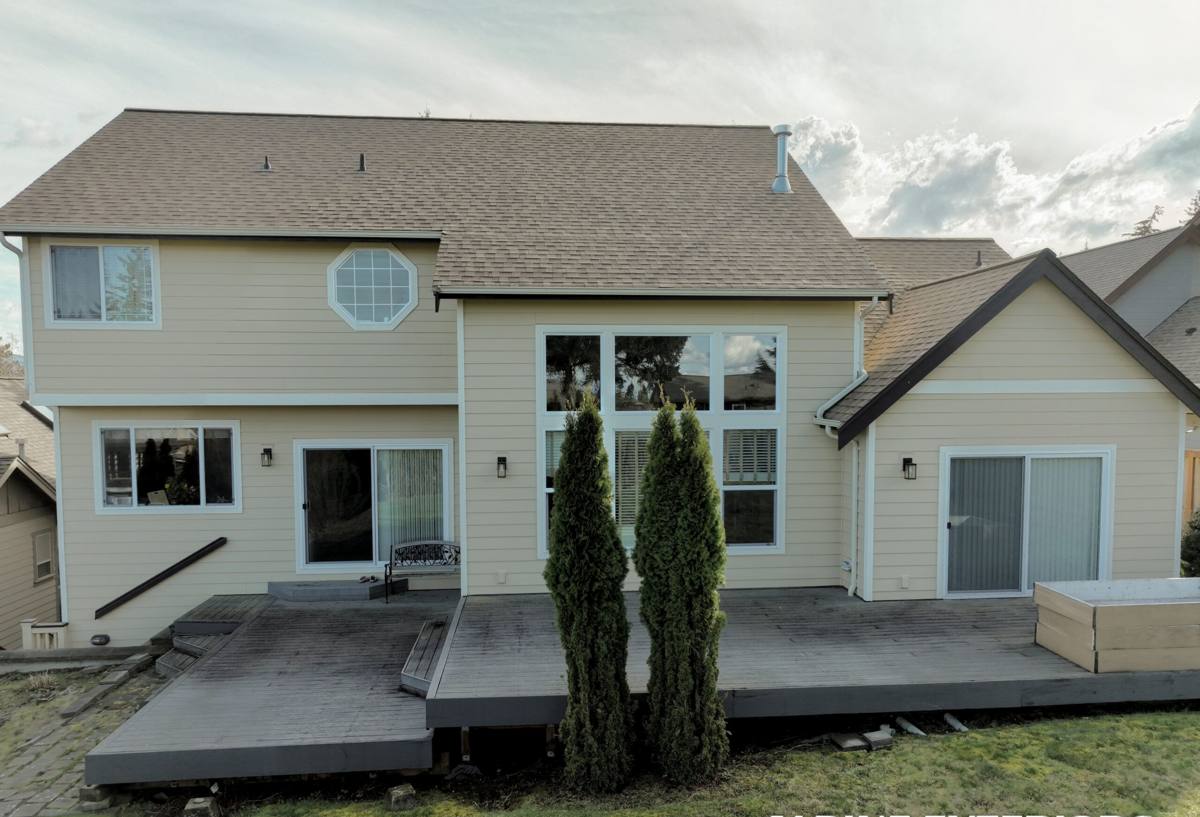
What Actually Wears Out a Deck Here
Salt Air and Corrosion
The biggest difference between a deck near the bay and one further inland is corrosion speed. Standard galvanized fasteners and hardware that would last many years in a dry inland yard can start rusting and weakening much sooner this close to open water. Once a fastener corrodes, it loses grip strength in the wood around it, and that's often the real reason a board that "looks fine" starts to feel loose or bounce underfoot.
UV and Board Movement
Direct Florida sun dries out the top face of a board faster than the underside can release moisture, which pulls the board into a cup or crown over time. That warping opens gaps at the fasteners, and those gaps become the entry point for water on the next rain.
Wind-Driven Rain and Standing Moisture
Normal rain sheds off a deck the way it's supposed to. Wind-driven rain during a squall or tropical system gets pushed underneath railings, into ledger connections, and behind fascia boards where it doesn't dry out quickly. Combined with our humidity, that trapped moisture is what leads to rot at framing members long before the decking itself looks bad.
Ground and Foundation Moisture
Because Shore Acres is a low-lying, water-adjacent part of St. Petersburg, deck posts and footings can spend more time sitting in damp soil than posts on higher, drier lots. Post bases and any wood-to-concrete contact points are worth extra attention here, since that's usually where rot starts from the ground up rather than from the top down.
Signs a Shore Acres Deck Needs Repair, Not Just Cleaning
- Boards that feel spongy, soft, or give slightly when you step on them
- Visible rust streaks running from screw heads or bolts down the face of a board
- Railings or posts that wiggle side to side when pushed
- Gaps opening up between boards that weren't there when the deck was newer
- Cupping or crowning boards — where the board is no longer flat across its width
- Soft or discolored wood where the deck meets the house (the ledger connection)
- Nails backing out or popping above the board surface
- A musty smell coming from underneath the deck, which usually points to trapped moisture
- Stairs that feel less solid than the rest of the structure
Any one of these on its own might be minor. Two or three together usually mean the structure underneath needs a real look, not just a pressure wash and a coat of sealer.
What a Correct Deck Repair Actually Involves
A repair that only addresses what's visible from the top is a repair that gets redone in two or three years. A correct repair works from the structure outward:
- Structural inspection first. We check the ledger board connection to the house, the joists, the beam, and the posts before touching a single deck board. Surface boards are the easiest part to replace — a weak frame underneath is the part that actually causes failures.
- Isolate and address moisture sources. If water is getting trapped somewhere — behind flashing, under a rail post, at a joist hanger — that path gets fixed before new material goes in, or the same rot comes back in the same spot.
- Replace fasteners with corrosion-appropriate hardware. Given the salt air here, that generally means stainless steel or coated fasteners rated for coastal exposure, not whatever standard-grade hardware came with the original build.
- Match or upgrade board material where it's failing. Sometimes matching the existing wood is right; sometimes swapping the worst-exposed boards to composite is the smarter long-term move. We'll tell you honestly which applies to your deck.
- Restore proper ventilation underneath. Airflow under the deck is what lets framing dry out between rain events. Skirting, plantings, or debris that block that airflow work against the repair you just paid for.
- Final fastening and finish. Boards get properly spaced for drainage and movement, then sealed or finished appropriately for the material.
Repair or Replace? What We Actually Weigh
Not every deck problem calls for a full rebuild, and not every deck is worth patching. Here's how we think through it, and the honest trade-offs on each side:
| Factor | Leans Toward Repair | Leans Toward Replacement |
|---|---|---|
| Framing condition | Joists, beams, and posts are solid; only decking or railings are worn | Rot or corrosion has reached the structural framing itself |
| Age of the deck | Deck is under 10-12 years old with isolated problem areas | Deck is older and multiple systems are failing at once |
| Ledger connection | Ledger board and flashing are sound | Ledger shows soft wood or was never properly flashed |
| Scope of damage | Damage is limited to a few boards or one section | Damage is spread across the whole deck footprint |
| Code/permitting status | Existing structure meets current setback and railing requirements | Structure predates current code and would need upgrades anyway |
| Long-term plan | You plan to sell or use the home short-term | You're staying long-term and want fewer repeat repairs |
We'll walk the deck with you and give you a straight answer on which side of that table your project falls on — including telling you when a repair is the more sensible choice, even though a full rebuild is the bigger job.
Materials: What We Use and Why
Pressure-Treated Wood
Pressure-treated lumber remains a solid, cost-effective choice for framing and for homeowners who want a traditional wood look. It needs regular sealing or staining to hold up against our UV and rain, and that maintenance schedule is worth being upfront about before you choose it.
Composite Decking
Composite boards resist UV fading and moisture absorption better than wood over the long run, which matters in a salt-air environment. The trade-off is a higher upfront material cost and the need for correct fastening systems designed for composite, since it expands and contracts differently than wood.
Fasteners and Hardware
This is where we don't cut corners regardless of which decking material you choose. Given how close Shore Acres sits to the bay, we use fasteners and structural hardware rated for coastal, high-corrosion exposure. Standard-grade hardware is a false economy here — it's the first thing to fail, and it's hidden until it does.
How We Handle Deck Repair Jobs in Shore Acres
- On-site assessment. We inspect the full structure — decking, framing, ledger, posts, and footings — not just the spot you called about.
- Honest scope and estimate. You get a clear explanation of what's actually wrong, what repair options exist, and a straightforward cost range for each.
- Material selection. We talk through wood versus composite, and coastal-rated hardware, based on your budget and how long you plan to keep the deck.
- Repair work. Framing and moisture issues are corrected first, then decking, railings, and stairs are rebuilt or repaired to match.
- Walkthrough. We go over the finished work with you before we consider the job done.
Permits and Codes for Waterfront-Area Decks
Deck work that involves structural framing, railings, or footings typically requires a permit in Pinellas County, and waterfront or low-lying lots can carry additional considerations around elevation and setbacks. We handle the permitting conversation as part of the job rather than leaving you to sort it out, and we won't skip a required permit just to save time — a deck that isn't permitted correctly can become a real problem when you go to sell the house.
Maintaining Your Deck After the Repair
- Rinse salt residue off the deck surface periodically, especially after storms
- Keep the area underneath the deck clear so air can circulate
- Re-seal or re-stain wood decking on the schedule appropriate to the product used
- Check railings and stair connections for looseness once or twice a year
- Address small issues — a popped fastener, a soft spot — before the next rainy season, not after
A repaired deck with good hardware and proper drainage can go a long time between major issues in this climate, but "no maintenance ever" isn't realistic for any exterior structure this close to the bay.
Why Hire a Crew That Already Works in Shore Acres
A contractor who works this part of St. Petersburg regularly already knows what salt exposure and wind-driven rain do to a deck over time, and doesn't need to relearn it on your project. That familiarity shows up in small decisions — which hardware to spec, where moisture tends to hide on a waterfront lot, how to sequence a repair so it holds up through the next hurricane season — that a crew unfamiliar with the area might miss entirely. It also means we're not guessing at the permitting expectations for this part of Pinellas County; we've been through that process before.
If your deck in Shore Acres has soft spots, loose railings, rusting hardware, or just doesn't feel as solid as it used to, we're happy to take a look and give you a straightforward, no-pressure estimate — free, with no obligation to move forward. Fill out the form below and we'll get back to you.