 St. Petersburg Siding
 Cemplank Is a Real Fiber Cement Product — Here's Why We Still Don't Install It
Homeowners in St. Petersburg often come to us with a quote in hand that specifies Cemplank siding, usually because a contractor sourced it as a lower-cost alternative to James Hardie. We want to be upfront: Cemplank is genuine fiber cement, manufactured by Plycem/Etex, and it is not a scam product or a knockoff in the way vinyl or engineered wood sometimes gets marketed as "just as good." It shares the same basic composition as James Hardie boards — Portland cement, sand, and cellulose fibers — and it will outperform vinyl or wood siding in most respects.
So why does a siding contractor working the Pinellas County market, where salt air, wind-driven rain, and intense UV exposure are daily realities, standardize on one brand and turn down installs of a competing product that's chemically similar? The answer isn't about the raw material. It's about the finish system, the engineering behind the product line, the manufacturer's track record supporting installers in this exact climate, and the warranty that stands behind the siding once it's on your wall for twenty or thirty years.
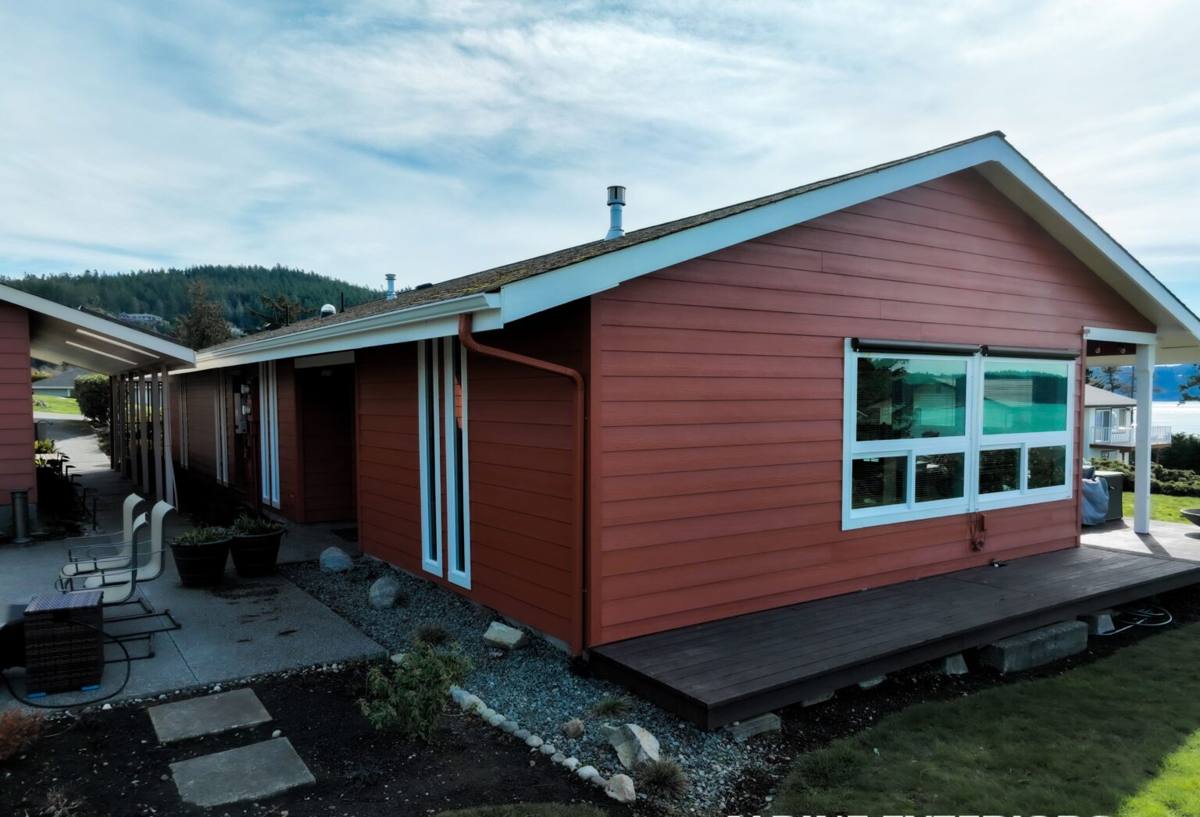
What Cemplank Gets Right
To be fair to the product, Cemplank fiber cement does the fundamental job fiber cement is supposed to do: it doesn't rot, it resists termites, and it's a poor fuel source compared to wood-based siding — a real advantage during Florida's dry, wind-driven wildfire seasons and in wind-blown ember exposure during storm events. It also holds paint reasonably well when properly primed and sealed, and its cost is typically lower than James Hardie's ColorPlus lines, which is exactly why it shows up on budget-conscious bids.
If your only criteria were "is this fiber cement" and "is this cheaper," Cemplank would check both boxes. The trade-offs show up over the years that follow installation, not on install day.
The Factory Finish Gap
This is the single biggest reason we don't install Cemplank. James Hardie's ColorPlus Technology bakes a color coat onto the board at the factory, cured in a controlled environment, with a 15-year finish warranty backing it and touch-up product engineered to match. Cemplank ships primed, not finished — the color coat is your painter's job, applied on a job site in Pinellas County heat and humidity, on a schedule dictated by weather windows rather than a factory process.
Field-applied paint on fiber cement is not inherently bad work, but it introduces variables a factory finish removes: inconsistent mil thickness, adhesion issues if the board sits primed too long before topcoat, and a paint warranty that's typically the paint manufacturer's standard product warranty rather than a siding-system warranty. In a coastal market where UV load is intense nearly year-round and salt-laden humidity accelerates coating breakdown, that gap between a factory-cured finish and a field-applied one tends to show up as chalking, fading, and touch-up work sooner than homeowners expect.
Why This Matters More Here Than Inland
St. Petersburg sits on a peninsula between Tampa Bay and the Gulf, which means most homes in this market get some degree of salt air exposure even a few miles from open water. Salt accelerates the breakdown of lesser coatings and can worsen minor moisture intrusion at fastener points and butt joints. A finish system engineered and tested specifically for this kind of exposure has a real, measurable advantage over a generic field-primed board.
Climate-Engineered Product Lines vs. One-Size-Fits-All
James Hardie sells region-specific HZ5 product formulations engineered for high-humidity, high-moisture climates like Florida's, with moisture management and freeze-thaw considerations tuned to the region a home is actually built in. Cemplank's product line does not offer that same regional engineering distinction — it's a more generalized formulation sold across climate zones.
For a home in Pinellas County that will see hurricane-force wind gusts, wind-driven rain forced sideways into wall assemblies, and months of sustained humidity between storms, that regional engineering isn't a marketing footnote — it affects how the board handles moisture cycling at the plane of the wall over the decades it's expected to last.
Installation Sensitivity: The Part Nobody Puts on the Quote
Fiber cement, in general, is installation-sensitive — clearances, fastener patterns, caulking at joints, and flashing details all matter more with fiber cement than with more forgiving materials like vinyl. This is true of James Hardie too. But Hardie backs its installer network with published installation manuals down to fastener spacing by wind zone, a nationally recognized certified-installer training track (HardieZone / Hardie Preferred), and a labor warranty structure that assumes installers are following that documented process.
Cemplank has installation guidelines as well, but the depth of installer training infrastructure, regional technical support, and product-specific certification programs behind it is not built out to the same degree in this market. When something is installation-sensitive, the manufacturer's support system for getting that installation right — before problems ever start — is part of what you're actually buying.
Warranty Structure: Read the Fine Print
Warranty length on paper looks similar between fiber cement brands, but the structure of what's covered, whether it's transferable to a new homeowner, and how claims are prorated over time differ meaningfully. James Hardie's non-prorated warranty terms and transferability provisions are a known quantity we can explain accurately to a homeowner before they sign a contract. That matters in a market like St. Petersburg where homes change hands regularly and siding warranty transferability is a genuine resale consideration.
| Factor | Cemplank | James Hardie |
|---|---|---|
| Base material | Fiber cement | Fiber cement |
| Factory color finish | Primed only; field-painted | ColorPlus baked-on factory finish, 15-yr finish warranty |
| Regional climate engineering | General-purpose formulation | HZ5 formulation engineered for high-humidity/coastal zones |
| Installer certification network | Limited regional depth | Nationally established certified-installer programs |
| Upfront material cost | Typically lower | Typically higher |
| Long-term maintenance | Repaint cycles on field-applied finish | Longer intervals before repaint needed under factory finish |
What "Refusing to Install It" Actually Means
We're not telling homeowners Cemplank will fail on their house. Plenty of Cemplank installations are performing fine around the country. What we're telling you is that as a company, we decided we'd rather stand behind one product system we know thoroughly — the engineering, the finish warranty, the fastening specs, the installer training — than split our crews' expertise and our warranty conversations across multiple fiber cement brands with different rules. That's a business decision about consistency and accountability, not a claim that every other product is defective.
When a homeowner asks us to install a product outside our standard, we're honest about it: either we pass on the job, or we explain clearly why we'd rather quote James Hardie for their home and let them decide.
Cost Factors Worth Weighing Beyond the Sticker Price
- Upfront material and labor cost — Cemplank often bids lower, which matters on tight budgets.
- Repaint cycle cost — a field-applied finish generally needs repainting sooner than a factory ColorPlus finish, and repainting an entire home's siding every several years adds up over a 20-30 year ownership window.
- Resale and warranty transfer — a transferable, well-documented warranty can be a selling point when the home changes hands; a warranty a buyer's inspector can't easily verify is a weaker one.
- Storm-season repair costs — after a named storm, insurance adjusters and contractors are more familiar with certified Hardie installations and their documented wind ratings, which can streamline claims and repairs.
- Installer availability over time — the depth of a manufacturer's certified installer network in Pinellas County affects how easy it is to find someone qualified for future repairs or additions.
What We Actually Install Instead
Every home we side gets James Hardie fiber cement, chosen for the HZ5 product line's engineering for Florida's humidity and storm exposure, the ColorPlus factory finish that removes field-paint variability from the equation, and a warranty structure we can explain plainly and stand behind. We install to Hardie's published fastening and clearance specifications for the wind zone St. Petersburg falls under, which matters when hurricane-force gusts are a "when," not "if," for coastal Pinellas County homes.
This isn't about brand loyalty for its own sake — it's that narrowing to one well-engineered system lets our crews get genuinely expert at installing it correctly, and lets us give every customer a straight answer about what their warranty actually covers.
Questions to Ask Any Contractor Quoting Fiber Cement Siding
- Is the color a factory-applied finish, or will it be primed and painted on site?
- Is the product formulated for high-humidity, coastal, or hurricane-exposed climates specifically?
- Is the installer certified by the manufacturer, and what does that certification actually require?
- Is the warranty transferable to a future homeowner, and is it prorated?
- What fastener pattern and clearance specs will be used, and are they matched to our local wind zone?
If you're weighing siding options for a home in St. Petersburg or elsewhere in Pinellas County, we're happy to walk through what we install, why, and how it applies to your specific house — no pressure, no obligation. Reach out for a free estimate and we'll give you the same straight answers you just read here.