 St. Petersburg Siding
 What Board and Batten Actually Is
Board and batten is one of the oldest siding patterns in American building — wide vertical panels with narrow strips (battens) covering the seams between them. It started as a practical way to close gaps in barn and farmhouse construction, and it's stuck around because the vertical lines read as clean, modern, and a little more distinctive than the horizontal lap siding on most of the block. In St. Petersburg, we're seeing it used most often as an accent — a gable end, a dormer, a porch surround, a garage face — paired with standard lap siding on the rest of the house, though full board and batten homes aren't uncommon either.
The look is simple. How it's built is where the differences between products, and between contractors, actually show up.
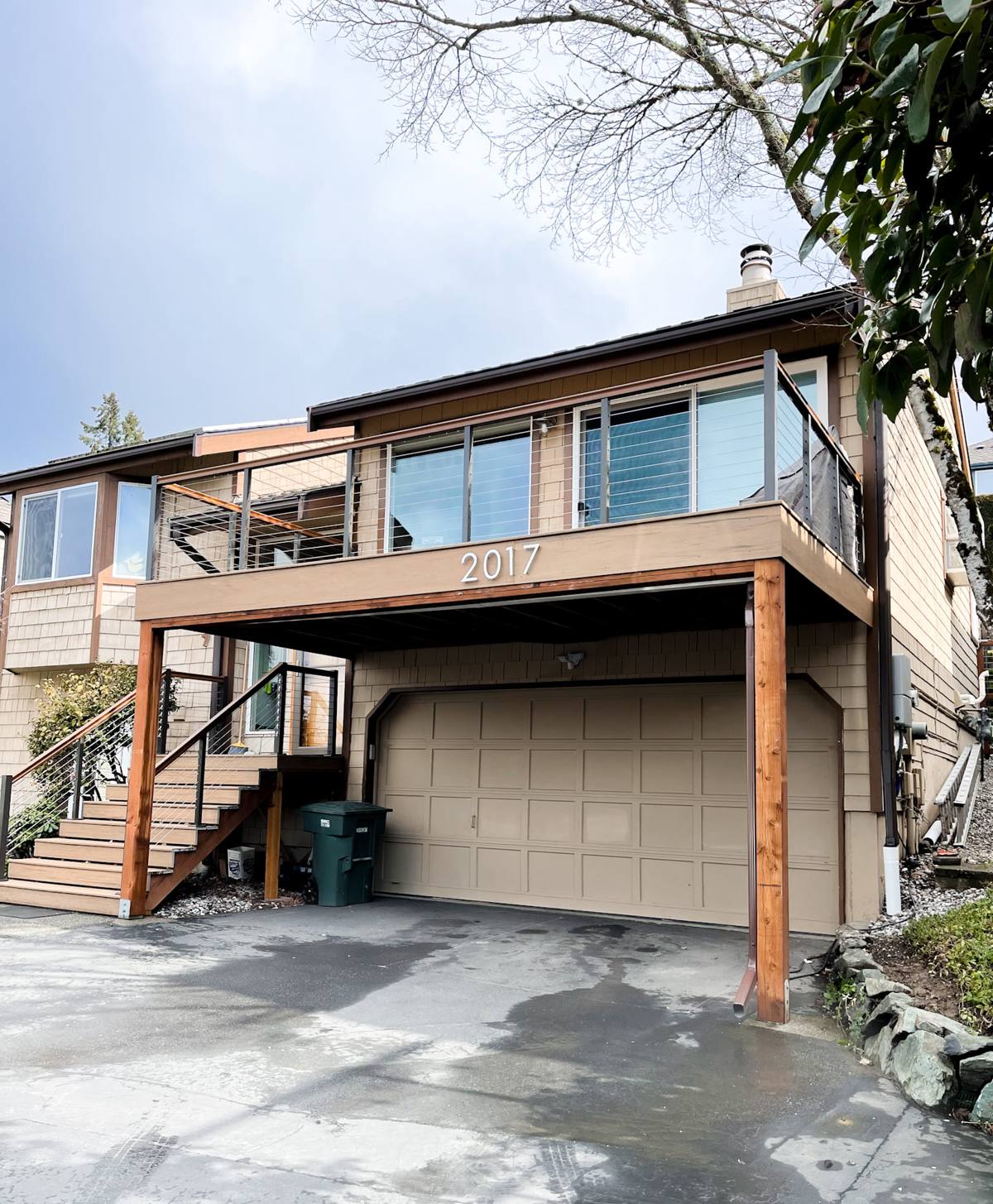
How James Hardie Builds Board and Batten
James Hardie offers a few ways to get this look, and the right one depends on the project:
- HardiePanel vertical siding with HardieTrim battens — large fiber cement panels installed vertically, with trim boards fastened over the seams. This is the traditional board and batten build and the most common approach on full elevations.
- Artisan Vertical Siding — a smoother, more refined panel profile from Hardie's higher-end Artisan line, often chosen for contemporary designs where a crisper reveal matters.
- Direct-fastened vs. furring-strip installation — panels can be installed straight to the wall sheathing or over vertical furring strips that create a drainage gap behind the siding. We'll get into why that gap matters in a Florida climate below.
All of these use the same core material: Portland cement, sand, and cellulose fiber, autoclaved into a dense, stable board. It's not vinyl formed to look like wood, and it's not a wood composite. It's fiber cement, engineered specifically for high-heat, high-moisture, coastal-adjacent environments — which is exactly what Pinellas County is.
Panel Sizes and Batten Spacing
HardiePanel comes in 4x8, 4x9, and 4x10 sheets, installed vertically with the long edge running floor to eave (or in shorter segments on lower wall sections). Batten spacing is a design decision as much as a structural one — tighter spacing (12–16 inches on center) gives a busier, more traditional farmhouse look, while wider spacing (18–24 inches) reads more contemporary. A good installer will lay this out on paper before anything goes on the wall, because uneven batten spacing is one of the fastest ways to make an otherwise well-built house look sloppy.
Where Board and Batten Works on a Home
We tell homeowners to think of board and batten as a texture change, not just a color change. It works best when it's used to separate architectural planes — a gable above a lap-sided first floor, a bumped-out entry, a porch gable, a garage that needs to visually recede or advance from the main house. Full-elevation board and batten is common on Craftsman, farmhouse, and modern coastal designs, all of which show up regularly in St. Petersburg's older bungalow neighborhoods and in newer infill construction alike.
Mixing board and batten with HardiePlank lap siding on the same house is standard practice and something Hardie's product lines are designed to support — the ColorPlus finishes are formulated to match across product types, so a batten accent and lap field painted the same color won't visibly drift apart the way field-touched-up paint sometimes does over time.
ColorPlus Finish and Color Options
Nearly all board and batten installs we do use Hardie's ColorPlus factory finish rather than job-site painting. The color is baked on in a controlled factory process — multiple coats, cured, not brushed or sprayed on a scaffold in Florida humidity — and it comes with its own finish warranty separate from the substrate warranty. For a style that's often used as a visual accent, color consistency and edge sharpness matter more than on a full lap-sided wall, and factory finish holds that line better than field paint.
| Consideration | ColorPlus (Factory Finish) | Job-Site Primed & Painted |
|---|---|---|
| Color consistency panel-to-panel | Controlled, uniform | Dependent on weather and painter |
| Cut-edge treatment | Requires touch-up sealant on field cuts | Full coat covers cut edges |
| Repaint interval | Typically well beyond 10-15 years | Standard exterior paint cycle, often 5-8 years in this climate |
| Warranty | Separate finish warranty from Hardie | Paint manufacturer warranty only |
Why Fiber Cement Board and Batten Holds Up Here
St. Petersburg sits in a climate that's genuinely hard on exterior building materials. Hurricane-force winds test how well siding is fastened and how well it resists impact. Wind-driven rain during tropical storms forces water sideways into seams and laps that would stay dry in a normal rain event. Year-round UV breaks down pigments and resins faster than in most of the country. And salt air, even well inland from the Gulf, accelerates corrosion on fasteners and degrades weaker materials over time.
Board and batten has more vertical seams per square foot than lap siding, which means more opportunities for water to find a way behind the cladding if the install is wrong. Fiber cement itself doesn't rot, doesn't support insect damage, and won't warp or cup the way engineered wood products can when they take on moisture. It's also non-combustible, which matters less for wind-driven rain but is a real factor in wildfire-adjacent code discussions elsewhere in the state. None of that replaces good installation — it just means the material isn't working against you.
Installation Details That Actually Matter
This is the part of board and batten that separates a system that lasts decades from one that causes problems in five years. It's also where we see the most corner-cutting on other projects we get called to look at.
Drainage Gap
Board and batten installed flat against the sheathing with no drainage path traps any moisture that gets behind it — through a seam, a fastener hole, a compromised sealant joint — against the wall assembly. Furring strips create a quarter-inch or so gap that lets water drain and air circulate, which is standard practice for vertical siding in humid climates and something we don't skip.
Fastening and Batten Attachment
Battens need to be fastened into structural framing or properly blocked furring, not just through the panel into thin air. Fastener spacing and placement affect wind-load performance directly — this is a hurricane-exposed coastal county, and siding that isn't fastened to spec is siding that comes off in a storm, full stop.
Gaps, Caulking, and Flashing
Panels need expansion gaps at trim and window/door openings, correctly sized and treated per Hardie's published details — not just butted tight and caulked over. Head flashing above windows and at horizontal transitions has to be integrated correctly with the water-resistive barrier underneath, not just relied on as a caulk line. Cut panel edges need factory or field touch-up sealant so the raw fiber cement edge isn't left exposed to weather.
- Furring strips or an approved rainscreen gap behind the panels
- Correct fastener type, spacing, and embedment into framing
- Manufacturer-spec expansion gaps at all trim and openings
- Flashing integrated with the water-resistive barrier, not just caulked
- Sealed or touched-up cut edges on every field-cut panel
- Batten layout planned and squared before install begins
Cost Factors
Board and batten typically runs somewhat higher than standard lap siding on a like-for-like basis, mostly because of the extra material (battens) and additional install labor for layout and fastening precision. Where it lands depends on the specifics:
| Factor | Effect on Cost |
|---|---|
| Accent use (gable, dormer) vs. full elevation | Accent areas cost less in total but more per square foot due to setup and cutting |
| Batten spacing | Tighter spacing = more material and labor |
| Furring-strip install vs. direct-fastened | Furring adds labor but improves drainage performance |
| ColorPlus vs. primed for field paint | ColorPlus costs more up front, less over the ownership period |
| Substrate condition | Rotted sheathing or old furring found during tear-off adds cost to fix properly |
Maintenance
With ColorPlus finish, board and batten maintenance is mostly about staying ahead of small issues rather than routine upkeep: rinsing off salt and pollen buildup, checking caulking at trim joints annually, and keeping an eye on any spot where two different materials or planes meet, since that's always where water problems start first if they're going to start at all. It doesn't need repainting on the schedule that job-site-painted wood trim or older siding does.
Why We Only Install James Hardie for This Look
Board and batten is available in vinyl, engineered wood, and other fiber cement brands, and we understand why some of those get chosen — usually price. But this is a style with more seams and more vertical water paths than standard lap siding, which is exactly the situation where material stability and installation forgiveness matter most. Vinyl board and batten can show visible waviness and doesn't hold color the same way under intense Florida UV over the long run. Engineered wood products carry moisture-sensitivity trade-offs we're not willing to install a stand of exposed vertical seams over. We standardized on Hardie because the combination of dimensionally stable fiber cement and a factory-cured ColorPlus finish gives this style its best shot at looking sharp and staying sealed for the long haul in a hurricane-exposed, salt-air climate — not because it's the cheapest option on the table.
If you're considering board and batten as an accent or across a full elevation, we're happy to walk your property, talk through where it makes sense architecturally, and put together a free, no-pressure estimate — no obligation, just straight information.