 St. Petersburg Siding
 Siding in Crescent Lake: A Neighborhood Built on Character, Tested by Climate
Crescent Lake is one of St. Petersburg's older, more established neighborhoods, known for its mature oak canopy, the lake and park at its center, and a housing stock that leans heavily toward bungalows, Craftsman-style homes, and mid-century construction. That character is part of what makes the area desirable, but it also means a lot of homes here are carrying original or long-past-due exterior materials that were never engineered for what Pinellas County weather delivers year after year.
Whatever exterior work a Crescent Lake home needs — siding, roofing, windows, or a deck — the starting point is the same: this is a coastal, sub-tropical climate with real structural demands, not just a cosmetic backdrop. We approach every project here as a local contractor first, product specialist second.
What St. Petersburg's Climate Actually Does to a Home's Exterior
St. Petersburg sits in a zone where several stresses compound instead of acting one at a time. That combination is what wears out siding faster here than it would in most of the country.
Intense, Year-Round UV
Florida's sun angle and number of daylight hours mean exterior materials get more cumulative UV exposure annually than in almost any other state. Paint chalks and fades faster, caulk joints dry out and crack sooner, and any material with a factory finish that isn't UV-stabilized will visibly degrade well before a homeowner expects to be repainting.
Wind-Driven Rain and Humidity
Afternoon storms in this area don't just fall — they get driven sideways into walls, soffits, and seams. Combined with Florida's humidity, any siding material that isn't dimensionally stable or that allows water behind the cladding is set up for moisture intrusion, swelling, or rot over time.
Hurricane-Force Wind Events
Pinellas County is a peninsula, and Crescent Lake's tree canopy — while beautiful — adds its own risk during named storms: falling limbs, wind-blown debris, and sustained gusts that test how well siding is actually fastened, not just what it's made of.
Salt Air
St. Petersburg isn't waterfront everywhere, but salt-laden air travels well inland across the whole Tampa Bay area. Over years, that salt content accelerates corrosion on fasteners and metal trim and speeds up the breakdown of lower-grade coatings.
Why This Hits Older Crescent Lake Homes Especially Hard
A neighborhood with a lot of homes built in the early-to-mid 1900s has an added wrinkle: many of these houses still have original wood siding, or a layer of siding installed decades ago as a "quick fix" over the original wood. Add the mature tree canopy that defines Crescent Lake's streets, and you get extra moisture retention from shade, leaf litter, and slower drying times after storms — all of which accelerate rot in wood-based products and telegraph through thinner materials as soft spots, staining, or bowing.
None of this means the neighborhood's housing stock is in bad shape — it means the exterior materials on these homes need to be matched to the actual climate they're sitting in, not just whatever was standard when the house was built.
Why We Only Install James Hardie Fiber Cement Siding
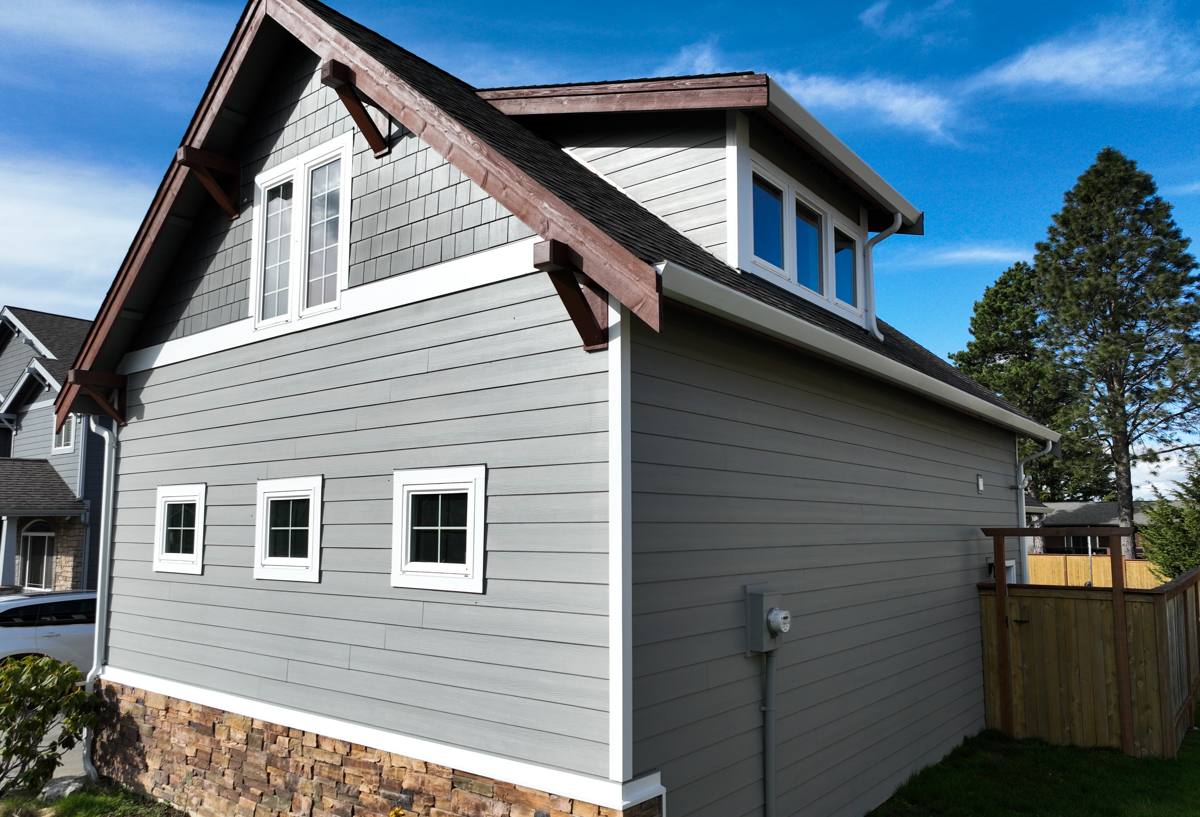
We made a deliberate decision as a company to install James Hardie fiber cement exclusively — not vinyl, not LP SmartSide, not Cemplank, Allura, or primed wood. That's not a marketing position; it's a reflection of what actually holds up under the conditions described above.
- Non-combustible material — fiber cement doesn't feed a fire the way wood-based or wood-fiber products can, which matters for insurance and for peace of mind.
- Dimensionally stable in humidity — it doesn't swell, warp, or delaminate from moisture exposure the way engineered wood products can if a seam or cut edge gets wet.
- Factory-applied ColorPlus finish — baked-on, UV-resistant color that's engineered to hold up to Florida sun rather than a field-applied paint job that starts degrading in a couple of seasons.
- HZ5 climate-engineered formulation — James Hardie makes region-specific products, and the HZ5 line is built for exactly this kind of high-moisture, high-heat climate.
- Strong, transferable warranty — backed by a large manufacturer with decades of performance data, not a startup or newer entrant to the fiber cement space.
We're not going to pretend other products don't have selling points — vinyl is inexpensive and low-maintenance in mild climates, and wood has genuine visual warmth that some homeowners want. But vinyl can warp and become brittle under sustained heat and UV, wood requires ongoing maintenance that most owners underestimate, and lower-cost fiber cement alternatives don't carry the same factory finish or long-term track record we're willing to put our name behind. For a coastal Florida install, we'd rather turn down a job than install something we don't believe will perform.
Matching Hardie's Product Lines to Crescent Lake's Architecture
A lot of Crescent Lake's bungalow and Craftsman-style homes have distinctive trim details — wide fascia, exposed rafter tails, and clean horizontal lap lines — that are worth preserving or restoring rather than covering up with something generic.
HardiePlank Lap Siding
The most common choice for classic lap-sided homes; available in multiple exposures and textures (smooth or woodgrain) to match a home's existing look.
HardieShingle
Useful for gable accents or homes with a Craftsman or cottage look that originally used shingle detailing.
HardieTrim Board & Batten
Works well for porch details, accent walls, or homes leaning into a more modern farmhouse update.
ColorPlus Color Selection
A range of factory-finished colors that hold their tone in direct sun far longer than a field-painted finish — a real advantage in a neighborhood with heavy year-round sun exposure and mature trees dropping tannin-staining debris.
Installation Quality Matters as Much as the Product
Fiber cement siding is only as good as the install behind it. Correct installation in this climate means proper flashing at every penetration, correct fastener spacing and type (to resist both wind uplift and salt-air corrosion), proper clearance from grade and roofing to avoid wicking moisture, and factory-specified caulking at joints — not generic sealant applied to save time.
| Install Factor | Why It Matters Here |
|---|---|
| Fastener type and spacing | Under-fastened siding is one of the top causes of wind-related failure in named storms |
| Flashing at windows/doors | Wind-driven rain finds any gap; correct flashing keeps water out of the wall assembly |
| Clearance from grade/roofline | Prevents constant moisture wicking into the bottom courses of siding |
| Manufacturer-specified caulk/sealant | Generic sealants degrade faster under intense UV and voids the warranty |
| Cut-edge sealing | Unsealed cut edges are a common entry point for moisture on fiber cement |
One Crew, Four Systems: Siding, Roofing, Windows, and Decks
Siding rarely fails in isolation. A roof that's shedding water improperly, windows with failed flashing, or a deck ledger board with hidden rot can all undermine a siding job — or get undermined by one. Because we handle siding, roofing, windows, and decks under one roof, we can look at a Crescent Lake home's exterior as a single system rather than four separate vendors passing the buck on whose scope a leak falls under.
That matters especially on older homes where one issue (a bad roof valley, an old window without proper flashing) has often been quietly feeding moisture into wall assemblies for years before it shows up as a siding problem.
Why a Local Crew Matters for This Neighborhood
Pinellas County has its own permitting requirements, wind-load standards, and inspection process, and St. Petersburg's older neighborhoods sometimes carry additional design or historic-character considerations that a crew unfamiliar with the area won't think to check. A local contractor also understands things a national franchise or storm-chasing outfit typically doesn't: which streets have heavier tree canopy and drainage concerns, how a Gulf Coast storm season actually plays out season to season, and how to get a project inspected and closed out correctly the first time rather than leaving a homeowner to sort out paperwork after the crew has moved on.
Cost Factors for a Crescent Lake Siding Project
Every home is different, but the main variables that move a siding estimate are consistent:
| Factor | Impact on Project |
|---|---|
| Home size and wall complexity | More corners, gables, and trim details add labor time |
| Existing siding removal | Older wood or layered siding often needs full tear-off and substrate repair |
| Underlying wood/moisture damage | Common on original-construction bungalows; adds repair scope before siding goes on |
| Hardie product line selected | Lap, shingle, and board-and-batten differ in material and labor cost |
| Color and trim detail | ColorPlus custom colors and added trim work can shift the estimate |
Signs a Crescent Lake Home May Need Siding Attention
- Visible cracking, bubbling, or peeling paint on wood siding
- Soft spots or slight give when pressing on siding near the bottom courses
- Staining or streaking that doesn't wash off, especially under tree canopy
- Warping, buckling, or gaps opening up at seams
- Higher-than-expected cooling bills, which can point to compromised wall insulation behind failing siding
- Visible fastener corrosion or rust streaking down the siding face
If any of that sounds familiar, or you're simply due for an honest look at your home's exterior, we're happy to walk the property with you. Reach out for a free, no-pressure estimate — the form below gets you on our schedule.