 St. Petersburg Siding
 Two Fiber Cement Brands, One Standard
If you've been collecting siding quotes in St. Petersburg, you've probably heard two fiber cement names come up: James Hardie and Allura. Both are cement-based composite siding products, both are marketed as durable alternatives to wood and vinyl, and on a spec sheet they can look nearly interchangeable. They are not the same product, and the differences matter more here in Pinellas County than almost anywhere else in the country.
We install James Hardie exclusively. We don't install Allura, LP SmartSide, vinyl, or primed wood siding. This page explains what Allura does well, where it falls short of our standard, and why James Hardie is the only fiber cement product we put our name behind on a Florida home.
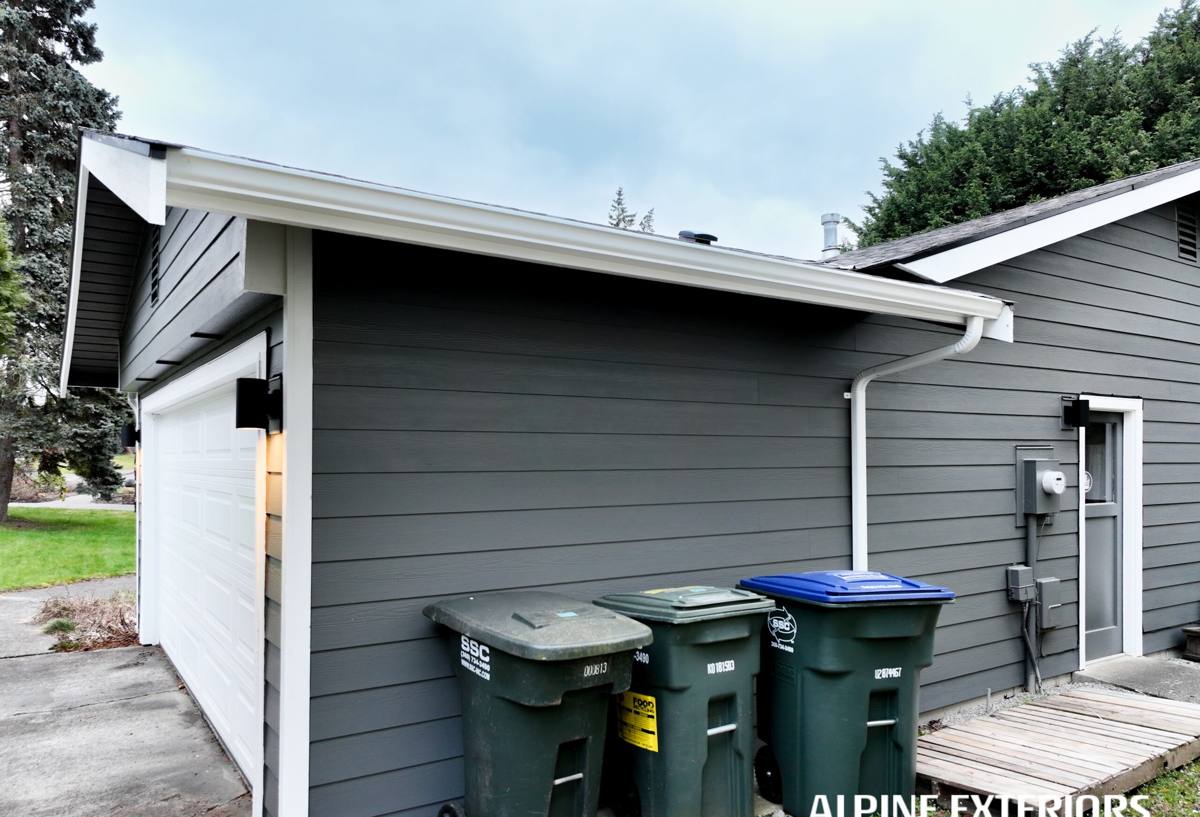
What Allura Gets Right
To be fair to Allura, it's a legitimate fiber cement product, not a knockoff. It's manufactured from the same basic recipe as Hardie — Portland cement, sand, cellulose fiber, and water, cured under pressure. That means it shares fiber cement's core advantages over vinyl or wood: it doesn't warp, it resists insects, and it's far more fire-resistant than most alternative claddings. Allura also tends to price a bit below Hardie, which is a real consideration for homeowners working with a tight budget.
If Allura were installed and maintained perfectly, on a mild climate, it would likely perform reasonably well. Our objection isn't that Allura is a bad material in a vacuum — it's that we don't think it holds up as well as Hardie under the specific stresses a St. Petersburg roofline actually sees, and we don't think the manufacturer backing is as strong when something does go wrong.
Where the Line Gets Drawn
Fiber cement siding is only as good as three things: the exact formulation, the factory finish, and the installation. Get any one of those wrong and you trade wood-rot problems for cracking, moisture intrusion, or finish failure instead. That's the lens we use to evaluate every fiber cement product, and it's the lens that pushed us toward carrying only one brand.
Manufacturing Track Record and Climate Engineering
James Hardie invented fiber cement siding for the U.S. market and has spent decades refining it specifically for regional climates. Its HardieZone system engineers separate product formulations for different climate zones — HZ10 for northern freeze-thaw regions and HZ5 for hot, humid, storm-exposed regions like ours. That's not a marketing label; it changes the moisture content and density specs baked into the board before it ever reaches a job site.
Allura does not offer that kind of climate-zoned product line. It sells one general fiber cement formulation nationally. For a lot of the country, that's not a meaningful gap. For a house in Pinellas County that deals with sustained summer humidity, wind-driven rain during tropical systems, and salt-laden air off Tampa Bay and the Gulf, a product engineered generically rather than for this specific exposure is a harder sell.
What St. Petersburg's Climate Actually Demands
- Hurricane-force wind: Siding has to stay fastened and intact under sustained high winds and wind-blown debris, year after year, not just survive one storm.
- Intense, near year-round UV: Florida sun degrades pigments and clear coats faster than in most of the country, which shows up first as fading and chalking.
- Wind-driven rain: Rain doesn't just fall here, it's pushed sideways into laps, seams, and butt joints, which is where moisture intrusion actually starts.
- Salt air: Coastal and near-coastal air accelerates corrosion of fasteners and trim, and it's harder on painted and coated surfaces generally.
None of that is exotic information — it's just the honest baseline for anything installed on the outside of a home in this part of Florida. It's also exactly the set of conditions HardieZone HZ5 formulations were built around, and it's why we treat "climate-engineered for this zone" as a real differentiator rather than a marketing checkbox.
Factory Finish: ColorPlus vs. Standard Coatings
Finish is where a lot of fiber cement siding actually fails first, long before the board itself has a problem. James Hardie's ColorPlus Technology is a baked-on, multi-coat factory finish applied and cured under controlled conditions, and it carries its own dedicated finish warranty separate from the substrate warranty. Allura offers factory-primed and some prefinished options, but the finish programs and warranty backing behind them are not built out to the same degree.
In a market with this much UV exposure, the factory finish is doing a lot of work. A finish that fades, chalks, or peels early means repainting a fiber cement wall years sooner than expected — which erases a big part of the low-maintenance pitch that justified paying for fiber cement over vinyl in the first place.
Warranty Structure: What You're Actually Covered For
Warranty paperwork looks similar across fiber cement brands until you compare the actual terms. Length of coverage matters, but so does whether the finish is covered separately, whether the warranty is transferable to a future buyer, and how the manufacturer has actually handled claims over time.
| Factor | James Hardie | Allura |
|---|---|---|
| Substrate warranty | Long-term, non-prorated coverage on the fiber cement board | Warranty offered, terms and length vary by product line |
| Finish warranty | Separate ColorPlus finish warranty on factory-finished products | Finish coverage tied to specific prefinished products, less standardized |
| Transferability | Transferable to subsequent homeowners under standard terms | Transfer terms vary by product and are less consistently marketed |
| National contractor network | Large, established network of factory-trained installers | Smaller network; fewer installers with brand-specific factory training |
None of this means Allura's warranty is worthless. It means that when we're the ones putting our reputation behind a 30-year siding job, we want a manufacturer with the longest, most consistently enforced track record standing behind it — and for fiber cement, that's Hardie.
Installation Sensitivity Is the Real Risk
Fiber cement is unforgiving of shortcuts, regardless of brand. Improper fastening, wrong nail placement, insufficient clearance from the roofline or ground, unsealed butt joints, and skipped flashing details are the actual causes of most fiber cement siding failures — moisture gets behind the board, and once it does, cracking and delamination follow.
Because James Hardie has invested heavily in contractor training and certification programs, there's a deeper and more established pool of installers who know its specific installation requirements cold. That matters just as much as the board itself. A perfectly good fiber cement product installed by a crew unfamiliar with its specific fastening and clearance requirements will fail early — and that's a risk we're not willing to take on for a coastal Florida home.
Cost Factors Worth Understanding
| Factor | Impact on Total Cost |
|---|---|
| Material price per square | Allura typically prices somewhat below Hardie for comparable board profiles |
| Factory finish vs. field painting | Unfinished or lower-tier prefinished boards shift painting cost and labor to the homeowner sooner |
| Installer availability | A smaller trained-installer network can mean fewer competitive bids and less installation quality assurance |
| Repaint and maintenance cycle | A weaker factory finish in high-UV climates shortens the interval before repainting is needed |
| Resale and warranty transfer | Stronger, more transferable warranties can support home value at resale |
Looking only at the upfront material quote misses most of what actually determines the real cost of fiber cement siding over 20 or 30 years in this climate.
What to Ask Any Contractor Quoting Fiber Cement
- Which specific fiber cement product line and climate formulation is being quoted, not just "fiber cement"?
- Is the finish factory-applied and warrantied separately from the board itself?
- Is the installer factory-trained or certified on this specific product?
- What does the warranty actually say about transferability if the home sells?
- What clearance, fastening, and flashing details will be followed at hips, valleys, and ground level?
- How has this manufacturer's warranty held up on actual claims, not just what the brochure promises?
Why We Standardize on James Hardie
We install one fiber cement brand because we'd rather be excellent at one system than average at several. James Hardie's HZ5 climate-specific engineering, ColorPlus factory finish, and the strength and transferability of its warranty line up with what a St. Petersburg home actually needs to survive hurricane season after hurricane season without repeat maintenance calls. Allura is a legitimate competitor in the fiber cement category, but on the specific points that matter most in Pinellas County — climate-zoned formulation, factory finish durability, and warranty backing — it's not the product we're willing to stake a full siding job on.
If you're weighing fiber cement options for a home in St. Petersburg or anywhere else in Pinellas County, we're happy to walk through what we see on real houses in this climate and why we land where we do. Reach out for a free, no-pressure estimate — there's no obligation, and we'll give you a straight answer even if it's not the one you expected.