 St. Petersburg Siding
 Siding Built for Childs Park's Real Conditions
Childs Park is one of St. Petersburg's established residential neighborhoods, with a housing stock that spans decades of Florida construction — from older single-story frame homes to more recent renovations and infill builds. Whatever era a house in this part of Pinellas County was built in, the exterior siding is doing the same job every single day: keeping wind-driven rain out, standing up to intense year-round UV, and surviving the salt-laden air that moves inland off Tampa Bay and the Gulf. That combination is harder on a house than most homeowners realize until they're dealing with the consequences — soft trim boards, chalky faded paint, or siding that's started to separate at the seams.
We work throughout St. Petersburg and Pinellas County, and Childs Park comes with its own set of considerations: mature tree canopy on some streets that keeps homes shaded (good for cooling bills, but it also means more debris and moisture sitting against siding after storms), a mix of home ages and prior renovation quality, and the same hurricane exposure that every neighborhood in this part of the state has to plan around. A siding job here isn't the same as a siding job in a brand-new subdivision with uniform lot setbacks and identical house plans — it takes someone who's actually looked at the house in front of them.
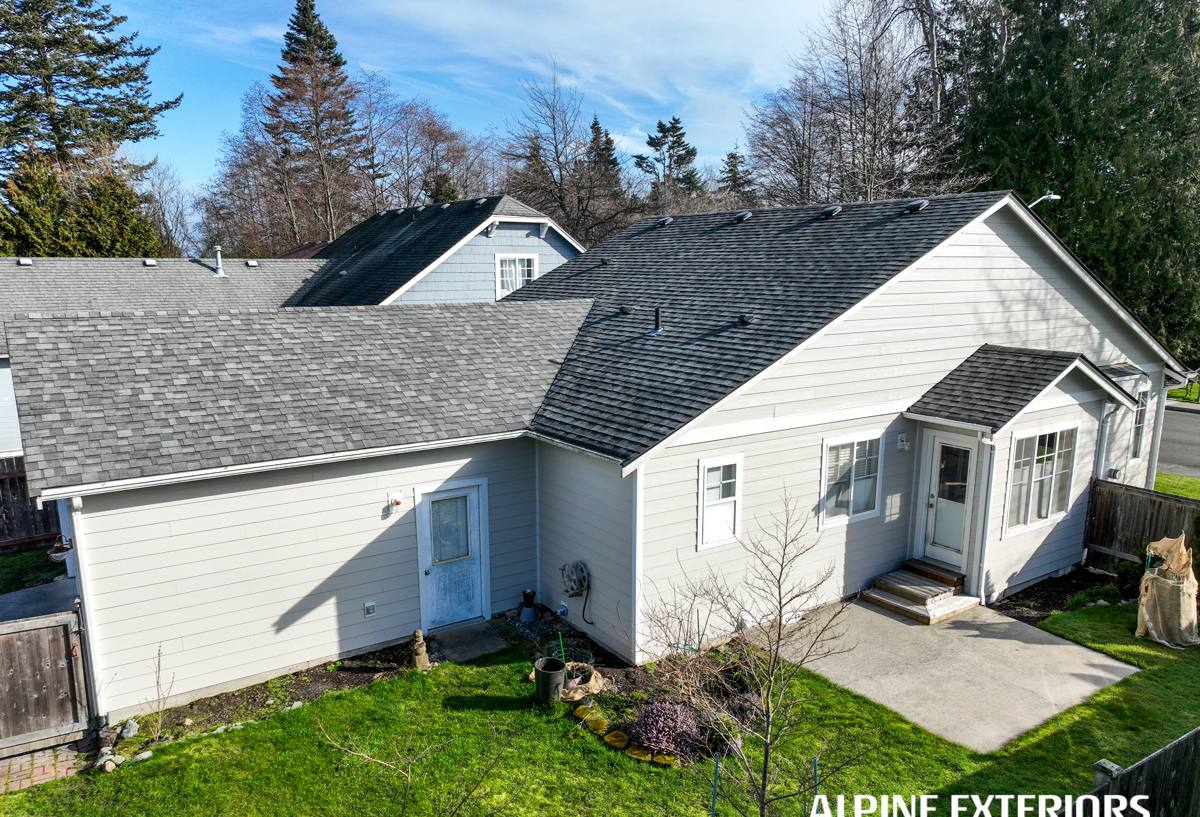
What St. Petersburg's Climate Does to Exterior Siding
Florida's Gulf Coast climate is uniquely hard on building exteriors, and it attacks siding through a few specific mechanisms:
Heat and UV Exposure
St. Petersburg gets some of the most consistent sun exposure in the continental United States. Constant UV breaks down pigments and polymers over time — it's why cheaper paint jobs and lower-grade siding products fade, chalk, and lose their finish well before their expected lifespan. Materials that expand and contract with daily heat cycles are also more prone to warping and joint failure over the years.
Wind-Driven Rain
Afternoon storms in the summer, plus the broader threat of tropical systems and hurricanes, mean siding here regularly deals with rain being pushed sideways into the wall assembly, not just falling straight down. Products and installation details that work fine in a drier, calmer climate can let water behind them here — and once moisture gets behind siding, it doesn't dry out quickly in Florida's humidity.
Salt Air
St. Petersburg sits on a peninsula, and salt-laden air moves through neighborhoods well beyond the immediate waterfront. Salt accelerates corrosion on fasteners and metal components and speeds up the breakdown of some siding materials and finishes. It's a slow, cumulative effect that shows up as premature aging rather than a sudden failure.
Hurricane-Force Wind
Pinellas County homes need siding that's rated and installed to hold up under high wind loads, including wind-borne debris impact. This isn't optional in Florida — it's a baseline requirement for any exterior product and installation method we'd put our name on.
Why We Install James Hardie — and Only James Hardie
We are a James Hardie-exclusive contractor. We don't install vinyl siding, LP SmartSide, Cemplank, Allura, or primed wood siding like spruce or cedar. That's a deliberate standard, not a sales pitch, and it's worth explaining honestly.
Vinyl siding is inexpensive and easy to install, which is exactly why it's everywhere. But in intense, sustained Florida sun it can soften, warp, or become brittle over time, and it's a poor match for the wind and impact resistance homes need in a hurricane-prone county. Wood-based products — including engineered wood siding like LP SmartSide, and traditional primed wood like cedar or spruce — perform well in drier, more temperate climates, but wood fiber and moisture are a difficult combination in a place with St. Petersburg's humidity and rain exposure. Even with good paint and maintenance, wood-based siding needs more upkeep here than most homeowners want to sign up for. Other fiber cement brands, like Cemplank or Allura, are legitimate products in the same general category as James Hardie — but we've standardized on Hardie specifically because of its climate-engineered product lines, factory-applied finish system, and the depth of its track record in exactly this kind of coastal, hurricane-exposed climate.
James Hardie fiber cement is non-combustible, resists moisture far better than wood-based alternatives, and its HardieZone HZ10 product line is engineered specifically for climates like ours — high humidity, intense UV, and storm exposure. The ColorPlus finish is baked on in a factory-controlled process rather than field-applied, which means better fade resistance and a more consistent finish than a job-site paint job can typically deliver. It also carries a strong, transferable limited warranty when installed to spec — something that matters if you ever sell the home.
James Hardie Product Comparison
| Product Line | Best Use | Key Trait |
|---|---|---|
| HardiePlank Lap Siding | Most common choice for full re-sides | Classic lap look, multiple textures and widths |
| HardieShingle | Accent areas, gables, full-shingle exteriors | Staggered or straight-edge shingle profile |
| HardiePanel | Modern/vertical siding designs | Vertical board-and-batten style applications |
| HardieTrim | Fascia, corner boards, window/door trim | Matches siding durability at trim details |
How a Siding Project Works in Childs Park
Every home is different, but a typical project follows a consistent process:
- On-site assessment — we look at the existing siding, sheathing, trim, and any moisture or damage issues before quoting anything.
- Product and color selection — choosing the right HardiePlank profile, texture, and ColorPlus finish for the home's style and the neighborhood's character.
- Removal and inspection — old siding comes off, and we check the wall sheathing and framing underneath for hidden rot or water damage before closing anything back up.
- Weather barrier and flashing — proper house wrap and flashing at every window, door, and penetration is what actually keeps wind-driven rain out, not just the siding itself.
- Installation to manufacturer spec — correct fastener type, spacing, and clearances matter for both wind performance and warranty coverage.
- Final walkthrough — caulking, trim details, and cleanup before we call the job done.
Roofing, Windows, and Decks — The Rest of the Exterior
Siding doesn't work in isolation. A house's exterior is a system, and problems in one area often show up as damage in another. We also handle:
- Roofing — a roof that's letting water in will eventually cause rot and staining at the siding and trim below it, no matter how good the siding is.
- Windows — poorly flashed or aging windows are one of the most common sources of hidden water intrusion around a home's exterior.
- Decks — Florida's sun and rain cycle is just as hard on deck materials as it is on siding, and a deck attached to the house needs to be flashed correctly where it meets the wall.
Being able to look at a home's roof, windows, siding, and deck together — instead of treating them as unrelated projects — usually catches issues that a siding-only contractor would miss.
What Drives the Cost of a Siding Project
Every home and project is different, so we don't quote sight unseen, but these are the main factors that affect price:
| Factor | Why It Matters |
|---|---|
| Home size and wall area | More square footage of siding means more material and labor |
| Condition of existing sheathing | Rot or water damage found during tear-off adds repair scope |
| Number of stories and roof lines | Complex rooflines and second-story work take more time and equipment |
| Trim and detail work | Corner boards, window trim, and architectural details add labor |
| Product line and texture | Certain HardiePlank textures and HardieShingle work cost more than standard lap siding |
| Removal and disposal | Tearing off and hauling away old siding is part of most re-side projects |
Signs Your Siding May Need Attention
A few things worth checking on a Childs Park home, especially after a summer storm season or a few years without inspection:
- Soft or spongy spots when you press on siding or trim, which usually means moisture has gotten underneath
- Visible warping, buckling, or gaps between siding boards
- Paint that's chalking heavily or peeling in sheets rather than wearing evenly
- Staining or streaking that keeps coming back even after cleaning
- Cracked or missing caulk at trim joints, window edges, and corners
- Visible daylight or drafts felt from inside near exterior walls
None of these mean a full re-side is automatically necessary — sometimes it's a repair or a trim issue — but they're worth having a professional look at before they turn into a bigger problem.
Why a Local Crew Matters
Pinellas County has its own permitting requirements, wind-load standards, and inspection process, and a crew that works this area regularly knows how to navigate that without slowing your project down. More than that, a local crew has actually seen what St. Petersburg's climate does to different siding products and installation methods over time — which details hold up and which ones don't. That kind of hands-on, area-specific experience is hard to substitute with a crew that's just passing through the region.
If you're in Childs Park and want a straight answer on the condition of your current siding — or you're ready to talk through a full James Hardie re-side, a repair, or a roofing, window, or deck project — we're happy to take a look. Reach out for a free, no-pressure estimate using the form below.