 St. Petersburg Siding
 Why Kenneth City Homes Take a Beating on Their Exteriors
Kenneth City sits inland enough to feel like a quiet residential pocket, but it's still Pinellas County — close enough to Tampa Bay and the Gulf that salt-laden air, wind-driven rain, and hurricane-season gusts reach every block, not just the waterfront ones. Add in Florida's year-round UV load and the humidity that never really lets up, and you've got four separate stresses working on a home's siding at the same time: moisture intrusion, sun degradation, wind pressure, and salt corrosion. Most siding materials are built to handle one or two of those well. Very few handle all four for decades without babysitting.
That's the real story behind most siding failures we see in this area. It's rarely one dramatic storm. It's years of small compromises — a caulk joint that dried out and cracked in the sun, a seam that let humidity behind the panel, a fastener that backed out under repeated wind flex — finally adding up. A siding job done right for Kenneth City has to be engineered for that slow accumulation, not just rated to survive a single named storm.
What Fiber Cement Actually Solves Here
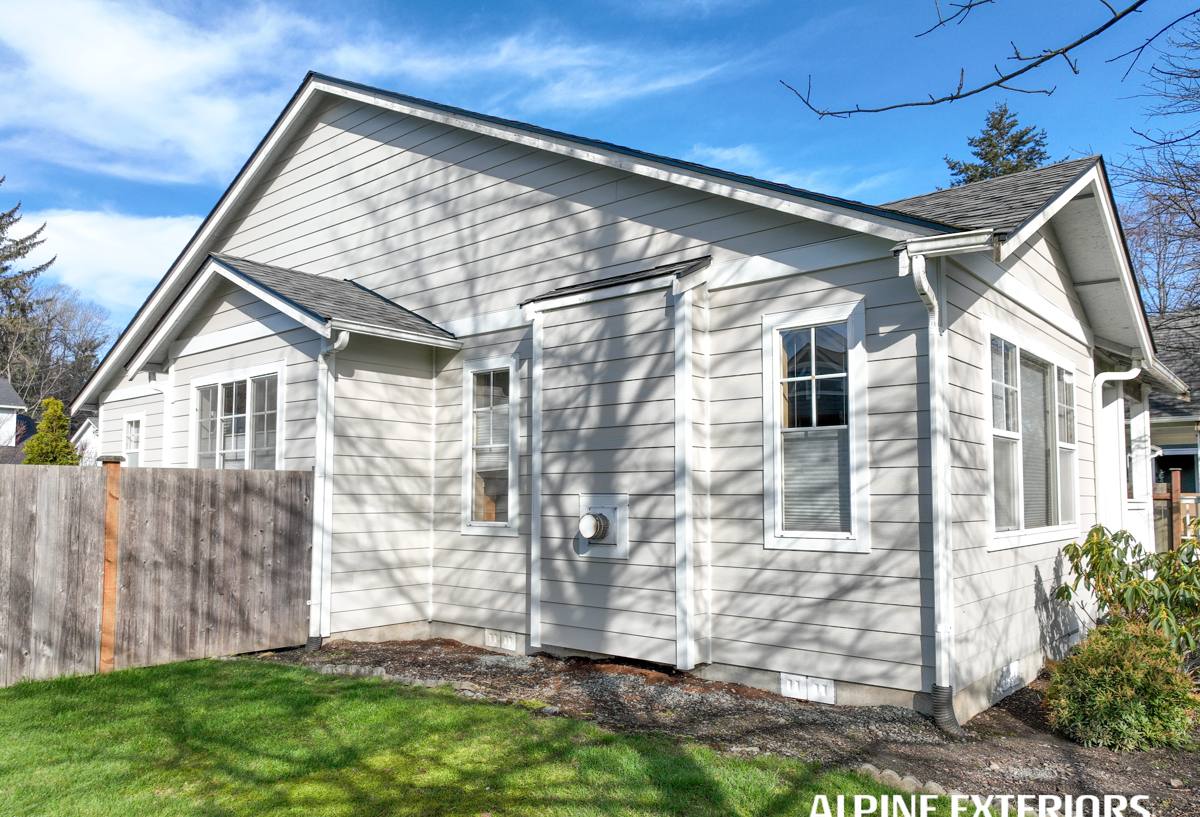
Fiber cement siding is a mix of cement, sand, and cellulose fiber pressed and cured into planks and panels. It doesn't rot, it doesn't feed termites, and it doesn't warp or delaminate the way wood-based products can when humidity sits against them season after season. It's also non-combustible, which matters less for wind and rain but is a real, practical advantage over any wood-based or wood-fiber siding product in a state where lightning-driven brush fires and neighborhood fires do happen.
None of that means fiber cement is automatically bulletproof, though. The material's real-world performance depends heavily on which specific product line you use and how carefully it's installed. That distinction — climate-engineered product plus correct installation — is the whole reason this page exists.
Why We Only Install James Hardie
We install James Hardie fiber cement siding exclusively. We don't install LP SmartSide, vinyl, Cemplank, Allura, primed spruce, or cedar, and we're upfront about why: those products each carry trade-offs — moisture sensitivity, appearance limits, thinner factory finishes, or weaker long-term warranty backing — that we're not willing to put our name behind on a Florida coastal home. James Hardie is the one fiber cement manufacturer that engineers specifically for regional climate, backs the product with a strong transferable warranty, and finishes it with a factory-applied ColorPlus coating instead of relying on job-site paint.
- HZ10 climate-engineered formulation — Hardie makes different plank formulations for different climate zones. Homes in warm, humid regions like Pinellas County get the HZ10 line, engineered against moisture-related deterioration in exactly the conditions Kenneth City sees for most of the year.
- ColorPlus Technology finish — a factory-baked, multi-coat finish that resists UV fade far better than field-applied paint, which matters a lot under Florida's sun load.
- Non-combustible core — won't ignite, warp, or feed pests.
- Engineered-for-wind installation specs — Hardie publishes fastening and clearance specifications tested for wind uplift and wind-driven rain, which is what a coastal installation actually has to resist.
What a Correct Fiber Cement Job Involves
Fiber cement siding fails less often because of the material and more often because of how it went on. Almost every callback we get on a competitor's job traces back to one of a handful of installation shortcuts — not a defective product.
The details that actually matter
- Proper water-resistive barrier and flashing — every window, door, and penetration needs correctly lapped flashing so wind-driven rain has nowhere to travel behind the siding.
- Correct fastener type, spacing, and placement — Hardie specifies fastener size and pattern by wind zone; using the wrong nail gauge or spacing too wide is invisible once the job is done but shows up as loosening or cracking within a few storm seasons.
- Manufacturer-specified clearances — gaps at the bottom edge, roofline, and any grade contact keep moisture from wicking into the plank's cut edges, which is the one part of fiber cement that isn't factory-sealed.
- Caulking only where Hardie specifies it — over-caulking seams that should be left to drain, or under-caulking penetrations, are both common mistakes that trap or admit water.
- Cut-edge sealing — every field cut needs to be primed or sealed before installation, not left raw.
Skip any one of these and the siding can still look fine going up. The problems show up two, five, or ten years later — usually as soft spots, paint failure at the seams, or moisture staining that traces back to a flashing detail nobody checked at install time.
Our Process for a Kenneth City Installation
- On-site assessment — we look at your home's current cladding, existing moisture damage, window and door flashing condition, and how the house is oriented to prevailing wind and sun before we quote anything.
- Tear-off and substrate check — old siding comes off and we inspect the sheathing underneath for rot or water damage before anything new goes on. Covering up a bad substrate is how good siding fails early.
- Water-resistive barrier and flashing — installed or repaired to current code and manufacturer spec, with special attention to window and door openings, which are the most common leak points.
- Hardie plank or panel installation — fastened per James Hardie's published wind-zone specifications, not generic "standard" spacing.
- Trim, caulking, and finish detailing — corners, trim boards, and joints finished to manufacturer spec so the ColorPlus finish isn't compromised by field paint touch-ups where they're not needed.
- Final walkthrough — we go over the finished exterior with you before calling the job done.
Comparing Siding Options for a Coastal Pinellas Climate
| Factor | James Hardie Fiber Cement | Vinyl | Wood / Cedar |
|---|---|---|---|
| Wind-driven rain resistance | Strong when installed to spec | Moderate — seams and panels can flex or blow off in high wind | Weak — end grain and joints absorb moisture over time |
| UV/sun fade resistance | Strong — factory ColorPlus finish | Moderate — can chalk and fade, especially darker colors | Weak — repaint/reseal every few years |
| Salt air / humidity durability | Strong — engineered non-organic core | Good, but can become brittle over decades | Weak — most susceptible to rot and insect damage |
| Fire resistance | Non-combustible | Combustible | Combustible |
| Typical maintenance | Occasional wash, repaint only after many years | Low, but limited repair options once brittle | Regular repainting/resealing required |
Signs Your Current Siding Is Due for Replacement
- Soft spots or visible sagging when you press on the siding
- Paint that's peeling, bubbling, or chalking heavily
- Cracked, warped, or separating boards, especially near corners and seams
- Visible staining or streaking that suggests water is getting behind the cladding
- Rising energy bills that suggest the wall assembly is no longer insulating or sealing properly
- Siding that's more than 20-25 years old, regardless of appearance, if it's not fiber cement
Cost Factors Homeowners Should Understand
Every fiber cement quote in this area is shaped by a handful of factors, and understanding them helps you evaluate a bid instead of just comparing a bottom-line number.
| Factor | Why it moves the price |
|---|---|
| Home size and wall complexity | More corners, gables, and dormers mean more cuts, trim work, and labor hours |
| Substrate condition | Rotted sheathing found during tear-off has to be repaired before new siding goes on |
| Plank profile and texture | Smooth, woodgrain, and shake-style profiles are priced differently |
| Trim and accessory scope | Corner boards, frieze boards, and soffit work add to the total |
| Access and site conditions | Tight lots, fencing, or two-story sections affect labor time |
Broadly, fiber cement costs more upfront than vinyl and less than most premium wood-look alternatives, but the honest way to think about it is cost per year of service, not cost per square foot at install. A product that goes 30-plus years without needing significant repainting or repair changes the math considerably compared to something that needs attention every few years.
Why It Matters That We Already Work in Kenneth City
A crew that's worked this specific area knows things that don't show up in a generic siding estimate. We know what Pinellas County's permitting and inspection process expects for exterior work. We know the Florida Building Code's wind-borne debris and fastening requirements that apply here, and we build every installation to meet them rather than to the bare minimum in a manufacturer's install guide. We also know what this climate does to a job over the following five, ten, and twenty years, because we've gone back and looked at our own work in homes just like yours.
That local track record matters more with fiber cement than with almost any other siding material, because so much of its long-term performance depends on installation details that are invisible on day one. Hiring a contractor who's only worked inland, drier climates — and applies the same techniques here — is one of the more common reasons a Florida fiber cement job underperforms its warranty.
What to Expect When You Work With Us
We'll walk your property, look honestly at what your current siding is telling us, and give you a straightforward quote for James Hardie fiber cement siding built to hold up against Kenneth City's sun, wind, rain, and salt air — not a generic national estimate. If you're weighing your options or just want a second opinion on a quote you already have, reach out for a free, no-pressure estimate using the form below.