 St. Petersburg Siding
 Why Kenneth City Homes Need Siding Built for This Climate
Kenneth City sits in the middle of Pinellas County, a narrow peninsula with the Gulf of Mexico on one side and Tampa Bay on the other. That geography is part of what makes the area a great place to live, and it's also exactly why siding here takes more abuse than siding almost anywhere else in the country. Homes in this area deal with hurricane-force winds during storm season, intense year-round UV exposure that never really lets up, wind-driven rain that gets forced sideways into seams and joints, and a steady dose of salt air carried in off the water. Any one of those on its own is manageable. All four, every year, for decades, is what actually wears a home's exterior down.
Siding that was designed for a mild, dry climate somewhere else in the country doesn't hold up the same way once it's on a Kenneth City roofline. That's the lens we use for every siding job we do here: not "what's the cheapest option that looks fine on install day," but "what's going to still look and perform right in fifteen years."
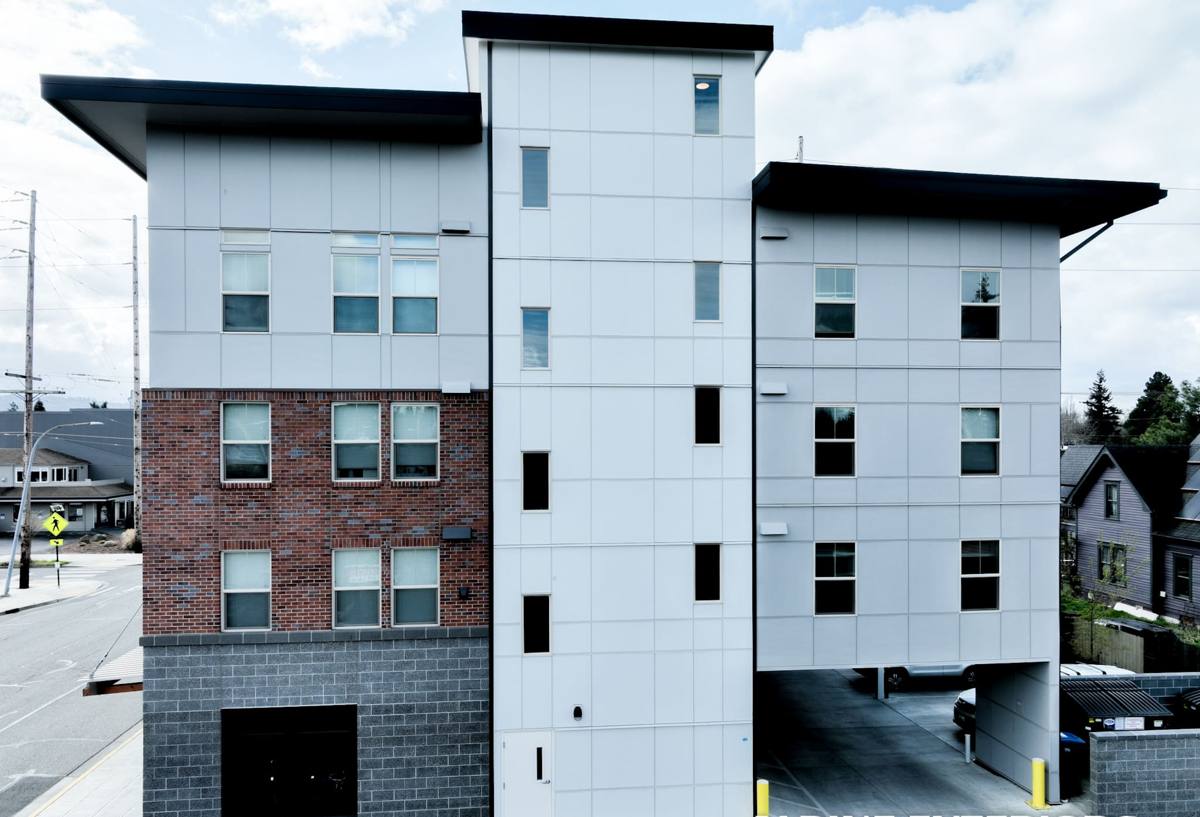
What Kenneth City's Housing Stock Means for a Siding Job
Like much of Pinellas County, Kenneth City has a mix of older, established homes alongside newer construction and renovations. That matters for siding work more than most homeowners expect. Older exterior walls were often built with different assumptions about moisture management than current code requires, and by the time siding is due for replacement, there's frequently more going on behind it than a fresh coat of anything can fix.
Common issues we find when we tear off old siding
Every home is different, and we don't diagnose a house before we've actually opened it up. But across coastal Pinellas County homes, a few patterns show up often enough that we plan for them:
- Water staining or soft sheathing near window and door openings, usually from flashing that was never installed correctly the first time
- Corroded fasteners or trim hardware from long-term salt air exposure
- Gaps or caulk failures at panel seams that let wind-driven rain track behind the cladding
- Faded, chalking paint on older siding that was never designed to hold color in constant Florida sun
- Insulation or house wrap that's degraded and no longer doing its job
None of this is unusual, and it's not a reflection on the homeowner — it's just what happens to exterior walls in this climate over enough years. It's exactly why the tear-off and inspection phase of a siding job matters as much as the material you choose to put back up.
Why We Only Install James Hardie Fiber Cement
We made a decision as a company to install James Hardie fiber cement siding exclusively — not vinyl, not LP SmartSide, not primed wood or cedar, not other fiber cement brands. That's not a marketing position, it's a standard we hold ourselves to because of what we've seen this climate do to exteriors over time. Vinyl softens, warps, and fades under sustained UV and can crack in high wind events. Wood-based products need a level of ongoing maintenance and moisture vigilance that most homeowners don't sign up for. James Hardie's fiber cement is non-combustible, dimensionally stable in heat and humidity swings, and engineered specifically for the conditions we're describing.
The HZ5 exposure zone and what it means here
James Hardie engineers its siding for different climate zones across the country, and Pinellas County falls into the HZ5 zone — the line built for high humidity, heavy rain exposure, and the freeze-thaw isn't the concern here, moisture and heat cycling is. HZ5 panels are formulated to resist moisture absorption and hold up under sustained humidity better than a generic, one-size-fits-all siding product. Combined with the ColorPlus factory-applied finish, which is baked on rather than field-painted, you get a finish designed to resist fading and chalking under exactly the kind of relentless UV Kenneth City gets. It also carries a strong, transferable manufacturer warranty — worth something concrete when a product is expected to perform for decades in this environment.
What a Correct James Hardie Installation Actually Involves
The material is only half the equation. James Hardie siding performs the way it's engineered to only when it's installed to the manufacturer's specifications — and in a wind and rain-driven climate like this one, the details that get skipped are usually the ones that cause problems five or ten years down the road, not five months.
The details that get skipped on rushed jobs
A correct installation includes things a homeowner often can't see once the job is done, which is exactly why it matters who's doing the work:
- Proper house wrap or weather-resistive barrier installed and lapped correctly before any siding goes up
- Flashing installed at every window, door, and roofline transition — not caulk used as a substitute for flashing
- Correct fastener type, spacing, and placement per James Hardie's published installation guide, not a generic nailing pattern
- Proper clearances between the bottom of the siding and the roofline, deck, or grade, so water has somewhere to go
- Panel joints and seams treated the way the manufacturer specifies, not just caulked over and painted
- Correct handling and cutting practices — fiber cement produces silica dust and needs to be cut with the right equipment and precautions
Skip any of these and the siding can still look fine on installation day. The problems show up later — as trapped moisture, failed seams, or wind uplift in the next tropical storm — and by then they're a lot more expensive to fix than they would have been to do right the first time.
Comparing Siding Options for a Coastal Pinellas County Home
Homeowners researching siding replacement usually come across several options. Here's an honest look at how they compare for a home dealing with Gulf Coast conditions:
| Factor | James Hardie Fiber Cement | Vinyl | Wood / LP SmartSide |
|---|---|---|---|
| Wind resistance | Engineered and rated for high-wind installation | Can crack or blow off in severe wind events | Depends heavily on installation quality |
| UV / fade resistance | ColorPlus factory finish resists fading and chalking | Prone to fading and can become brittle over time | Field-applied paint needs regular recoating |
| Moisture behavior | Engineered for humidity; won't rot | Doesn't absorb moisture but can trap it behind panels | Vulnerable to moisture intrusion and rot if compromised |
| Salt air durability | Strong long-term track record | Can become brittle faster near the coast | Requires vigilant maintenance near salt air |
| Combustibility | Non-combustible | Combustible | Combustible |
| Warranty | Strong, transferable manufacturer warranty | Varies by manufacturer, often prorated | Varies, often shorter or more conditional |
Every product on that list has homeowners who are happy with it somewhere in the country. Our position is simply that, for a Gulf Coast Florida home, the trade-offs on the other options are ones we're not willing to install and stand behind.
Our Process for a Kenneth City Siding Project
The process is straightforward, but we don't skip steps to move faster:
- On-site assessment — we look at your current siding, the condition of the substrate underneath where accessible, and any problem areas around windows, doors, and trim.
- Measurement and material planning — exact measurements, panel and trim selection, and a clear written estimate before any work starts.
- Tear-off and inspection — old siding comes off and we inspect the sheathing and house wrap underneath, flagging anything that needs repair before new siding goes up.
- Weather barrier and flashing — house wrap and flashing installed correctly at every penetration and transition point.
- James Hardie installation — panels installed to manufacturer spec, with correct fastening, spacing, and clearances.
- Final inspection and cleanup — a walkthrough with you, and the site cleared of debris and old material.
Maintaining Hardie Siding in This Climate
One of the advantages of fiber cement is how little maintenance it actually needs compared to other siding materials, but "low maintenance" doesn't mean "no maintenance," especially with salt air in the mix. A simple annual rinse-down with a garden hose or soft wash to clear off salt residue, pollen, and grime goes a long way. It's worth doing a walk-around after major storms to check caulking at seams and trim for any separation, since wind-driven rain will find any gap that opens up. Keeping gutters clear and shrubbery trimmed back from the siding also helps — trapped moisture and debris against any exterior surface is bad news in this climate, no matter what it's made of.
Why Local Experience in Kenneth City Matters
A siding job is only as good as the crew doing it, and a crew that regularly works in Pinellas County brings something a traveling or out-of-market contractor doesn't: familiarity with how homes in this specific environment behave, what local permitting and wind-load requirements actually call for, and what tends to go wrong when a job is done to a lower standard. We're not learning the coastal Florida playbook on your house.
If you're comparing contractors for a siding project, a few questions tend to separate the ones who do this correctly from the ones cutting corners:
- Are they licensed and insured to work in Florida, and can they show proof without hesitation?
- Do they install to James Hardie's published specifications, including flashing and fastening details, or just "however it's always been done"?
- Will they show you what they found once the old siding is off, before it's covered back up?
- Do they give you a written estimate that spells out materials, not just a lump-sum number?
- Can they explain why they recommend the specific product and line they're proposing for your home?
If a contractor can't answer those clearly, that's worth paying attention to before you sign anything.
If your Kenneth City home is due for new siding, we're happy to take a look and walk you through what we find — no pressure, no obligation. Reach out for a free estimate using the form below.