 St. Petersburg Siding
 Why Board & Batten Fits Seminole Homes So Well
Board and batten has become one of the most requested siding profiles for homeowners in Seminole and the surrounding Pinellas County communities. The wide vertical panels and narrow battens covering each seam give a home the crisp, linear shadow lines that work equally well on a coastal cottage remodel, a modern farmhouse update, or a gable-end accent on an otherwise traditional Florida ranch. It reads as clean and architectural without looking busy, and it pairs naturally with the metal roofing, shutters, and simple trim details common on homes in this part of the Gulf Coast.
The catch is that board and batten is not just a cosmetic choice. The pattern itself — tall panels, narrow vertical seams, and battens fastened over those seams — behaves differently in wind and rain than traditional horizontal lap siding. In a climate that regularly delivers hurricane-force gusts, sideways rain, and relentless sun, the profile you choose and the material it's made from matter as much as how it looks from the street.
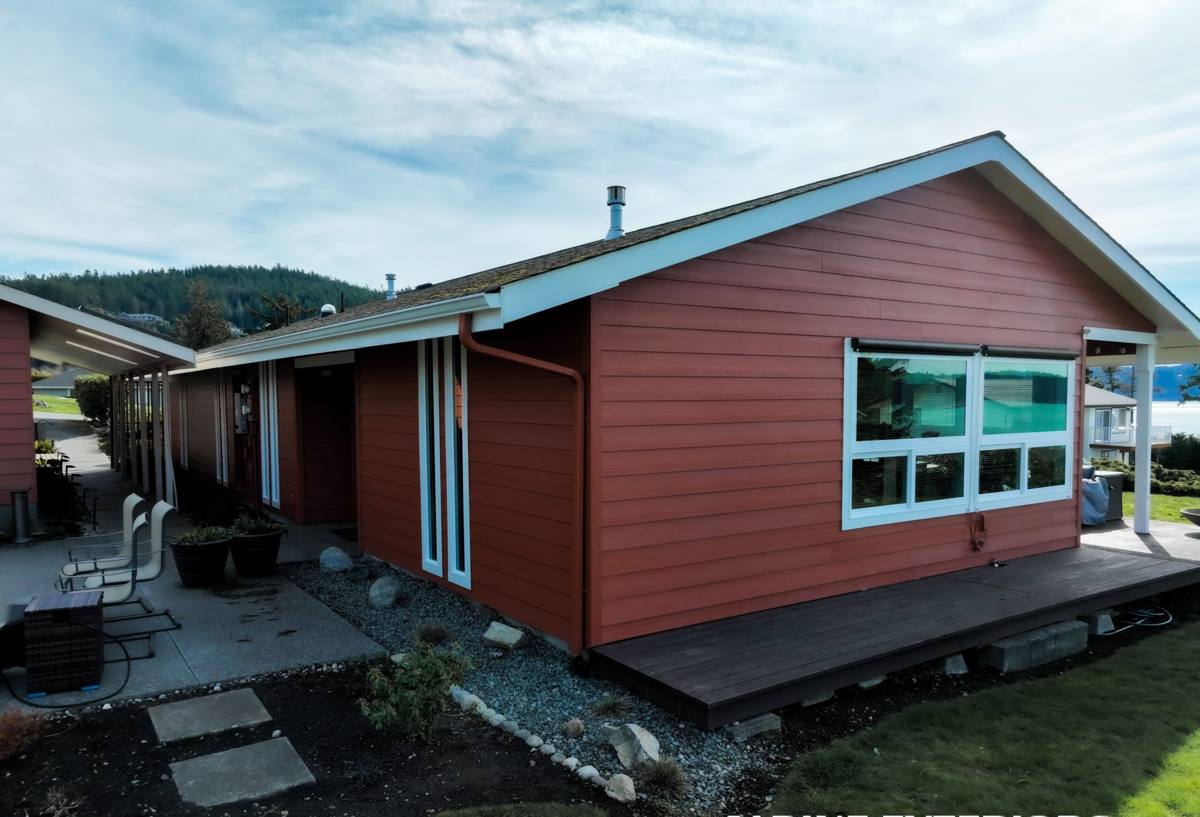
What Seminole's Climate Does to Board & Batten Siding
Seminole sits inland from the Gulf but still close enough to Boca Ciega Bay and the barrier islands that salt-laden air, humidity, and coastal storm exposure are part of daily life for every exterior surface on a home. Board and batten takes that exposure differently than lap siding, and it's worth understanding why before you pick a material.
Hurricane-Force Wind Loads
Wide, flat panel faces catch more wind than narrow lap boards, and every vertical seam is a potential point of failure if the fastening schedule underneath isn't matched to the wind zone. Under-nailed or improperly spaced battens are one of the most common reasons board and batten siding fails first in a storm — not because the material is wrong, but because the installation didn't account for the uplift forces a Gulf Coast storm can generate.
Year-Round UV Exposure
Florida's sun doesn't take an off-season. Paint films chalk, fade, and eventually crack under that kind of steady UV load, and unlike lap siding where color variation is harder to notice, board and batten's long unbroken vertical runs make any fading or streaking on the flat panel faces very visible from the street.
Wind-Driven Rain
Storms here rarely deliver rain straight down. Wind-driven rain gets forced sideways and upward into vertical seams, which is exactly where board and batten has the most joints per square foot of wall. Without a properly lapped weather-resistant barrier and correctly detailed flashing behind every seam, water finds its way behind the battens and into the sheathing — often for months before anyone notices a soft spot or stain.
Salt Air and Coastal Corrosion
Fasteners matter more here than almost anywhere else. Standard nails corrode faster in salt-influenced air, and once a fastener starts to fail, the batten it's holding starts to work loose, which opens the seam behind it to moisture. This is a slow, invisible failure mode that shows up as popped battens and streaking years after installation if the wrong fasteners were used in the first place.
Why We Only Install James Hardie for This Look — Not Vinyl, LP SmartSide, or Wood
Board and batten can be built from several different materials, and each one handles Seminole's climate differently. We've made a deliberate decision to install James Hardie fiber cement exclusively, and it's worth explaining honestly what that decision is based on rather than just asserting it.
Vinyl Board and Batten
Vinyl panels are light, inexpensive, and easy to install quickly, and there's nothing wrong with that for some applications. But vinyl expands and contracts significantly with Florida's temperature swings, and on the long, unbroken vertical runs that board and batten requires, that movement is more visible than on shorter lap pieces. In sustained high heat it can soften and oil-can, and its wind resistance in gusty, storm-prone conditions is generally lower than fiber cement once battens and trim accessories are factored in.
LP SmartSide Board and Batten
LP SmartSide is an engineered wood product, which means its performance depends heavily on every cut edge and seam being properly sealed and maintained. Board and batten inherently has more panel edges exposed per square foot than lap siding, and in a humid, storm-exposed climate that means more points where moisture can work into the substrate if maintenance slips even briefly. It's a legitimate product for some markets — we simply don't think it's the right match for what this coastline throws at a home over 20-plus years.
Real Wood — Primed Spruce or Cedar
Nothing looks quite like real wood board and batten, and we understand the appeal. But it's also the highest-maintenance option by a wide margin here: repainting every few years, a real risk of splitting and checking under UV exposure, and genuine vulnerability to rot and insect damage in a humid coastal environment. Battens fastened to solid wood also loosen as the wood moves seasonally, which reopens the seams the battens are supposed to protect.
Why Hardie Fiber Cement
James Hardie's fiber cement is engineered specifically for high-humidity, storm-exposed climates through its HZ10 formulation, built for the Gulf Coast and Southeast. It doesn't expand and contract the way vinyl does, it won't rot, warp, or attract termites the way wood can, and it's non-combustible. The factory-applied ColorPlus finish is baked on under controlled conditions rather than field-painted, which gives it meaningfully better UV and fade resistance than a job-site paint job on wood or a color molded into vinyl. That combination — dimensional stability, moisture tolerance, and a finish designed to hold its color in direct sun — is why it's the only material we put behind a board and batten profile.
The Hardie Board & Batten System — and What a Correct Installation Verifies
The board and batten look in fiber cement is achieved using HardiePanel vertical siding as the base panel, with HardieTrim boards installed over the seams to create the traditional batten reveal. It's a system, not just a panel, and every layer under the finish surface matters as much as the finish itself. Underneath the panels, a continuous weather-resistant barrier is lapped correctly from the bottom of the wall up, so any water that gets past the surface has a drainage path down and out rather than a place to pool. Horizontal joints get Z-flashing so water sheds forward off the wall instead of running behind the panel below.
A board and batten job can look identical from the curb whether it was done to spec or not — the difference usually shows up years later, after the first serious storm season or two. That's why we walk every project through the same checks regardless of schedule pressure:
- Sheathing is inspected and any soft, delaminated, or water-damaged sections are repaired before a single panel goes up.
- Weather-resistant barrier is installed with proper overlap and sealed at every penetration, not just stapled up and covered.
- Flashing is installed at every horizontal joint, window head, and roof-to-wall transition before panels close it in.
- Fastener type, length, and spacing match Hardie's published schedule for the applicable wind zone — not a generic pattern used everywhere.
- Battens are checked for consistent spacing and solid attachment to framing, not just to the panel face.
- Caulking is used only at the joints Hardie's instructions specify, never to mask a missing flashing detail.
- A final walk-through checks reveal lines, seams, and fastener pattern before the job is called complete.
Our Process for Seminole Homeowners
We keep the process straightforward because homeowners deserve to know exactly what's happening to their house and why.
- Assessment. We walk the exterior, note existing moisture damage, siding condition, and any areas where past water intrusion has already affected the sheathing.
- Written scope. The proposal spells out the Hardie products specified, the fastening and flashing details we'll follow, and how the property's wind zone requirements are addressed — not a vague line item that just says "siding."
- Tear-off and inspection. Old siding comes off, sheathing is inspected, and any rot or damage is repaired and documented before new material goes on.
- Installation to spec. Weather barrier, flashing, panels, and battens go up in that order, following Hardie's installation manual and the correct fastener schedule for the wind zone.
- Final walk-through and warranty registration. We review the finished job with the homeowner and register the installation so the manufacturer's warranty is properly on file.
Why a Crew That Already Works in Seminole and Pinellas County Matters
Siding installation isn't identical everywhere in Florida, and a crew that regularly works Seminole and the greater St. Petersburg area brings real advantages that aren't just marketing talk. Pinellas County's wind load and permitting requirements are specific, and a crew that pulls permits here regularly knows what the local building department expects on an inspection without back-and-forth delays. There's also a practical, on-the-ground understanding of how close a given property sits to the Bay or the Gulf, which affects how aggressive the fastener and flashing details need to be — a home a few miles inland and one closer to the water don't need the identical approach, and a crew that works this specific area day to day recognizes the difference immediately rather than applying a generic statewide standard.
Comparing Board & Batten Material Options
| Factor | James Hardie Fiber Cement | Vinyl | LP SmartSide | Real Wood |
|---|---|---|---|---|
| Hurricane wind performance | Engineered and tested for high wind zones | Lower; often limited by trim accessories | Adequate when installed and sealed correctly | Depends heavily on fastening; loosens over time |
| Moisture tolerance | Won't rot; engineered for humid climates | Doesn't rot but seams can trap moisture | Vulnerable at cut edges if not sealed | Prone to rot and insect damage |
| UV / color retention | Factory ColorPlus finish resists fading | Molded-in color can fade and chalk | Field-painted; fades like any painted surface | Field-painted; fades and needs frequent recoating |
| Dimensional stability | Minimal expansion/contraction | Noticeable movement in heat | Stable when sealed and dry | Moves seasonally with humidity |
| Typical maintenance | Occasional wash; repaint on a long cycle | Low, but repairs are visible/patchwork | Regular edge and seam inspection | Repainting every few years |
| Fire resistance | Non-combustible | Combustible | Combustible | Combustible |
Cost Factors for Board & Batten Siding in Seminole
Every home is different, so we don't quote board and batten off a flat per-square-foot number without seeing the property. The factors below are what actually move the price up or down.
| Cost Factor | Why It Matters |
|---|---|
| Full elevation vs. accent application | A full-house install costs more than a gable-end or accent-wall treatment |
| Old siding removal and disposal | Tear-off of existing siding adds labor and disposal cost, especially with multiple layers |
| Sheathing repair | Rot or water damage found underneath existing siding needs to be repaired before new siding goes on |
| Trim and corner detail complexity | Window returns, corner boards, and transitions to other materials add labor time |
| Color and finish selection | Standard ColorPlus colors versus premium or custom finish options affect material cost |
| Height and access | Two-story sections, steep pitches, or limited access require more setup time and equipment |
| Permitting | Pinellas County permit fees and inspection scheduling are part of a properly documented job |
Maintenance and What to Expect Over Time
One advantage of a correctly installed Hardie board and batten system is how little it asks of a homeowner afterward. A periodic rinse to clear salt residue and pollen buildup, a visual check after major storms for any loose battens or fastener pops, and keeping gutters and downspouts clear so water isn't sheeting down the wall are really the extent of routine upkeep. Because the ColorPlus finish is factory-applied and UV-engineered, homeowners aren't on a repainting schedule the way they would be with wood or a field-painted product, and that matters in a climate where sun exposure is constant rather than seasonal.
If you're weighing board and batten for a home in Seminole, we're glad to walk the property, talk through what the climate here actually demands from this specific siding profile, and put together a straightforward, no-pressure estimate for the job — free of charge and with no obligation to move forward.