 St. Petersburg Siding
 Roof Repair Built for Seminole's Climate
Seminole sits close enough to the Gulf and Intracoastal that every roof in the area is doing a harder job than a roof would in most of the country. Between hurricane-season wind and wind-driven rain, near-constant UV exposure, and a steady drift of salt air off the water, roofing materials here age faster and fail in specific, predictable ways. A repair that doesn't account for those forces might look fine for a season and then open right back up at the first real storm.
We work on homes throughout St. Petersburg and Pinellas County, and Seminole roofs tend to show a consistent pattern of wear: shingle edges that curl and lift from UV breakdown, flashing that corrodes faster than inland areas because of salt air, and underlayment that's been quietly saturated by wind-driven rain finding its way under lifted shingles or through aging boots and seals. None of that shows up as an obvious "leak" until it's been happening for a while.
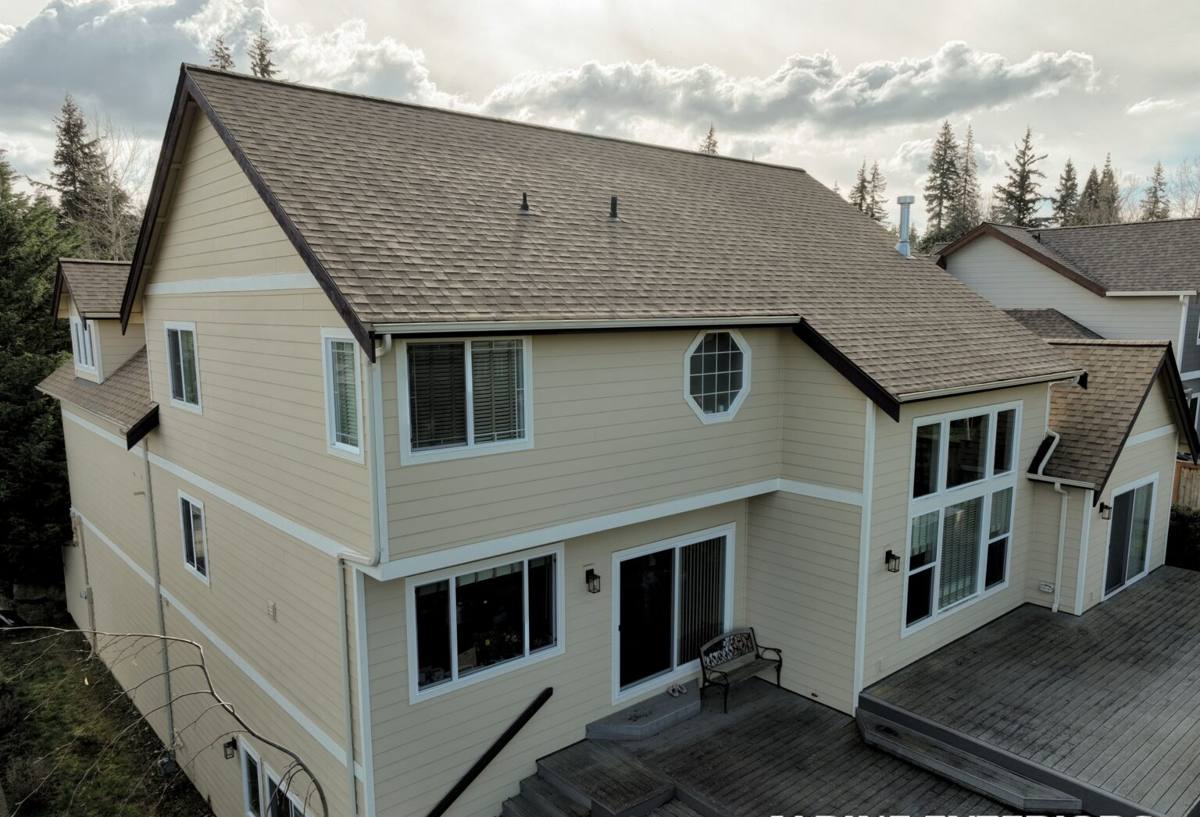
What a Correct Roof Repair Actually Involves
A lot of roof repairs fail early because they treat the visible symptom instead of the underlying cause. If a ceiling stain shows up in one spot, the water didn't necessarily enter directly above it — it can travel along rafters or decking before dropping. A repair that just patches the spot where the stain appeared, without tracing the actual entry point, is a repair that comes back.
Diagnosis Before Anything Gets Touched
Before we replace a single shingle, we get on the roof and look at the whole system: shingle condition and granule loss, flashing at every penetration (vents, chimneys, skylights), valleys, the roof-to-wall transitions, and the attic side if we can access it. Attic inspection matters more than most homeowners realize — water staining on the underside of decking, or dark trails along rafters, tells you where water is actually moving, which isn't always where it's showing up inside.
Matching the Repair to the Cause
- Wind-lifted or missing shingles: replaced with matching material and properly re-sealed, not just nailed back down over compromised underlayment
- Cracked or corroded flashing: full replacement of the flashing piece, not caulk over the gap — caulk is a stopgap, not a fix
- Failed pipe boots and vent seals: these rubber and plastic components break down from UV faster than the shingles around them and are one of the most common quiet leak sources on Pinellas County roofs
- Saturated or compromised underlayment: the affected section is opened up, the decking checked for soft spots or rot, and underlayment replaced before new shingles go back down
- Valley and roof-to-wall leaks: these concentrate more water flow than any other part of the roof and need flashing and sealant work done correctly the first time
Skipping the diagnosis step and jumping straight to patching is how homeowners end up paying for the same repair twice.
Why Salt Air and UV Change the Math
Roofing materials are rated and tested under general conditions, but a home a few miles from the Gulf doesn't experience "general conditions." Salt-laden air accelerates corrosion on any exposed metal — flashing, fasteners, vent caps — well before the shingles themselves would normally need attention. That's why a flashing repair on a Seminole roof is a different conversation than the same repair on a roof further inland: metal components need closer inspection and, often, earlier replacement.
UV exposure is the other constant pressure. Florida's sun bakes asphalt shingles, drives off the oils that keep them flexible, and leaves them prone to cracking and curling years before a shingle rated for a milder climate would show the same wear. Combine that with wind-driven rain that gets pushed sideways and upward under roof edges during storms, and you get a roof that needs more frequent inspection and faster response to small issues than the "check it every few years" advice that works elsewhere.
Common Repair Triggers We See Locally
| Cause | What It Looks Like | Why It Happens Here |
|---|---|---|
| Wind-lifted shingles | Cracked, torn, or missing shingle tabs, often after a storm | Sustained coastal wind and gusts during storm season stress shingle seals |
| Corroded flashing | Rust streaks, gaps at chimneys/walls, visible pitting on metal | Salt air accelerates metal corrosion faster than inland exposure |
| Cracked pipe boots | Leaks concentrated near plumbing vents, often slow and intermittent | Constant UV breaks down rubber/plastic seals over time |
| Granule loss | Bald patches on shingles, granules in gutters | Intense year-round sun accelerates asphalt breakdown |
| Valley leaks | Interior stains tracing to roof valleys after heavy rain | Valleys concentrate the volume of wind-driven rain typical of Gulf storms |
Our Repair Process
1. Inspection and Honest Assessment
We inspect the roof and, where accessible, the attic, and tell you plainly what we find — including if a repair genuinely isn't warranted, or if the damage is extensive enough that a repair would be a band-aid on a roof that's closer to needing full replacement. We'd rather tell you that upfront than sell you a repair that won't hold.
2. A Clear Scope Before We Start
You get a straightforward explanation of what's actually wrong, what we're going to do about it, and why — no vague line items. If the cause turns out to be broader than the original complaint (for example, a "leak near the chimney" that turns out to be corroded flashing plus a cracked boot two feet away), we'll tell you before doing extra work, not after.
3. The Repair Itself
We match materials to what's already on the roof where possible, replace compromised components rather than covering them, and re-seal and re-flash to current standards — not just to "how it was." Every repair is done with the next storm season in mind, not just the next dry week.
4. Cleanup and Walkthrough
We clear debris, check gutters and downspouts near the repair area for anything that fell during the work, and walk you through what was done and what to watch for going forward.
Why a Crew That Already Works Seminole Matters
Roofing knowledge that applies to a roof in Ohio doesn't automatically apply to a roof three miles from Boca Ciega Bay. A crew that regularly works St. Petersburg and greater Pinellas County knows which flashing details tend to fail first in this salt-air environment, how local wind patterns during storm season stress certain roof sections more than others, and what a roof that's had one hurricane season versus five looks like from the ground and from the attic. That's not something you pick up from a manual — it's pattern recognition built from working the same conditions repeatedly.
It also means faster, more accurate answers. When we look at a Seminole roof, we're not guessing at how the local climate factors in — we already know what to check first and why.
What to Check Before You Call for a Repair
- Interior ceiling stains, especially ones that appear or worsen after storms
- Missing, cracked, or curling shingles visible from the ground
- Granules collecting in gutters or at downspout outlets
- Visible rust or gaps in flashing around chimneys, skylights, or vent pipes
- Soft or discolored decking visible from the attic
- Daylight visible through the roof deck from inside the attic
- A musty smell in upper rooms or closets, which can indicate slow, hidden moisture
Catching any of these early is almost always cheaper and simpler than waiting until a small issue becomes a bigger one after the next storm.
Repair vs. Replacement: An Honest Look
Not every roofing problem calls for full replacement, and not every leak can be permanently solved with a patch. The honest answer depends on the age of the roof, how much of it is affected, and whether the damage is isolated or a sign of broader wear.
| Factor | Favors Repair | Favors Full Replacement |
|---|---|---|
| Roof age | Roof is relatively young, well within expected service life | Roof is near or past the typical lifespan for its material |
| Damage scope | Isolated to one area — a valley, a vent, a section of shingles | Widespread granule loss, multiple leak points, or repeated repairs in different spots |
| Underlying decking | Decking is sound where accessible | Soft spots or rot found in more than one area |
| Storm history | Damage traceable to a single recent event | Cumulative wear from years of UV and salt exposure |
Get a Straight Answer on Your Roof
If you're dealing with a leak, storm damage, or just want a professional set of eyes on a Seminole roof before the next storm season, we're glad to take a look. We'll tell you exactly what we find, what it would take to fix it correctly, and whether a repair or something more is the right call — no pressure either way. Reach out for a free estimate using the form below.