 St. Petersburg Siding
 What a Disston Heights Deck Is Really Up Against
A deck in Disston Heights doesn't fail because the crew that built it did bad carpentry. It usually fails because it was built like a deck in Ohio or Georgia, not a deck three miles from Tampa Bay. St. Petersburg sits on a narrow peninsula between the bay and the Gulf of Mexico, which means every structure in the city — including yours — deals with hurricane-force wind gusts during storm season, intense UV exposure essentially year-round, sudden wind-driven rain that gets pushed sideways under eaves and railings, and salt-laden air that doesn't stay confined to the waterfront. Add Florida's heat and humidity cycle, and you've got a climate that's genuinely harder on outdoor structures than most of the country.
None of that means a deck can't last for decades here. It means the design, material choices, and connection details all have to account for those conditions from the start, not get patched in later after the first hurricane season exposes what was cut short.
The Disston Heights Setting: What We Design Around
Established Lots and Mature Tree Canopy
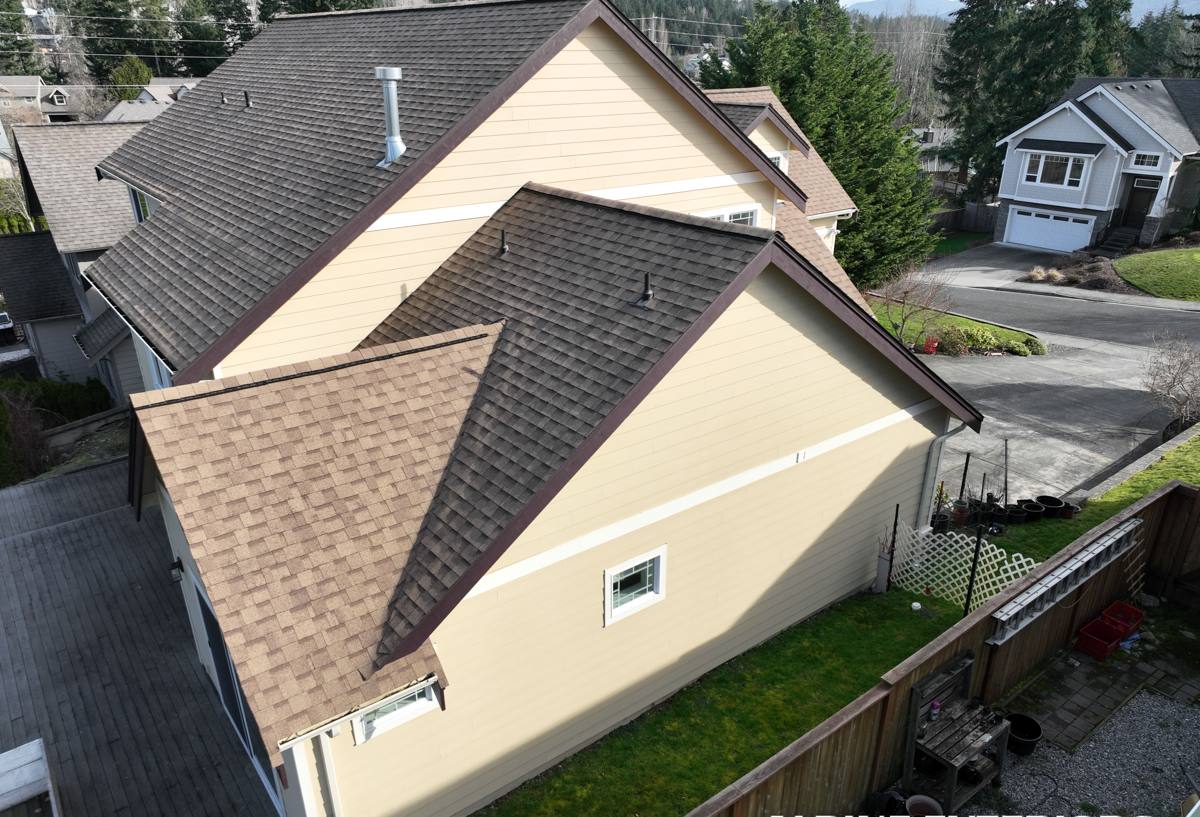
Disston Heights is one of St. Petersburg's older, established residential neighborhoods, and that shows up in the lots: mature oaks and other shade trees, moderate-sized yards, and homes that were laid out before anyone was thinking about outdoor living space as a design category. That's usually good news for a deck — established tree canopy means real afternoon shade, which matters a lot when UV exposure is a year-round issue, not just a summer one. It also means we pay close attention to root systems and drip lines when siting footings, and to how much dappled shade versus direct sun a given spot actually gets before finalizing a decking material.
Older Homes and Ledger Attachment
Many homes in this part of St. Petersburg were built decades ago, which means the wall or rim joist a new deck ties into isn't always in the condition (or configuration) that modern deck-building guides assume. Before we ever attach a ledger board, we check what's actually behind the exterior finish — solid framing, adequate fastening surface, and a way to flash it properly so wind-driven rain can't get behind the house. Skipping that step is one of the most common causes of rot and structural failure in older-home deck attachments, and it's not something that shows up until years later.
Choosing a Deck Material That Won't Fight the Climate
There's no single "best" decking material — there's a best material for your budget, your sun exposure, and how much upkeep you actually want to do. Here's how the common options hold up under Pinellas County conditions:
| Material | UV / Fade Resistance | Moisture Behavior | Maintenance | Typical Cost Tier |
|---|---|---|---|---|
| Pressure-treated pine | Fades and grays without regular finish | Prone to cupping/splitting if not sealed | Annual cleaning + resealing | Lowest |
| Tropical hardwood | Good natural resistance, still grays | Dense, low absorption when sealed | Periodic oiling to maintain color | High |
| Capped composite | Strong, color-stable | Doesn't rot; can trap heat/moisture at fasteners if not installed correctly | Occasional washing | Mid-High |
| PVC / cellular decking | Very strong, virtually no fading | Fully moisture-resistant, won't absorb water | Lowest | Highest |
Whatever decking surface you choose, the framing underneath should be treated for ground contact or, better, a naturally durable or coated material — the substructure takes the same wind-driven rain and humidity the decking does, just out of sight.
What's Under the Boards Matters More Than What's On Top
The parts of a deck nobody photographs are the parts that determine whether it survives a bad storm season. In Pinellas County, that means:
- Footings sized for wind uplift, not just weight. Florida doesn't have a frost-depth problem like northern states, but our footings still need to resist wind trying to lift the structure, not just support it.
- Hurricane ties and proper post-to-beam connections at every structural joint, not just where it's visibly obvious.
- Corrosion-resistant fasteners and hardware — standard galvanized hardware corrodes faster near coastal air than most homeowners expect, so stainless steel or coated fasteners rated for coastal exposure are worth the difference in cost.
- Proper ledger flashing so water is directed away from the house structure instead of trapped against it.
- Spacing and drainage details that let a deck dry out fast after a downpour instead of holding moisture against the framing.
Permits and Wind-Load Requirements in St. Petersburg
Most new decks and many deck replacements in St. Petersburg require a building permit, and the structural requirements — post spacing, beam sizing, connection hardware, footing depth — are governed by the Florida Building Code's wind provisions. Pinellas County sits in one of the state's higher wind-design zones given its coastal exposure, which means the code expects more robust framing and connection hardware here than it would in an inland, low-wind-zone state. Skipping the permit doesn't just create legal risk if you sell the home later — it also means nobody with code knowledge ever checked that the structure can actually take a real storm.
We handle the permit drawings and submission as part of the project, and if the design needs an engineer's stamp because of size, height, or attachment method, we coordinate that too. It's part of the job, not an upsell.
How We Build Your Deck, Start to Finish
- On-site visit and measurement. We walk the lot, look at grade, sun exposure, tree roots, and how the deck will tie into the house.
- Design and material selection. We go over layout, decking and railing options, and trade-offs so you're choosing based on real information, not guesswork.
- Permit drawings and submission. We prepare and file what the city requires, including engineering if the design calls for it.
- Demo of the old structure, if a deck is being replaced rather than added new.
- Footings and framing, built to the wind-load and connection standards described above.
- Decking, railing, and stairs installed per the material and design you chose.
- Final inspection with the city, and a walkthrough with you before we consider the job done.
Keeping a Disston Heights Deck Looking Right Year After Year
Every decking material needs some upkeep in this climate — the amount just varies. A basic seasonal routine goes a long way:
- Rinse off pollen, salt film, and organic debris every few months, more often near trees.
- Check fastener heads and connectors for corrosion once or twice a year.
- Reseal or refinish wood decking on the schedule the product actually needs, not just when it looks bad.
- Keep gutters and downspouts clear so runoff isn't dumping extra water onto or under the deck.
- After any major storm, walk the structure and check railings, stair connections, and ledger flashing before assuming everything's fine.
- Trim back tree limbs that overhang the deck to reduce debris buildup and moisture retention on the surface.
What Drives the Cost of a Deck Project Here
| Factor | Why It Matters |
|---|---|
| Size and footprint | More square footage means more framing, footings, and decking material |
| Material choice | Pressure-treated, hardwood, composite, and PVC all sit at different price points |
| Height and elevation | A raised deck needs more substantial framing, stairs, and often guardrails |
| Railing style | Cable, glass, and custom railing systems cost more than standard baluster railing |
| Site access | Tight side yards or mature landscaping can slow demo and material staging |
| Engineering/permit complexity | Larger or unusually configured decks may need engineered plans |
| Demo of an existing deck | Removing and disposing of an old structure adds labor before the new build starts |
Rather than quote a number that doesn't mean anything without seeing your yard, we walk the site and give you a real range based on your actual project.
Why It Matters That We Already Work in This Area
Building decks for the St. Petersburg and Pinellas County climate isn't the same skill set as building them somewhere with mild weather and no hurricane season. A crew that regularly works in this area already knows which fastener grades hold up to salt air, what the city's permitting office expects in a set of drawings, and how to size framing for wind loads without treating it as an afterthought. That local familiarity translates into fewer surprises during permitting, fewer callbacks for corrosion or water damage down the line, and a deck that's actually built for the conditions it has to survive — not a generic design dropped into a Florida lot.
If you're weighing a new deck or replacing one that didn't hold up, we're happy to take a look and talk through honest options for your property. Request a free, no-pressure estimate using the form below, and we'll walk you through what a deck built for this climate actually involves.