 St. Petersburg Siding
 Crescent Lake Homes Take a Different Kind of Beating
Crescent Lake is one of St. Petersburg's older, established in-town neighborhoods — tree-lined streets, a mix of early-to-mid-20th-century bungalows and later infill homes, all built around the park and lake the area is named for. Siding on these homes isn't dealing with abstract "Florida weather." It's dealing with a specific combination: long stretches of intense, nearly year-round UV that breaks down pigment and resin faster than most homeowners expect, hurricane-season winds and wind-driven rain that push moisture sideways into every seam and butt joint, and salt-laden air that reaches inland across the Pinellas peninsula even when a home isn't waterfront. None of these forces are unique to Crescent Lake, but the combination, applied to a housing stock that's often 50-plus years old, is why so many siding jobs in this neighborhood are replacements rather than first installs.
Mature tree canopy adds its own demands
The oak canopy that makes Crescent Lake attractive to live in also keeps siding shaded and damp longer after every rain. Shade slows drying time on north- and east-facing walls, which is exactly the condition that lets mold, mildew, and algae take hold on siding that can't shed moisture well. Falling limbs and wind-blown debris during storms also concentrate impact damage on specific elevations — usually the same walls that already carry more moisture load. A siding system has to handle both problems at once: dry out fast after rain and take a hit without cracking.
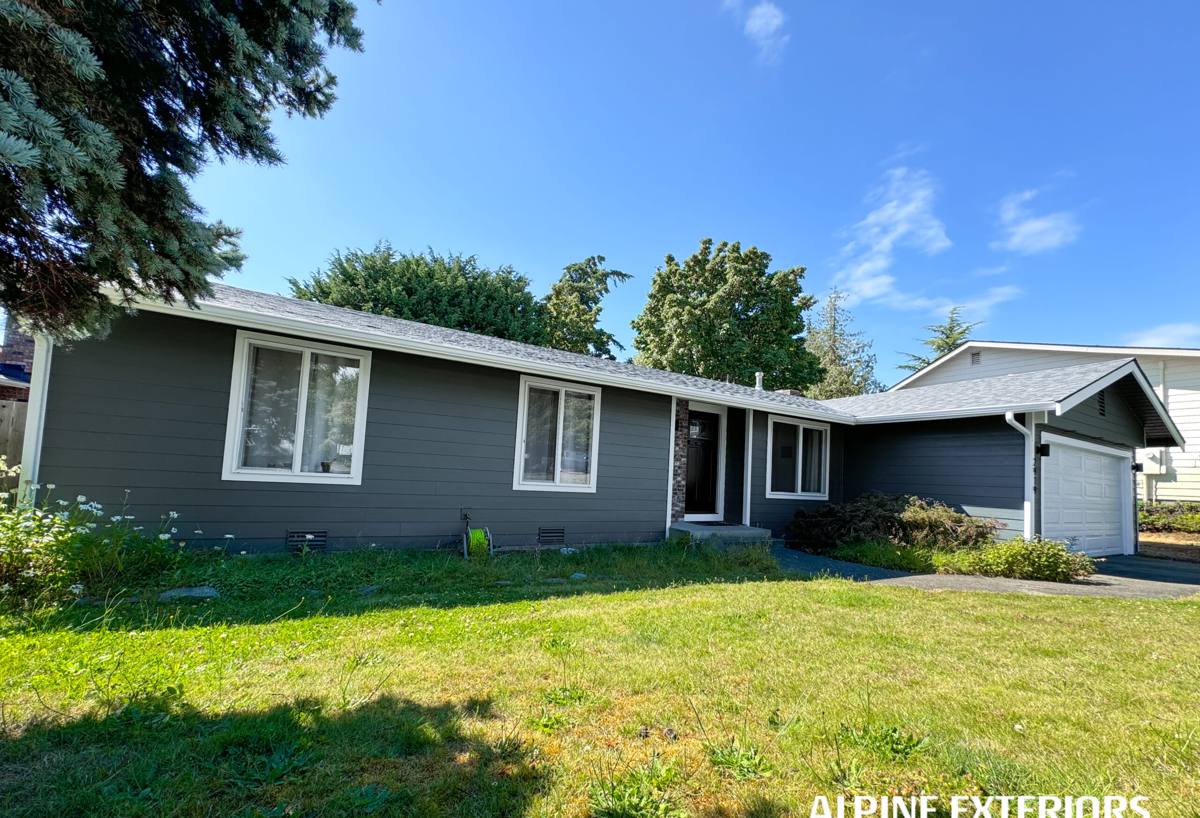
Signs a Crescent Lake Home Needs Replacement, Not Another Patch
Older siding in this neighborhood often gets one more paint job or caulk repair before an owner accepts that the material itself has failed. Some practical signs it's time to stop patching:
- Soft, spongy, or crumbling spots when you press on the siding, especially near the bottom courses and around window trim
- Paint that won't hold more than a year or two before peeling or bubbling again, even after prep work
- Visible gaps opening at butt joints and corners where boards have shrunk, warped, or pulled away from the wall
- Persistent mildew or algae staining on shaded, north-facing walls that returns within months of cleaning
- Soft or discolored wall sheathing visible from inside, or a musty smell in an exterior-facing room
- Siding that rattles or flexes in a stiff breeze, a sign fasteners or the substrate underneath have deteriorated
- Storm damage — cracked, split, or missing sections — that keeps recurring on the same elevation every season
Any one of these can sometimes be spot-repaired. Two or three together, especially on a home over 30 years old, usually mean the underlying material and water management system are past the point where patching makes sense.
What a Correct Siding Replacement Job Actually Involves
A siding replacement isn't just swapping old boards for new ones. Done right, it's a rebuild of the wall's entire water management system, and that's especially true in a climate that pushes rain sideways during storms.
Tear-off and a real substrate check
Full tear-off is the only way to know what's actually happening behind the old siding. On Crescent Lake homes we regularly find soft or water-damaged sheathing, especially at the bottom few feet of a wall and around old, poorly-flashed window and door openings. Any compromised sheathing gets replaced before new siding goes on — covering it up just relocates the problem.
Weather-resistive barrier and flashing
A correctly lapped weather-resistive barrier, integrated with proper flashing at every window, door, and penetration, is what actually keeps wind-driven rain out of the wall assembly. This is the step that gets shortcut most often on lower-bid jobs, and it's the one that determines whether a home stays dry through the next tropical storm or starts rotting from the inside in three years.
Fastening, clearances, and gaps
Fiber cement siding has a manufacturer-specified fastening schedule, minimum clearance from grade, roofing, and decks, and required gaps at butt joints and trim for expansion. Skipping these details doesn't show up on install day — it shows up two or three years later as cracking, buckling, or moisture intrusion at the exact points that were installed wrong.
Working Within Crescent Lake's Older Housing Character
Many Crescent Lake homes have a distinct architectural character — visible siding profile, trim proportions, and corner details that were common when the neighborhood was built out. Some properties also fall within locally recognized historic district boundaries, which can carry specific expectations about exterior appearance and, in some cases, require review before exterior work is done. We don't guess on this: if a property is inside a historic district, we tell homeowners to confirm requirements with the City of St. Petersburg before work begins, and we match siding profile, reveal, and trim detail to keep the home's original character intact rather than defaulting to whatever's easiest to install.
Why We Install Only James Hardie Fiber Cement
We made a standing decision years ago to install James Hardie fiber cement exclusively, and we don't deviate from it on Crescent Lake jobs. It's not that other products can't be installed correctly — it's that, weighed against this climate, they ask homeowners to accept trade-offs we're not willing to sign our name to.
| Factor | Vinyl siding | Engineered wood (LP-type) | James Hardie fiber cement |
|---|---|---|---|
| UV / color retention | Fades and chalks under sustained Florida sun | Paint film degrades on schedule, needs repainting | ColorPlus factory finish is baked-on and warranted against fading |
| Moisture behavior | Doesn't absorb water, but trim/seams can trap it behind panels | Wood-fiber core swells and softens if moisture reaches it | Cement-based core is not organic; doesn't rot or feed fungus |
| Wind performance | Can crack, warp, or blow off in sustained high wind | Rated for wind but panel/edge sealing is installation-sensitive | Rated for high-wind exposure when installed to spec |
| Fire behavior | Combustible plastic product | Combustible wood-based product | Non-combustible cement composite |
| Ongoing maintenance | Low, but damage often means full-panel replacement | Repainting and edge sealing on a recurring schedule | Repaint cycle is much longer thanks to factory finish |
Hardie's HZ5 product line is engineered specifically for humid, high-moisture climates like ours, and the ColorPlus finish is what actually holds color through a full St. Petersburg summer without the chalking and fading we see on painted products after a few seasons. Add a transferable, non-prorated product warranty, and it's the system we're comfortable standing behind on a 30-, 40-, or 50-year-old Crescent Lake home.
What Siding Replacement Costs in Crescent Lake
Every home is different, but the same factors drive cost on nearly every job in this neighborhood:
| Cost factor | Why it matters here |
|---|---|
| Sheathing condition found at tear-off | Older bungalows and mid-century homes often need some rotted sheathing replaced before new siding goes on |
| Home footprint and wall complexity | Older homes with porches, dormers, and multiple roof lines take more cutting and trim work |
| Siding profile selected | Lap siding, shingle-style panels, and trim boards carry different material and labor costs |
| Trim and historic detail matching | Replicating original trim proportions on a character home adds labor over a stock install |
| Access and site conditions | Mature trees, tight side yards, and close-set lots common in Crescent Lake can slow staging and material handling |
We give exact numbers only after walking a specific home — anything else is a guess.
Our Process for a Crescent Lake Job
- On-site inspection of the current siding, trim, and any visible moisture damage, including a look at sheathing condition wherever it's accessible
- A written scope and estimate that spells out siding profile, trim approach, and any sheathing repair contingency before work starts
- Site protection for landscaping, tree roots, and neighboring property, given how tight and tree-covered many Crescent Lake lots are
- Full tear-off, sheathing repair as needed, and correct installation of weather-resistive barrier and flashing
- Fiber cement installation to manufacturer fastening, clearance, and joint specifications
- Final walk-through so the homeowner sees the finished work and understands the warranty coverage in place
Why a Crew That Already Works This Neighborhood Matters
Crescent Lake's older housing stock, tighter lots, tree cover, and, in some cases, historic-district considerations aren't things a crew figures out on your dime. A contractor who's already replaced siding on homes like yours knows what to expect when the old siding comes off, how to stage a job around mature trees and narrow side yards, and how to match trim and profile on a home built decades before most of today's siding products existed. That experience shows up in fewer surprises mid-job and a finished result that actually looks like it belongs on the house.
If your Crescent Lake home needs a real assessment — not a guess over the phone — we'll walk the property, look at what's actually happening behind the current siding where we can, and give you a straight, no-pressure estimate. Use the form below to get started.