 St. Petersburg Siding
 Snell Isle Decks Face a Tougher Environment Than Most
Snell Isle sits right up against the water, and that proximity is exactly what makes it one of the most beautiful pockets of St. Petersburg — and one of the hardest places in Pinellas County to keep an outdoor deck looking good. Salt-laden air drifts off the bay and settles on every exposed surface, wind-driven rain drives moisture into joints and fasteners that face inland decks never see, and the Florida sun delivers UV exposure nearly every day of the year. Add in the real possibility of hurricane-force wind gusts each storm season, and you have a set of conditions that will find every weak point in a deck within a few seasons if the materials and installation weren't chosen with that environment in mind.
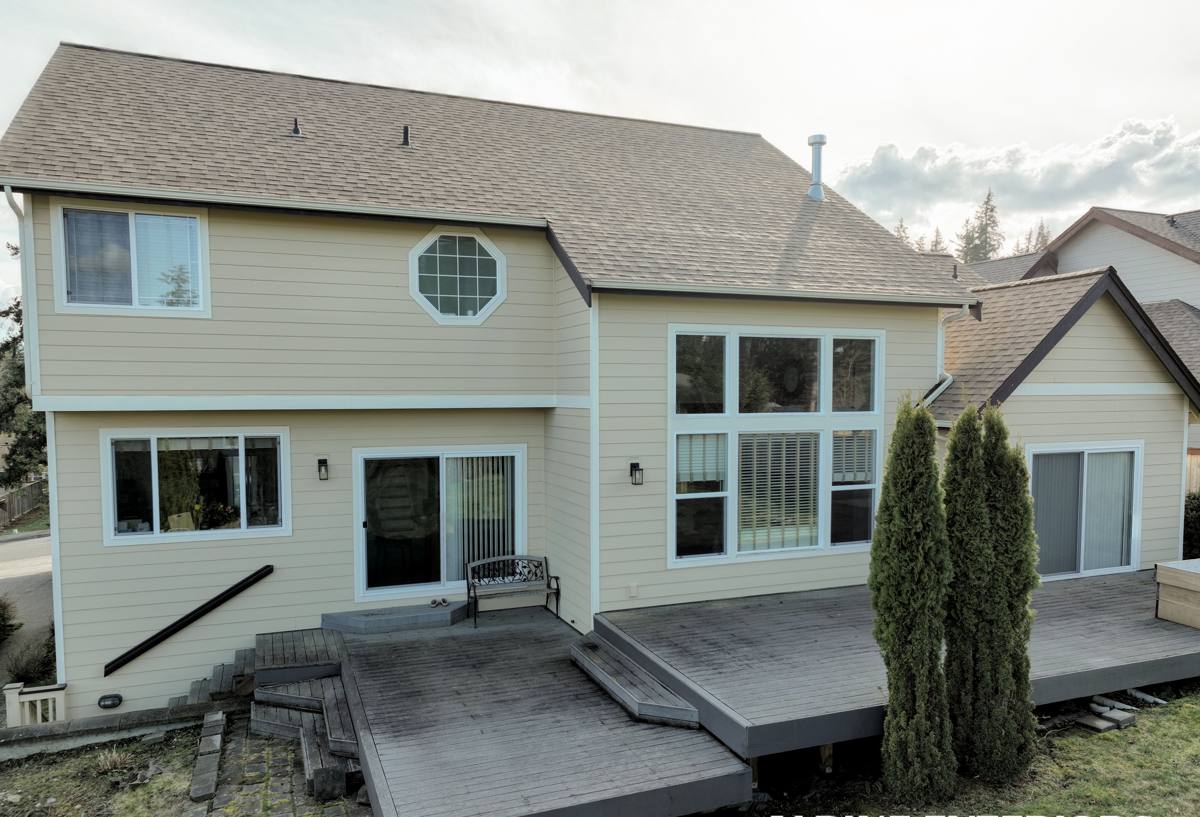
This is a page about one thing done right: composite decking, built specifically for Snell Isle homes. Not a generic "how decking works" overview — the substrate choices, fastening methods, and product grades that actually hold up a few blocks from the water, versus what gets away with cutting corners inland.
What Coastal Exposure Actually Does to a Deck
It helps to understand the specific failure modes before talking about how to prevent them, because each one points to a different construction decision.
- Salt air corrosion — attacks any fastener, bracket, or connector that isn't rated for coastal use, leading to rust streaks, weakened joints, and eventually structural fasteners that let go under load.
- UV degradation — fades color and, in lower-grade composite boards, breaks down the plastic matrix over years of constant sun, leaving a chalky, brittle surface.
- Wind-driven rain — pushes water sideways and upward into gaps that a standard flashing detail wouldn't need to handle inland, so ledger boards and picture-frame joints need tighter, more deliberate sealing.
- Humidity and poor airflow — traps moisture under and around the deck structure, which is what actually rots a substructure, even when the composite decking on top looks fine.
- Storm wind loading — puts real uplift and racking force on railings, stairs, and ledger attachments, which is why fastening specs matter more here than in a lot of the country.
What a Correct Composite Decking Job Involves
The Substructure Comes First
Composite decking is only as good as what's underneath it. On Snell Isle we favor pressure-treated lumber rated for ground contact and coastal use, or in cases where budget and design allow, aluminum deck framing — which sidesteps rot entirely and holds up better long-term against the humidity that collects under a waterfront deck. Joist spacing gets tightened from the standard 16" on center to 12" for most composite products, both because composite boards need closer support than wood and because it adds stiffness against wind loading.
Fasteners and Hardware
Every screw, bracket, and joist hanger on a coastal install should be stainless steel or a coated fastener rated for corrosive environments — not the standard galvanized hardware that's fine sixty miles inland but starts rusting within a couple of years near saltwater. Hidden fastener clip systems, which most modern composite boards are designed around, also need to be a coastal-rated version; using an interior-grade clip system near the bay is a common corner-cutting mistake that shows up as loosening boards a few years down the line.
Ventilation and Drainage
The space under the deck needs to breathe. That means proper joist spacing off the ground, gapping at board ends for expansion and drainage, and keeping any skirting or under-deck enclosure vented rather than sealed. A deck that traps humidity underneath will show problems in the substructure long before the composite boards themselves show any wear.
Choosing the Right Composite Board for This Climate
Not all composite decking is built the same, and the differences matter more here than in a drier, cooler climate. The biggest distinction is between capped and uncapped composite.
| Board Type | How It Handles Salt Air & UV | Maintenance | Typical Lifespan Locally |
|---|---|---|---|
| Capped composite (polymer shell over composite core) | Best resistance to fading, staining, and moisture intrusion | Occasional soap-and-water wash | Long service life with proper install |
| Uncapped composite | More prone to surface fading and moisture absorption over time in salt air | Periodic cleaning and closer inspection | Shorter than capped, especially in full sun/salt exposure |
| PVC decking (no wood fiber) | Excellent moisture and salt resistance, very stable in humidity swings | Low | Comparable to or longer than capped composite |
For most Snell Isle homes, capped composite or PVC decking is the honest recommendation. Uncapped composite can still be the right call for a budget-conscious, less-exposed area of a property, but on an open, sun-exposed deck within a block or two of the water, the extra cost of a capped board pays for itself in reduced fading and fewer callbacks over the years.
Color and Heat Considerations
Darker composite boards absorb more heat, which matters on a Florida deck that gets used barefoot. Lighter and mid-tone colors stay cooler underfoot and also tend to show less visible fading over time than deep browns and grays, since the contrast between "new" and "faded" is less noticeable on a lighter board.
Our Installation Process
- On-site assessment — we look at existing structure (if any), drainage, sun exposure, and proximity to the water to determine substructure and fastener requirements.
- Design and material selection — board brand, color, and picture-framing or border details are chosen with the homeowner, factoring in budget and exposure.
- Permitting — Pinellas County and City of St. Petersburg permitting requirements are handled before work starts, including any wind-load or setback considerations specific to the site.
- Substructure build or repair — coastal-rated lumber or aluminum framing, proper joist spacing, and stainless or coated fasteners throughout.
- Ledger and flashing work — the connection to the home gets flashed and sealed carefully, since this is the single most common point of water intrusion on any deck.
- Composite board installation — hidden fastener systems, correct expansion gapping, and manufacturer-specified spacing.
- Railings, stairs, and trim — matched to the same coastal-hardware standard as the deck itself.
- Final walkthrough — we go over care and maintenance with the homeowner before we consider the job done.
Permits and Local Code Considerations
Decking work in St. Petersburg and unincorporated Pinellas County generally requires a building permit, and waterfront or near-waterfront properties like those on Snell Isle can carry additional review related to setbacks, flood zone requirements, and wind design criteria. Skipping the permit process is a shortcut that can come back to bite a homeowner at resale or insurance renewal, so we handle it as a standard part of the job rather than an upsell.
Maintaining a Composite Deck in a Salt Air Environment
Composite decking is marketed as low-maintenance, and relative to wood it is — but "low-maintenance" doesn't mean "no maintenance," especially this close to the bay. A short seasonal routine keeps a coastal composite deck looking and performing the way it should:
- Rinse the deck surface periodically to clear salt residue before it builds up, especially after storms or high-wind days off the water.
- Wash with soap and water (or a manufacturer-approved composite cleaner) a few times a year to prevent mildew and surface grime from setting in.
- Keep gutters and downspouts near the deck clear so runoff isn't dumping extra water onto the structure.
- Inspect fasteners, railings, and stair connections once a year, particularly after hurricane season, for any loosening or corrosion.
- Check under-deck ventilation isn't blocked by storage, plants, or added skirting that traps moisture.
- Avoid sealing uncapped composite with the wrong product — check manufacturer guidance before applying anything to the surface.
Cost Factors Worth Understanding
| Factor | Why It Moves the Price |
|---|---|
| Board grade (uncapped vs. capped vs. PVC) | Capped and PVC boards cost more per square foot but reduce long-term maintenance and replacement risk |
| Substructure material | Aluminum framing costs more upfront than treated lumber but removes rot risk entirely |
| Deck size and shape | Multi-level decks, curves, and picture-framing details add labor time |
| Railing style | Composite, aluminum, and glass railing systems vary widely in material cost |
| Site access and existing structure | Demolition of an old deck or difficult site access adds labor |
We give a clear, itemized estimate before any work begins — no vague allowances that turn into surprise change orders once the job is underway.
Why Hire a Crew That Already Works Snell Isle
A contractor who mostly builds decks in inland neighborhoods, or in drier parts of the country, doesn't automatically think in terms of coastal-rated fasteners, tighter joist spacing, or ventilation details that matter here. Those aren't upgrades — on Snell Isle, they're the baseline for a deck that's supposed to last. We work throughout St. Petersburg and Pinellas County, which means we're regularly building and repairing decks in exactly this kind of salt air, high-UV, storm-exposed environment, and we make our material and hardware decisions accordingly rather than defaulting to whatever spec works fine somewhere with milder weather.
That local familiarity also means knowing the permitting process for the area, understanding how Snell Isle's waterfront setting affects design choices like railing height and drainage, and being straightforward about which products are worth the extra cost here versus which upgrades wouldn't move the needle much for a given home.
Get a Straightforward Estimate
If you're planning a new composite deck or need to replace one that hasn't held up to the salt air and sun, we're happy to take a look and walk you through your options honestly — including where it makes sense to spend more and where it doesn't. Fill out the form below for a free, no-pressure estimate.