 St. Petersburg Siding
 Board & Batten on a Barrier Island: Why It's Everywhere in St. Pete Beach
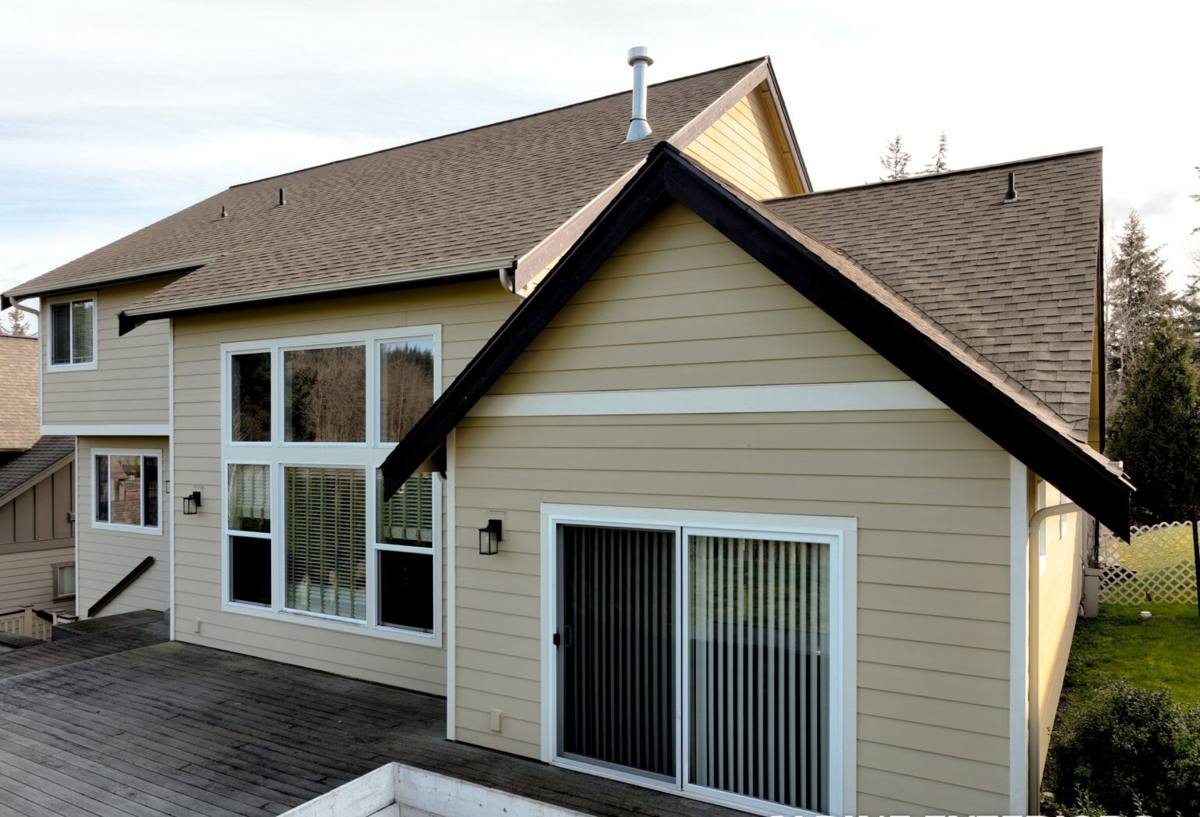
Walk any street in St. Pete Beach and you'll notice how many homes lean into that vertical board-and-batten look — wide flat boards with a narrow batten covering each seam, running top to bottom instead of the horizontal lap most of Pinellas County grew up with. It reads as coastal cottage, Old Florida, or clean modern farmhouse depending on the trim and color, and it holds up visually against the salt haze and bright sun better than a lot of busier siding profiles. It's also a popular way to dress up gable ends, dormers, and accent walls on homes that are otherwise lapped, which is a detail worth planning for even if you're not redoing the whole exterior.
But board and batten is a style, not a shortcut. The vertical seams and batten strips create more joints and more exposed edges per square foot than horizontal lap siding, and every one of those joints is a place where St. Pete Beach's climate can go to work on a poorly built assembly. Getting the look right and getting the performance right are two different jobs, and on a barrier island the second one matters more than most homeowners realize until something goes wrong.
What St. Pete Beach's Climate Actually Does to Siding
St. Pete Beach sits directly on the Gulf, which means the exterior of every home here is dealing with a harsher version of the same conditions the rest of Pinellas County sees.
Salt air, up close
Being on the barrier island itself — not just near the coast, but on it — means salt-laden air and windblown spray reach the siding constantly, not just during storms. Salt accelerates the breakdown of paint films, corrodes exposed metal fasteners and trim, and speeds up moisture absorption in materials that aren't built to shed it.
Year-round UV
Florida sun is intense for most of the year, and it hits siding on a barrier island with less tree cover and more reflected light off water and sand than a shaded inland lot. UV breaks down pigments and resins, which is why paint on the wrong substrate chalks, fades, and needs recoating far sooner here than up north.
Wind-driven rain
Rain in this region rarely falls straight down. Gulf-fed storms push rain sideways into walls, forcing water into any gap, seam, or fastener hole that isn't properly flashed and sealed. Vertical board and batten has more vertical seams than lap siding, so the flashing detail at every joint carries more weight here than it would on a calmer inland site.
Hurricane-force wind loads
Pinellas County's wind-load requirements are strict, and a barrier island location like St. Pete Beach sits in some of the more demanding wind zones in the county. Siding, fasteners, and the underlying attachment all have to be engineered and installed to hold under sustained high winds and wind-borne debris, not just look good on a calm day.
Why Material Choice Matters More Here Than Almost Anywhere Else
Every siding material behaves differently under salt, sun, and wind, and a barrier island environment tends to expose the weak points faster than a typical suburban lot would.
| Material | How it holds up on a barrier island |
|---|---|
| Vinyl | Can warp, crack, or become brittle under sustained heat and UV; seams and battens (if simulated) are a common spot for wind to catch and peel panels in gusts |
| Untreated or primed wood / cedar | Attractive when new, but constant moisture and salt exposure accelerate rot, cupping, and paint failure without an aggressive maintenance schedule |
| LP SmartSide (engineered wood) | Wood-based core is more moisture-sensitive than fiber cement; edge swelling and the need for meticulous sealing become a bigger liability in a wind-driven-rain environment |
| James Hardie fiber cement | Non-combustible, dimensionally stable cement composite; factory-cured ColorPlus finish resists the fade and chalking that plain paint suffers under constant UV and salt |
This is exactly why we standardized on James Hardie fiber cement and don't install vinyl, LP SmartSide, Cemplank, Allura, or primed spruce or cedar. It's not that those products can't be installed anywhere — it's that on a barrier island exterior, the trade-offs (moisture sensitivity, maintenance burden, UV-driven finish failure) show up faster and cost more to fix than the upfront savings are worth. We'd rather install one product correctly and stand behind it than offer five options and hope the cheaper ones hold up.
What a Correct Board & Batten Installation Actually Involves
Board and batten looks simple from the street, but the assembly behind it is doing real structural and moisture-management work. On a St. Pete Beach home, we treat every one of these steps as non-negotiable:
- Water-resistive barrier: a continuous weather barrier behind the siding, lapped correctly at every seam, so any water that gets past the cladding has a drainage path instead of a way into the wall.
- Flashing at every penetration: windows, doors, hose bibs, light fixtures, and roof-to-wall transitions all need proper flashing before a single board goes up — this is where most water intrusion actually starts.
- Correct fastener pattern and type: Hardie panel and batten fastened per the manufacturer's published fastening schedule for our wind zone, using corrosion-resistant fasteners rated for coastal exposure.
- Proper clearances: gaps at the bottom of the siding away from grade, roof lines, decks, and other hard surfaces, so boards aren't sitting in standing water or trapped moisture.
- Sealed and caulked joints where specified: using a sealant rated for the substrate and for sustained UV and salt exposure, not a generic caulk that will fail in a season or two.
- Battens installed to allow the panel to move: fiber cement expands and contracts slightly with temperature and moisture; battens and fasteners are placed to accommodate that without cracking the finish.
Skip any one of these and the siding can look fine for a year or two while water quietly works its way into the wall assembly behind it — which is a far more expensive problem than the siding itself.
James Hardie Options for a Board & Batten Look
James Hardie makes this style straightforward to do right, with panel products engineered specifically for the vertical board-and-batten profile rather than adapted from a horizontal product.
HardiePanel vertical siding
The core panel product used for board and batten, available in smooth or select cedarmill textures, installed with vertical battens over the seams for the classic look.
Artisan and other accent options
For homeowners who want a more refined, tighter-reveal look on accent walls or gables, Hardie's higher-end panel lines offer that without changing the underlying performance.
HZ5 engineering and climate zone
James Hardie engineers its products by climate zone, and Pinellas County falls in the HZ5 zone — the version of their product line built to handle high humidity, heavy rain, and moisture exposure, which is exactly the profile of a Gulf-front barrier island.
ColorPlus factory finish
Rather than field-painting the panels after installation, ColorPlus finishes are baked on at the factory in multiple coats, which holds color and resists fading and chalking far longer under constant Florida UV than a job-site paint job — and it comes with its own finish warranty separate from the substrate warranty.
Our Process for St. Pete Beach Projects
- On-site inspection: we look at the existing wall assembly, note any moisture or rot already present, and check flashing at windows, doors, and roof lines before quoting anything.
- Plan and product selection: confirm panel style, batten spacing, and ColorPlus color, and account for any wind-load or permitting requirements specific to the property.
- Tear-off and prep: remove failing siding, repair any damaged sheathing found underneath, and install a continuous water-resistive barrier.
- Flashing first: every window, door, and penetration gets flashed and detailed before the panels go up.
- Installation to Hardie's HZ5 spec: panels and battens fastened per manufacturer specification for our wind zone, with proper clearances and sealed joints.
- Final walkthrough: we go over the finished job with the homeowner and document warranty coverage.
What Drives the Cost of a Board & Batten Project
| Factor | Why it matters |
|---|---|
| Condition of existing sheathing | Rot or moisture damage found during tear-off means repair work before new siding can go on |
| Wall height and complexity | Gables, dormers, and multiple stories add labor and staging time |
| Panel texture and finish | Smooth vs. cedarmill, and standard vs. premium ColorPlus colors, affect material cost |
| Trim and batten spacing | Tighter batten spacing or custom trim details take more material and labor per square foot |
| Full replacement vs. accent application | A gable or accent wall costs far less than siding an entire home |
We give exact numbers only after a walkthrough, but expect board and batten to run comparably to standard Hardie lap siding when it's a full exterior, and less when it's used as an accent on part of the home.
Why Hiring a Crew That Already Works St. Pete Beach Matters
A barrier island isn't just a coastal address — it comes with its own permitting details, wind-load requirements, and, in some cases, flood zone considerations that affect how exterior work is scoped and inspected. A crew that regularly works on St. Pete Beach and the surrounding Pinellas County coastline already knows what local building officials expect, how to detail flashing for a Gulf-exposed wall, and how salt air changes the maintenance conversation with a homeowner before it becomes a problem. That local familiarity is worth more than a lower bid from a crew that treats a barrier island job the same as an inland one.
Signs your current board and batten needs attention
- Soft or spongy boards, especially near the bottom edge or around windows and doors
- Visible gaps opening up at batten seams or around trim
- Paint that's chalking, peeling, or fading unevenly within just a few years
- Rust streaks running down from fastener heads or metal trim
- Any bubbling or staining on interior walls near an exterior wall
If your board and batten is showing any of these on a St. Pete Beach home, it's worth having it looked at before the next storm season rather than after.
If you're weighing a board and batten accent, a full re-side, or just want an honest read on what's happening behind your current siding, we're happy to take a look. Fill out the form below for a free, no-pressure estimate.