 St. Petersburg Siding
 Kenneth City's Climate Is Harder on Siding Than Most Homeowners Realize
Kenneth City sits inside Pinellas County, tucked close enough to the Gulf and Tampa Bay that its homes take on the same exterior stresses as the rest of the St. Petersburg area, even though it's a small, quiet community away from the immediate waterfront. That matters when you're planning a siding replacement, because the siding on a Kenneth City home isn't just a cosmetic layer — it's the barrier standing between your framing and a climate that works against it every single day.
Four things do most of the damage over time: hurricane-force wind events that stress every seam and fastener, intense year-round UV that breaks down pigments and weaker composite materials, wind-driven rain that gets pushed sideways into laps and joints during storms, and salt-laden air that accelerates corrosion on fasteners and trim. None of these are occasional problems here — they're the baseline. A siding product or installation method that performs fine in a drier, cooler climate can fail years early in Pinellas County if it wasn't chosen and installed with these conditions in mind.
That's the lens we use on every Kenneth City project: not "what looks good going up," but "what still looks good and still performs in twelve years, after a dozen tropical systems and a decade of Florida sun."
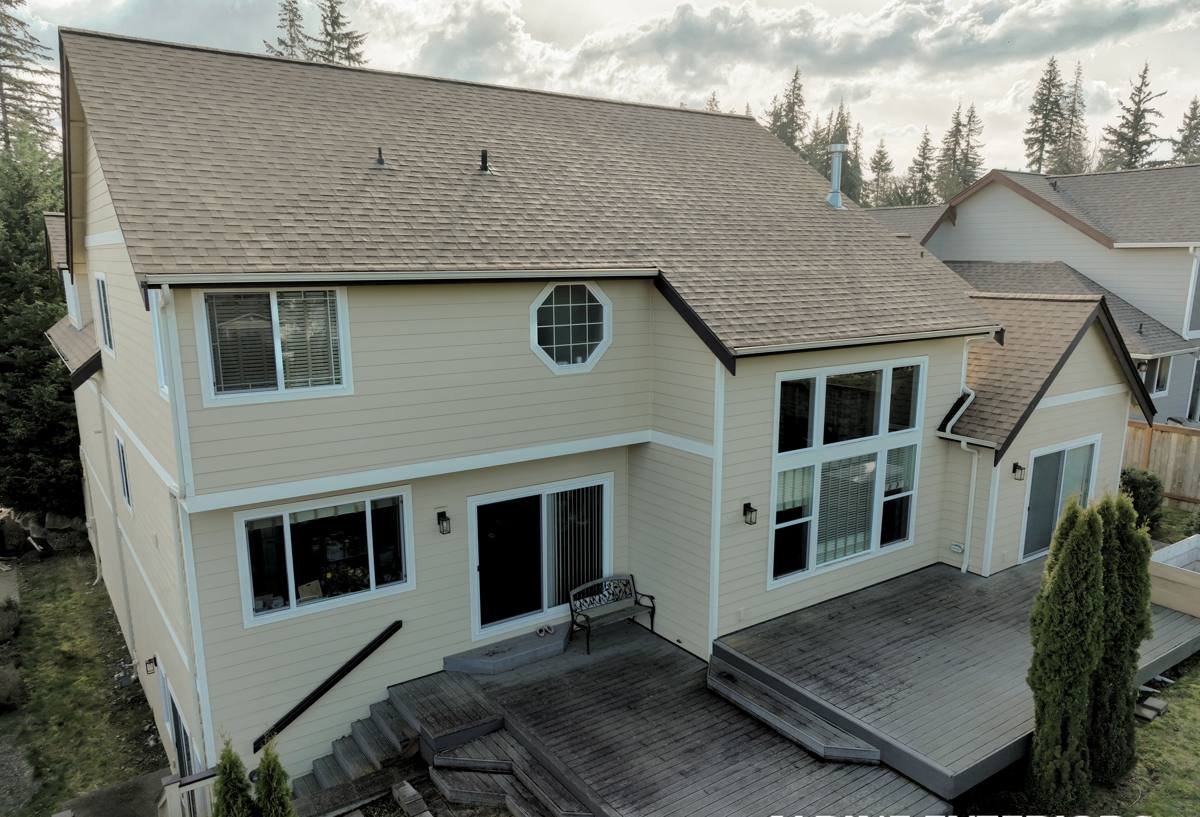
Signs a Kenneth City Home Is Ready for Siding Replacement
Siding rarely fails all at once. It shows warning signs first, and catching them early usually means a straightforward replacement instead of dealing with hidden rot or moisture damage behind the wall. Walk your exterior and look for:
- Boards or panels that are soft, spongy, or crumbling at the edges when pressed
- Visible warping, buckling, or gaps at seams and corners
- Paint that's peeling or bubbling repeatedly, even after repainting
- Fading that's uneven from one wall to another, especially the west and south exposures
- Streaking or dark staining near seams, which often points to water getting behind the siding
- Rust bleeding from fastener heads or trim connections
- A musty smell near exterior walls inside the home, which can indicate trapped moisture
- Visible daylight or drafts around window and door trim where siding meets openings
Any one of these can be a minor fix. Several at once, especially combined with a home's age, usually means the underlying material or the original installation has reached the end of its useful life.
What a Correct Siding Replacement Actually Involves
Siding replacement gets sold as a cosmetic upgrade, but the work that actually protects a Pinellas County home happens in layers most people never see once the job is done.
Tear-Off and What's Underneath Matters More Than the New Siding
Pulling the old siding is also the inspection. This is when we find soft sheathing, hidden rot around window and door openings, and any framing damage from long-term moisture intrusion. Skipping a real inspection here — or covering problems instead of fixing them — is the single most common reason a "new" siding job fails within a few years. Any compromised sheathing or framing needs to be repaired or replaced before a single new panel goes up.
Flashing, Weather Barrier, and Water Management
Wind-driven rain doesn't fall straight down here; storms push it sideways and upward under laps and around trim. Correct flashing at windows, doors, and roof lines, paired with a properly lapped weather-resistant barrier, is what actually keeps that water out. This detail work is invisible once the siding is on, but it's the difference between a wall system that sheds water and one that slowly absorbs it.
Fastening and Wind Resistance
Pinellas County homes need siding fastened to the manufacturer's high-wind specifications, not generic nailing patterns. Fastener type, spacing, and embedment all affect how the siding performs when a tropical system pushes sustained wind and gusts against the wall. This is also where salt air comes back into play — corrosion-resistant fasteners matter more here than almost anywhere else in the state.
Why We Install Only James Hardie Fiber Cement — Not Vinyl, Not LP, Not Cedar
We made a deliberate decision to install James Hardie fiber cement siding exclusively, and we think Kenneth City homeowners deserve to know why, not just be told it's "the best."
Vinyl siding is inexpensive and easy to install, but it's a plastic product that softens, warps, and becomes brittle under sustained heat and UV exposure — exactly the conditions Pinellas County delivers year-round. In wind events, vinyl panels can pull loose from their track system, and it's rarely repaired cleanly; a damaged section usually stands out against faded original panels because exact color matches fade in and out of production. LP SmartSide and similar engineered wood products perform reasonably well in drier climates, but they rely on treated wood strand cores that are more sensitive to sustained moisture exposure than fiber cement — a real concern in a county that sees heavy seasonal rain and high humidity. Primed spruce and cedar are beautiful materials, but they demand a maintenance schedule — regular repainting, caulking, and moisture monitoring — that most homeowners underestimate until the wood starts to show it.
James Hardie fiber cement isn't perfect for every budget, but it's non-combustible, dimensionally stable in heat and humidity, and built in HZ product lines specifically engineered for high-humidity, high-moisture climates like Florida's. The factory-applied ColorPlus finish resists fading and chipping far better than field-applied paint, and it carries a strong transferable warranty when installed to Hardie's specifications. For a home that has to withstand hurricane season, UV exposure, and salt air every year, we think that combination is worth the honest conversation about cost.
Comparing Siding Materials for Pinellas County Conditions
| Material | Wind Performance | Moisture Behavior | UV/Fade Resistance | Typical Maintenance |
|---|---|---|---|---|
| James Hardie Fiber Cement | Engineered HZ lines rated for high-wind zones | Dimensionally stable, resists moisture-driven warping | Factory ColorPlus finish resists fading | Occasional washing; no repainting for years |
| Vinyl | Can loosen, crack, or blow off in sustained high wind | Doesn't rot, but seams can trap moisture behind panels | Prone to fading and brittleness under constant UV/heat | Low, but damaged panels are hard to color-match later |
| LP SmartSide / Engineered Wood | Generally solid when installed correctly | Wood-strand core more sensitive to prolonged moisture | Requires factory or field finish upkeep | Periodic caulking and finish maintenance |
| Primed Spruce / Cedar | Solid physically, but finish is the weak point | Wood absorbs and releases moisture with humidity swings | Finish fades and needs recoating regularly | Highest — regular painting and sealing |
Our Siding Replacement Process for Kenneth City Homes
- On-site inspection: We evaluate your current siding, trim, and any visible signs of moisture or wind damage, and talk through what we find in plain language.
- Written estimate: A clear scope of work and cost, with no pressure to sign on the spot.
- Tear-off and sheathing check: Old siding comes off, and we inspect and repair the wall assembly underneath before anything new goes up.
- Weather barrier and flashing: Proper water management details are installed at every window, door, and transition point.
- James Hardie installation: Panels or planks are installed and fastened to manufacturer high-wind specifications.
- Trim, caulking, and final inspection: Details finished and the full job walked before we call it complete.
- Cleanup: Job site cleared of debris, old materials hauled off.
What Drives the Cost of a Siding Replacement
Every Kenneth City home is different, but the same handful of factors move the price up or down on almost every project:
| Cost Factor | Why It Matters |
|---|---|
| Home size and wall complexity | More square footage and more corners, gables, and trim details mean more labor and material |
| Condition of existing sheathing | Hidden rot or damage found during tear-off adds repair work before new siding can go on |
| Hardie product line and profile | Lap siding, panel siding, and shingle-style profiles carry different material costs |
| ColorPlus finish vs. field-painted | Factory finish costs more upfront but eliminates a repaint cycle for years |
| Trim and accessory scope | Fascia, soffit, and trim replacement alongside siding adds to the overall project |
| Access and site conditions | Landscaping, fencing, or multi-story sections can affect labor time |
We don't quote a job over the phone or from a photo. A correct estimate requires walking the exterior and, in most cases, seeing what's under a section of the existing siding.
Why a Crew That Already Works Kenneth City Matters
Siding installed to spec in Ohio isn't automatically installed to spec in Pinellas County. Wind-load fastening requirements, flashing details for wind-driven rain, and material choices that hold up to salt air and constant humidity are regional knowledge, not generic best practices. A crew that regularly works St. Petersburg and the surrounding Pinellas communities already understands local permitting, knows how James Hardie's HZ10 product line is meant to perform in this climate, and isn't learning coastal Florida installation details on your home for the first time.
That local familiarity also shows up in smaller, practical ways — knowing realistic timelines around Florida's rainy season, understanding how Kenneth City's mix of home ages and construction styles affects tear-off surprises, and being available if a question comes up after the job is finished rather than being a crew that worked the area once and moved on.
If your Kenneth City home is showing signs it's time for new siding, we'll walk the exterior with you, give you a straight answer about what we find, and put together a free, no-pressure estimate for a James Hardie replacement built for what this climate actually demands.