 St. Petersburg Siding
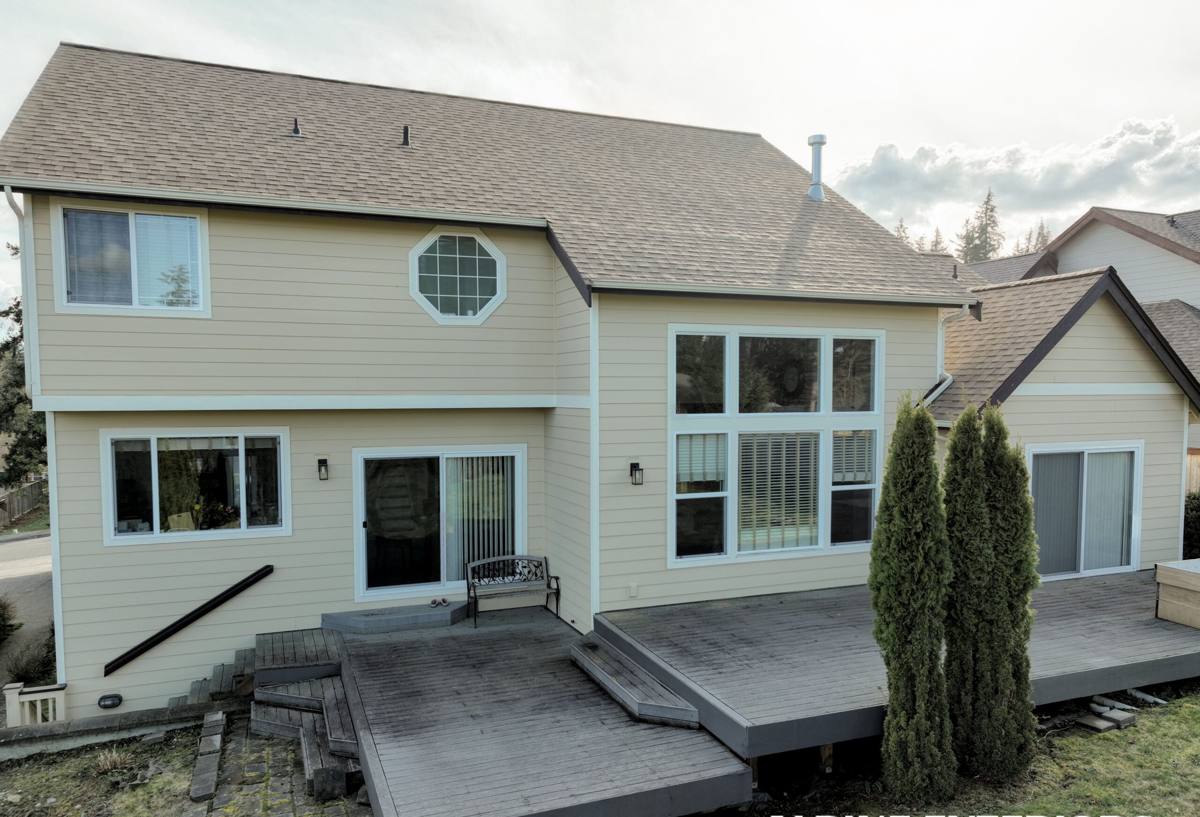
 Composite Decking in a Neighborhood Built Before Decks Were Standard
Most of the homes in Historic Kenwood predate composite decking by half a century or more. These are bungalow and Craftsman-style houses on established lots, often with mature tree canopy, narrow side yards, and foundations and framing details that don't always match what a crew sees on a newer St. Petersburg build. Adding or replacing a deck here means working around an older house, not a blank slate — and that changes how the substructure gets planned, how the ledger board (if there is one) gets tied in, and how much attention goes into keeping the new work from looking bolted onto an old house.
Composite decking fits this neighborhood well for a simple reason: it holds up to Pinellas County's climate with far less upkeep than wood, and it's available in tones that read as natural wood grain rather than obviously synthetic, which matters on a street where the house next door has original wood trim and a century-old roofline.
What St. Petersburg's Climate Actually Does to a Deck
A deck in Historic Kenwood faces the same conditions as the rest of the Gulf Coast side of Pinellas County, just filtered through more shade from established trees:
- UV exposure: Florida gets some of the most intense year-round sun in the continental U.S. Unprotected wood grays and checks within a couple of seasons; even composite boards need UV-stabilized capping to resist fading and surface chalking over time.
- Wind-driven rain: Summer storms and tropical systems don't just fall straight down here — rain gets driven sideways into board gaps, fastener holes, and ledger connections. Poor flashing or sealing at the house connection is where rot and mold problems start, composite or not.
- Humidity and moisture cycling: Boards and hardware go through constant wet-dry cycling. This is what causes cheap or uncapped composite to swell, and what causes standard fasteners to corrode over a few years.
- Salt air: Kenwood sits inland from the immediate waterfront, but St. Petersburg is a peninsula — salt-laden air still reaches the whole city and accelerates corrosion on any exposed metal hardware, fasteners, and railing brackets.
- Hurricane-force wind: Pinellas County structures need to handle real wind load, not just a stiff breeze. A deck's framing, post connections, and railing attachment all need to be built to hold together in a storm, not just support foot traffic on a calm day.
None of this is unique to Kenwood, but it's worth stating plainly: a deck built to a generic national spec, without accounting for St. Petersburg's combination of sun, salt, and storm wind, will show problems faster here than in most of the country.
What a Correct Composite Deck Build Involves
The Substructure Matters More Than the Boards
Composite decking is only as good as what's underneath it. The framing — joists, beams, posts, and footings — is what actually resists wind uplift and structural load. On an older Kenwood lot, that means checking existing soil conditions, confirming footing depth meets current code (not whatever was standard when the house was built), and sizing joists appropriately for span and spacing, not just what the composite manufacturer's minimum allows.
Hardware Has to Match the Environment
Every fastener, joist hanger, post base, and hurricane tie should be stainless steel or coated for coastal/high-corrosion use. This is one of the most common shortcuts on lower-bid deck jobs — standard galvanized hardware looks fine for a year or two, then starts rusting and staining the decking around it. In a salt-air climate, that's not a maintenance issue, it's a structural one over time.
Ledger Attachment and Flashing
Where a deck ties into the house, the ledger board connection is the single most common point of hidden rot in any climate — and with St. Petersburg's wind-driven rain, an improperly flashed ledger will let water behind it regardless of how good the decking looks on top. Correct flashing, proper standoff spacing, and through-bolting (not just lag screws) into solid framing are non-negotiable, especially on an older home where the original wall assembly may need extra care to open up and reseal correctly.
Drainage and Airflow Underneath
Composite boards don't rot, but the framing underneath still can if water and debris collect and can't dry out. Proper board spacing, ventilation under low decks, and grading that moves water away from posts and footings all matter just as much as they do on a wood deck.
Composite vs. Wood vs. PVC: How They Hold Up Here
| Factor | Wood (Pressure-Treated) | Capped Composite | PVC |
|---|---|---|---|
| Upfront cost | Lowest | Mid-range | Highest |
| UV/fade resistance | Poor without regular refinishing | Good with cap layer | Very good |
| Moisture/humidity behavior | Prone to swelling, splintering, rot | Stable if properly capped | Very stable |
| Maintenance | Annual sealing/staining | Periodic cleaning only | Minimal cleaning |
| Heat underfoot in full sun | Moderate | Can run warm in dark colors | Similar to composite |
| Salt air/hardware corrosion risk | High if hardware isn't upgraded | Low with coastal-rated hardware | Low with coastal-rated hardware |
| Typical lifespan | 10–15 years before major repair | 25+ years | 25–30+ years |
Wood costs less to install but demands the most upkeep in this climate — and in a shaded, humid yard like many in Kenwood, untreated or poorly maintained wood decking will show moisture damage faster than in a fully sun-exposed yard. Composite closes that maintenance gap significantly. Uncapped or budget composite boards are where we draw a line professionally: without a full cap layer, the board core can absorb moisture at cut edges and fastener holes, which defeats the purpose of going composite in the first place. We install fully capped composite for that reason.
Our Process for a Historic Kenwood Deck Project
- On-site assessment: We look at the existing structure (if replacing a deck), the house's ledger connection point, soil and footing conditions, and how the new deck needs to work with the home's existing lines and grade.
- Design and material selection: We walk through composite color and board profile options that fit the house's age and style, and talk through cost tiers honestly — including where cheaper composite cuts corners that matter in this climate.
- Permitting: Deck work in the City of St. Petersburg requires a permit, and older Kenwood homes sometimes carry additional considerations tied to local historic district status. We handle the permit process and flag anything on the property that needs a closer look before work starts.
- Framing and structural work: Footings, posts, beams, and joists get built to current wind load requirements with corrosion-resistant hardware throughout — not just at the visible connections.
- Decking installation: Boards go down with proper spacing for drainage and thermal movement, using a hidden fastener system where the product allows for a clean finished look.
- Final walkthrough and inspection: We review the finished deck with the homeowner and make sure it passes any required city inspection before calling the job done.
Working Within an Older, Established Neighborhood
Kenwood's character comes from its intact bungalow streetscape, and that's part of what homeowners are protecting when they invest in the property. We approach a deck addition or replacement here the same way we'd approach any exterior work on a historic-adjacent home: get the permit and any applicable design review handled correctly up front with the City of St. Petersburg rather than after the fact, and choose composite colors and railing styles that complement the house instead of fighting it. If your property falls within a designated historic district, it's worth confirming with the city what, if anything, applies to deck or railing changes before materials are ordered — we're glad to help homeowners figure out what step that is.
Maintaining a Composite Deck in Gulf Coast Conditions
Composite cuts maintenance dramatically compared to wood, but "low-maintenance" doesn't mean "no maintenance" — especially under a tree canopy where pollen, leaf tannins, and shade-driven mildew are common.
- Rinse or sweep debris off regularly, especially after storms and during oak pollen season
- Wash the surface a few times a year with mild soap and water to prevent mildew buildup in shaded areas
- Check hardware and railing connections annually for corrosion or looseness
- Keep gutters and downspouts near the deck clear so water isn't dumping directly onto boards or footings
- Trim back overhanging branches that keep boards damp longer than they should stay
- Inspect the ledger board area yearly for any sign of moisture intrusion at the house connection
Why Local Deck Experience Matters in Kenwood
A deck crew that regularly works in Historic Kenwood already knows the practical realities: how these older homes are typically framed, what the city's permitting process looks for, how tree canopy affects drainage and material choice, and what it takes to tie a new deck into a house that wasn't built with modern deck ledger details in mind. That experience shows up in fewer surprises during the project and a deck that actually fits the house it's attached to, rather than looking like a standard suburban install dropped onto a historic lot.
If you're weighing a new composite deck or a replacement for an aging wood deck in Historic Kenwood, we're happy to take a look at your property and put together a straightforward, no-pressure estimate — just fill out the form below.