 St. Petersburg Siding
 Gulfport sits close to the water, and that proximity shapes almost everything about how siding ages here. Homes in this pocket of St. Petersburg take on wind-driven rain off Boca Ciega Bay, salt-laden air that never really lets up, and long stretches of direct Florida sun that most siding products were never designed to survive for decades on end. When a homeowner in Gulfport calls about a siding repair, it's rarely just one bad board — it's usually a sign that the material or the original installation wasn't built for this specific environment.
This page covers what siding repair actually involves for Gulfport homes, what separates a real fix from a patch job, and why we approach every repair call in this neighborhood the way we do.
Why Gulfport Siding Wears Differently Than Inland Homes
Pinellas County as a whole deals with hurricane season, UV exposure, and humidity. Gulfport gets an extra layer on top of that because of how close it sits to open water. Salt air corrodes exposed fasteners faster, wind gusts off the bay push rain sideways into seams and laps that were never meant to face that kind of pressure, and the constant moisture cycle — wet mornings, humid afternoons, brief intense storms — keeps siding materials in a near-permanent state of expansion and contraction.
That cycle is what actually destroys siding, more than any single storm. Wood-based products swell when they take on moisture and shrink as they dry out, and repeating that thousands of times over a decade opens joints, cracks paint film, and loosens fastener holes. Add UV breakdown on top of that and you get the failure patterns we see most often on repair calls in this area: soft or delaminating panel edges, cracked caulk lines that have pulled away from trim, and fastener heads that have rusted and stained the siding around them.
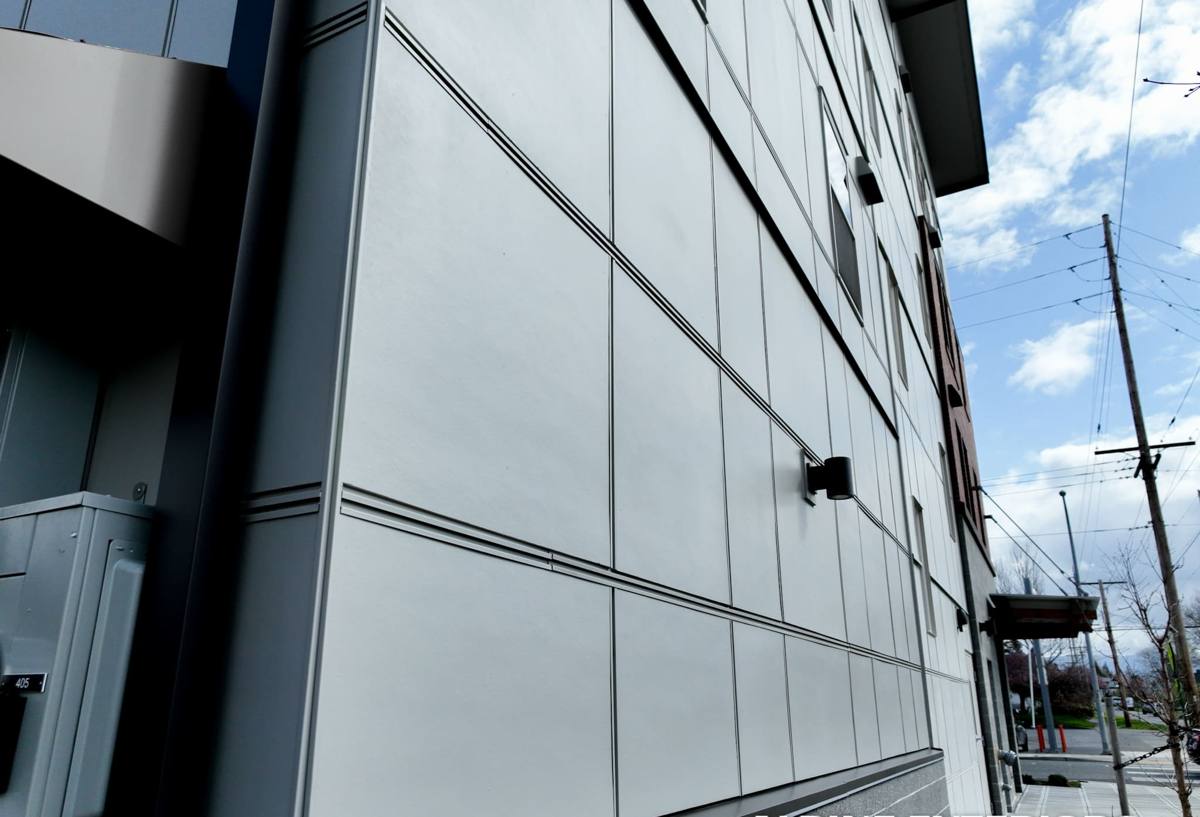
Common Siding Problems We See in Gulfport
Moisture and Rot at Panel Edges
Cut edges and butt joints are the most vulnerable part of any lap siding installation. If those edges weren't properly sealed or primed when the siding went up — or if the sealant has aged out, which happens faster in salt air — water gets into the substrate. On wood-based or engineered wood siding, that means soft, spongy material that keeps spreading until the board is replaced.
Storm and Wind Damage
Even when a storm doesn't produce a direct hit, sustained wind gusts common to this stretch of coast can crack panels, pop fastener heads, or peel siding away from the wall at corners and edges where wind pressure concentrates. Damage like this often looks minor from the ground but leaves an entry point for water that causes bigger problems months later if it isn't addressed.
Fastener Corrosion and Staining
Salt air accelerates corrosion on any fastener that isn't rated for coastal exposure. Rusting nail or screw heads don't just look bad — the streaking is a sign the fastener is losing its grip, and a loose fastener means the panel around it is no longer secured the way it should be.
Sun-Faded and Chalking Finishes
Constant UV exposure breaks down paint film and factory finishes over time. Once a finish starts chalking or fading unevenly, it's no longer doing its job of shedding water, which speeds up every other failure mode on this list.
What a Correct Siding Repair Actually Involves
A repair that's done right isn't just about matching the color and nailing a new piece over the gap. It starts with figuring out why the original section failed, because if the underlying cause isn't addressed, the replacement piece fails the same way on the same timeline.
- Inspect the damaged area and the surrounding siding to confirm how far the moisture or damage has actually traveled — it's often more than what's visible from the outside
- Check the water-resistive barrier and flashing behind the damaged section for damage or gaps once panels are removed
- Replace only what's compromised, but never patch over a section where the substrate underneath is still wet or soft
- Match reveal, coursing, and profile so the repair is structurally consistent with the surrounding siding, not just visually close
- Reseal and refasten with corrosion-resistant hardware appropriate for coastal exposure
- Confirm caulking and trim details are restored to shed water the way they were designed to
Repair vs. Replacement: How We Make That Call
Not every problem calls for a full re-side, and we don't push homeowners toward bigger jobs than they need. But there's a point where repeated repairs on an aging or failing product stop making financial sense. Here's how we generally think through it:
| Situation | Repair Usually Makes Sense | Replacement Usually Makes Sense |
|---|---|---|
| Damage location | Isolated to one or two sections, storm impact, accidental damage | Spread across multiple elevations or recurring in the same areas |
| Underlying material condition | Surrounding siding is sound and dry | Surrounding siding shows soft spots, delamination, or widespread finish failure |
| Age of existing siding | Siding is well within its expected service life | Siding is old enough that failures are becoming routine |
| Cause of damage | One-time event (storm, impact) | Ongoing exposure issue the original product or install can't handle |
| Cost over time | One repair resolves the issue for years | Homeowner is looking at repeat repair calls annually |
When repair is the right call, we do the repair — that's a straightforward, honest job and there's no reason to talk anyone into more than they need. When the pattern points to the material itself struggling against this climate, we say so plainly and explain the trade-offs before recommending anything.
Why We Only Repair and Install James Hardie Fiber Cement
A lot of what we get called out for in Gulfport traces back to the underlying material, not just bad luck or a bad storm. We install and repair James Hardie fiber cement siding exclusively — we don't work with vinyl, LP SmartSide, Cemplank, Allura, or primed wood siding, and it's worth explaining why, especially for a coastal neighborhood like this one.
Vinyl siding can warp and distort in high heat and doesn't hold up structurally against sustained wind loads the way a heavier material does. Engineered wood products like LP SmartSide use wood strand technology that, while improved over older wood siding, still depends heavily on an intact factory finish and correct field sealing at every cut edge — exactly the kind of ongoing maintenance discipline that's hard to guarantee over a decade in salt air and humidity. Primed wood or cedar siding requires the most maintenance of all and is the most vulnerable to the rot patterns described earlier in this page.
James Hardie fiber cement is non-combustible, doesn't expand and contract with moisture the way wood-based products do, and holds its factory-applied ColorPlus finish far longer under UV exposure. Hardie's HZ5 product line is engineered specifically for climates like ours — hot, humid, and storm-prone — which matters when a repair or a full install needs to actually last in a place like Gulfport rather than just look good on installation day.
Our Repair Process for Gulfport Homes
- On-site inspection: We look at the damaged area and check adjacent sections, trim, and flashing details rather than just the spot the homeowner called about.
- Honest assessment: We tell you plainly whether this is a contained repair or a sign of a bigger issue, with reasoning you can follow — not a sales pitch.
- Clear scope and estimate: You get a written scope of what's being replaced, what hardware and sealants are being used, and what the repair covers.
- Correct removal: Damaged panels come off carefully to avoid disturbing sound siding or the water-resistive barrier underneath.
- Barrier and flashing check: Any gaps or damage behind the siding get addressed before new material goes up — this is the step that gets skipped most often on rushed repairs, and it's the one that causes repeat failures.
- Matched installation: New sections are installed to match reveal and coursing, fastened with corrosion-resistant hardware, and sealed per manufacturer specification.
- Final walkthrough: We review the completed repair with you before considering the job done.
Why Local Experience in Gulfport Matters
Siding repair isn't one-size-fits-all across Pinellas County. A crew that mostly works inland neighborhoods may not think twice about standard fasteners or a quick caulk-and-paint patch — approaches that hold up fine further from the water but fall short in a bay-adjacent community like Gulfport. Knowing to spec corrosion-resistant hardware, check flashing details more carefully, and account for wind-driven rain patterns isn't guesswork; it's the result of having repaired siding on homes that face the same exposure, block after block, for years.
That local pattern recognition is also what helps us catch problems before they become bigger ones. A fastener corrosion pattern on one wall often shows up elsewhere on the house even before it's visibly failing, and knowing what to look for shortens the time between "small repair" and "avoidable big repair."
Maintaining Your Siding Between Repairs
Whether your Gulfport home has Hardie siding or another material, a few habits reduce how often repairs are needed:
- Rinse siding periodically to clear salt residue, especially on walls facing open water or prevailing wind
- Inspect caulk lines at trim, corners, and penetrations once or twice a year and address cracking early
- Trim vegetation back from siding to keep moisture and debris from collecting against panels
- After any significant storm, do a visual walk-around for cracked panels, lifted edges, or loose fasteners
- Address small issues promptly — a single loose panel is a repair; the same panel left through another storm season often isn't
If you're noticing damaged, aging, or failing siding on a Gulfport home, we're happy to take a look and give you a straightforward assessment — no pressure, no upsell, just an honest read on what your siding needs. Reach out for a free estimate using the form below.