 St. Petersburg Siding
 Why Decks in Historic Kenwood Take More Punishment Than Most
Historic Kenwood is one of St. Petersburg's older residential neighborhoods, built up mostly in the early-to-mid 20th century with wood-frame bungalow-style homes. A lot of those houses still have elevated wood porches, rear decks, and stair landings that are either original construction or additions built at some point over the last several decades. That age, combined with Pinellas County's climate, is a tough combination for any outdoor wood structure.
Year-round intense UV breaks down wood fibers and finishes faster than most homeowners expect, drying out boards and making them brittle even before rot sets in. Wind-driven rain off the Gulf gets forced sideways into joints, ledger connections, and end grain that would normally stay dry in a milder climate. Add in salt air drifting inland from the bay and coastline, which accelerates corrosion on nails, screws, and structural hardware, and you get decks that can look fine on the surface while the connections holding them together are quietly failing underneath. Then there's wind — St. Petersburg sits squarely in hurricane territory, and gusts during tropical systems put real lateral and uplift loads on railings, posts, and framing that were often built to a lighter standard decades ago.
None of this means every old deck in Kenwood is in bad shape. It means deck problems here tend to hide below the surface longer, and by the time boards are visibly cupping or railings feel loose, the underlying structure has usually needed attention for a while.
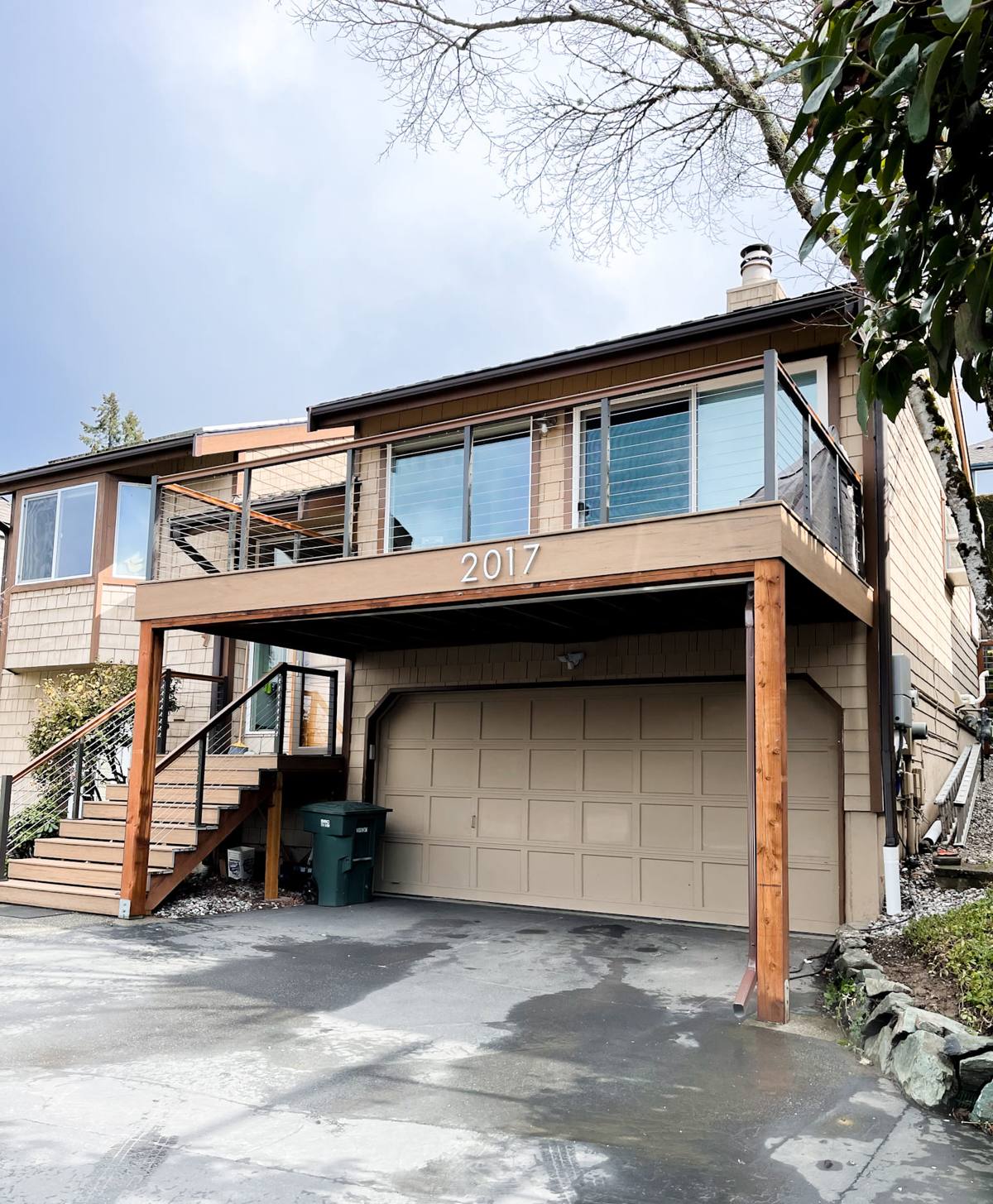
Common Problems We Find on Older Decks in the Area
Wood Rot and Hidden Moisture Damage
The most common issue on older Kenwood decks is moisture trapped where two pieces of wood meet — under ledger boards, around post bases, and at joist ends. Florida humidity means wood rarely gets a long stretch to fully dry out between rain events, so rot can progress for years in spots a homeowner never sees without pulling a board or getting underneath the structure.
Corroded or Failing Fasteners
Standard steel nails and screws don't hold up well this close to the coast. We regularly find fasteners that have rusted through or lost most of their holding strength long before the wood around them has failed, which is a structural problem even when the deck surface looks fine.
Undersized or Deteriorated Footings
Many older decks were built to whatever standard was common at the time, which sometimes means posts sitting on footings that are too small, too shallow, or have shifted with years of ground moisture. This is one of the least visible problems and one of the most important to catch.
Railings and Stairs Below Current Expectations
Railing height, baluster spacing, and stair construction on older additions often don't match what's expected on a code-compliant deck built today. This matters for safety regardless of how the deck looks otherwise.
What a Correct Deck Repair Actually Involves
A proper repair is not just swapping out the boards that look bad. It starts with an inspection from both above and below the deck — checking the ledger board attachment to the house, the condition of joists and beams, post and footing stability, and the state of every connection point, not just the ones visible from the top.
Ledger board flashing deserves particular attention in this climate. That's the connection where the deck attaches to the house, and it's one of the most common failure points because it traps water against the structure if it isn't flashed correctly. Fixing surface boards while leaving a poorly flashed ledger in place just delays the next problem.
Hardware matters just as much as lumber. Joist hangers, bolts, and fasteners should be rated for coastal exposure — stainless steel or hot-dip galvanized, not standard coated steel that corrodes quickly in salt air. And any structural work should meet current guardrail, stair, and framing requirements, even on a deck that's being repaired rather than fully rebuilt.
Repair or Replace? What Actually Decides It
Homeowners often ask whether it makes more sense to repair a problem area or rebuild the whole deck. The honest answer depends on a few specific factors, not the age of the deck alone.
| Factor | Usually Points to Repair | Usually Points to Replacement |
|---|---|---|
| Extent of rot | Isolated to a few boards or one post | Spread through multiple structural members |
| Ledger board condition | Solid, properly flashed | Rotted or improperly attached |
| Footings and posts | Stable, adequately sized | Undersized, shifted, or deteriorated |
| Cost relative to deck size | Repair cost is a fraction of rebuild cost | Repair cost approaches rebuild cost |
| Age and prior repairs | Recently built or previously well-maintained | Multiple past patch repairs stacking up |
As a rough guide, small structural or surface repairs on a deck that's otherwise sound tend to run from a few hundred dollars into the low thousands. A full or near-full rebuild is a bigger investment, typically several thousand dollars depending on size, framing condition, and materials — but we'll always give you a specific number after we've actually looked at the deck, not a guess over the phone.
Material Choices Worth Thinking Through
Pressure-treated lumber is still the traditional choice for deck framing and is what most older Kenwood decks were built with. It's affordable and workable, but it does require regular sealing or staining to hold up against this much sun and rain — skip that maintenance for a few years and you'll see it in the wood.
Composite and PVC decking boards are a low-maintenance option for the walking surface itself, and they resist the sun and moisture cycle better than raw wood over time. The trade-off is upfront cost and, in a historic neighborhood like Kenwood, appearance — some homeowners prefer to keep a traditional wood look on porches and decks that are visible from the street, and reserve composite for less visible areas. We'll talk through that trade-off honestly rather than pushing one material because it's easier for us to install.
Whatever the decking material, we treat hardware and fasteners as non-negotiable: stainless or hot-dip galvanized connectors, not standard coated steel, because that's where we see coastal decks fail first regardless of what the boards are made of.
Our Deck Repair Process
We keep the process straightforward and honest, because most homeowners just want to know what's actually wrong and what it will take to fix it right.
- On-site inspection of the full structure — deck surface, framing, ledger connection, posts, and footings, not just the parts that are easy to see.
- A clear explanation of what we found, including photos where useful, and an honest repair-versus-replace recommendation.
- A written estimate that separates structural work from cosmetic work, so you know exactly what you're paying for.
- Permitting through the appropriate local building department when the scope involves structural framing, footings, or guardrails — this isn't optional on structural work, and skipping it can create problems at resale.
- The repair or rebuild itself, using corrosion-resistant hardware and materials suited to a coastal Florida climate.
- A final walkthrough so you can see and understand exactly what was done.
Maintenance Checklist for Kenwood Homeowners
Between full inspections, there are things any homeowner can check to catch problems early, especially after a heavy storm season.
- Press on deck boards near the house and around posts — soft or spongy spots often mean rot has already started.
- Look underneath the deck for water staining, dark streaks, or visible mold on the framing.
- Check railings and guardrails for movement by pushing on them firmly, not just visually inspecting them.
- Look for rust stains bleeding out around nail and screw heads, a sign fasteners are corroding.
- Inspect the ledger board connection to the house for gaps, staining, or peeling paint, which can indicate trapped moisture.
- After any tropical storm or hurricane, walk the deck and stairs before using them normally, checking for new looseness or shifting.
- Reseal or restain pressure-treated wood on a regular schedule rather than waiting until it visibly grays or cracks.
Why Local Experience in Historic Kenwood Matters
A deck built in the 1930s or 1950s often used framing methods, wood species, and connection details that aren't common in new construction today. Crews who work regularly in older St. Petersburg neighborhoods recognize those older building patterns quickly, instead of treating every deck like a modern build and missing problems specific to how it was originally put together.
There's also the practical side of working in an established neighborhood — mature trees and landscaping close to the house, tighter side yards, and homes where the deck ties into the original structure in ways that need care to avoid unrelated damage. And in a designated historic district, there's often an added expectation that repairs respect the visual character of the home, even when the work itself is purely structural. That's a balance that comes from having done this kind of work in this kind of neighborhood before, not from a one-size-fits-all approach.
If you've got a deck or porch in Historic Kenwood that's showing its age — or you just want an honest read on its condition before it becomes a bigger problem — we're happy to come take a look. Fill out the form below for a free, no-pressure estimate.