 St. Petersburg Siding
 Why Coquina Key's Waterfront Setting Changes the Decking Calculus
Coquina Key sits on a peninsula wrapped by canals and open water, which means a lot of the outdoor living space here is built to sit right next to it — pool decks, dock-adjacent platforms, and lanai extensions that spend their entire lifespan a few feet from brackish water. That proximity is exactly what makes decking decisions different in this neighborhood than they'd be a few miles inland. Salt-laden air, near-constant humidity, intense sun, and the real possibility of a tropical system all load onto the same structure, and a deck that isn't built with that combination in mind will show it within a few seasons.
Salt Air and Humidity
Salt air doesn't just sit on the surface of a deck — it works into fasteners, connectors, and any exposed metal, accelerating corrosion far faster than it would inland. Combined with St. Petersburg's humidity, which rarely lets up even in the cooler months, wood substructures and untreated hardware are under constant low-grade attack. This is the main reason composite decking gets specified so often for canal-front and waterfront lots in Pinellas County — the boards themselves don't absorb moisture and swell the way lumber does.
UV and Heat
Florida sun is intense and consistent year-round, not seasonal the way it is in much of the country. Composite boards are engineered to resist UV fading and heat-driven expansion, but not all formulations handle it equally well — cheaper capless boards can fade unevenly and get noticeably hot underfoot compared to capped composite. Board selection matters more here than in a milder climate.
Wind and Storm Exposure
Hurricane-force wind events are a real design load for any outdoor structure in this part of Florida, not a rare exception. A deck's framing, ledger attachment, and railing system all need to be engineered and fastened to hold up under wind-driven rain and gusts, not just look good on a calm day. This is structural work as much as it is finish work, and it's where a lot of decking failures actually originate — not in the boards, but in what's underneath them.
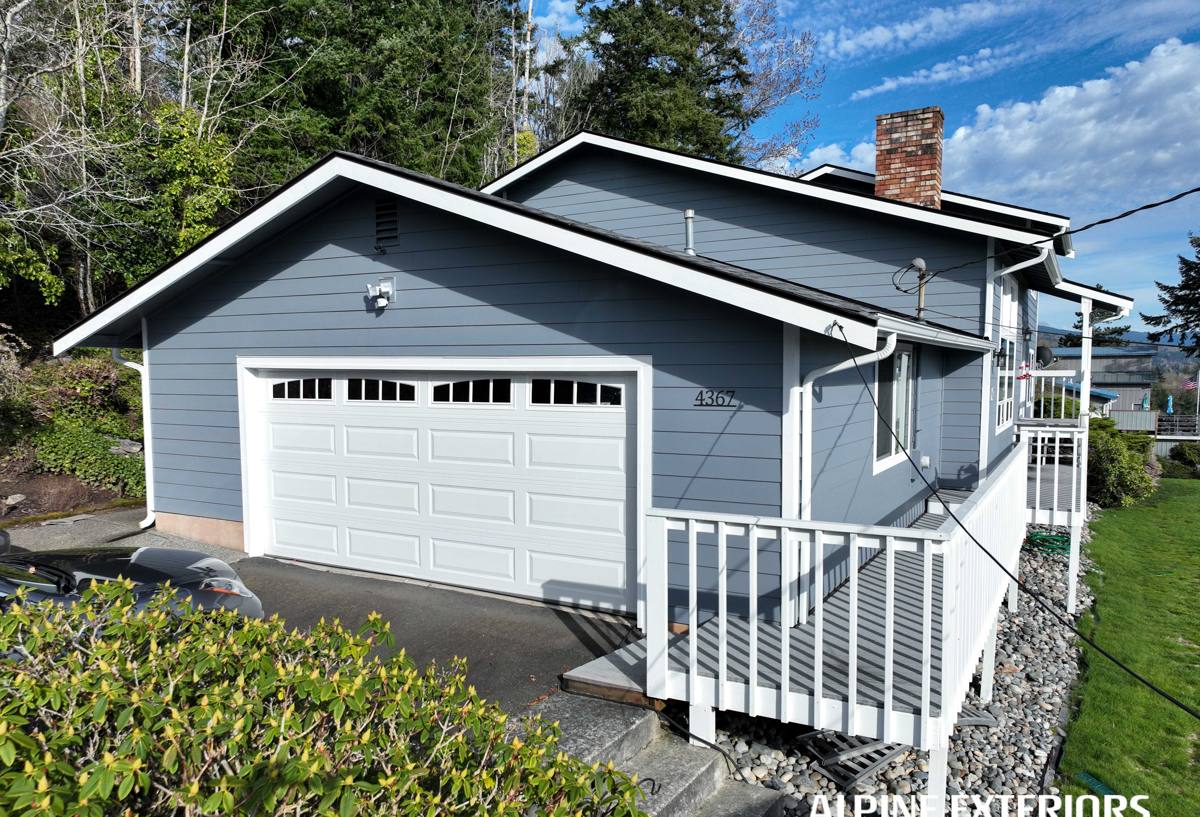
What "Correct" Composite Decking Looks Like on a Coquina Key Lot
A composite deck that's actually built for this environment involves several decisions working together, not just picking a board color.
- Pressure-treated or, where budget allows, hot-dip galvanized or composite substructure rated for coastal humidity exposure
- Stainless steel or coated fasteners throughout — not standard zinc, which corrodes quickly in salt air
- Proper joist spacing for the specific composite product being used (composite typically needs tighter spacing than wood)
- Ledger board flashing and attachment engineered for wind uplift, not just gravity load
- Ventilation gaps beneath the deck surface so moisture doesn't get trapped between boards and framing
- Railing posts anchored to resist lateral wind load, not just decorative attachment
Skip any one of these and the deck may look fine for a year or two before problems surface — usually as rust streaks, loose boards, or a railing post that's started to wobble.
Composite vs. Wood vs. PVC: What We Weigh for This Climate
We get asked why we lean toward composite for most Coquina Key jobs rather than pressure-treated wood or full PVC. Here's the honest breakdown of the trade-offs, not a sales pitch for one product.
| Factor | Pressure-Treated Wood | Composite | PVC/Cellular |
|---|---|---|---|
| Moisture & humidity behavior | Swells, cups, and checks over time in high humidity | Stable — minimal moisture absorption | Very stable, fully moisture-resistant |
| Salt air / corrosion resistance | Depends entirely on fastener and hardware choice | Board itself unaffected; hardware still matters | Board itself unaffected; hardware still matters |
| UV/heat performance | Grays and roughens with sun exposure | Capped boards resist fading well | Excellent UV stability, can run hot underfoot |
| Maintenance burden | Annual sealing/staining recommended | Occasional wash-down, no sealing | Lowest maintenance of the three |
| Upfront cost | Lowest | Mid-range | Highest |
| Feel underfoot | Natural wood feel | Wood-like, some flex | Firmer, plastic feel |
Wood isn't a bad material — it's just a higher-maintenance one in this climate, and a lot of homeowners here are choosing decking specifically to get away from annual upkeep. PVC is a legitimate option too, and we'll install it when a homeowner wants it, but it costs more and some products get noticeably hot in direct Florida sun. Composite tends to land in the sweet spot of durability, appearance, and cost for most Coquina Key projects, which is why it's what we recommend most often.
Our Installation Process
- On-site assessment — we look at the existing structure (if any), grade, drainage, proximity to water, and how the deck ties into the house.
- Design and material selection — board profile, color, and hardware are chosen together, factoring in sun exposure and how close the deck sits to the canal or pool.
- Permitting — deck projects in St. Petersburg typically require a permit; we handle that paperwork rather than leaving it to the homeowner.
- Substructure build — framing, ledger attachment, and joist layout, all fastened with corrosion-resistant hardware.
- Decking installation — boards fastened per manufacturer spacing and gap requirements, with attention to expansion room for heat.
- Railing and trim — installed and anchored for wind load, with fascia and picture-frame detailing where specified.
- Final walkthrough — we check fastener seating, board alignment, and railing rigidity before calling it finished.
Board Selection: What Actually Matters
Not every composite board is built the same, and in a high-UV, high-salt environment the differences show up faster than they would somewhere milder.
Capped vs. Uncapped
Capped composite has a polymer shell wrapped around the wood-plastic core, which is what actually gives it its stain and fade resistance. Uncapped or partially capped boards cost less but are more prone to surface wear and moisture uptake at cut edges over time — something to weigh carefully on a waterfront lot.
Color and Heat
Darker board colors absorb more heat, which matters on a deck that gets full Florida sun for most of the day. Lighter and mid-tone colors stay noticeably cooler underfoot through summer, which is worth considering for anyone planning to walk the deck barefoot regularly.
Board Profile
Grooved-edge boards (for hidden fastener systems) give a cleaner look but require a compatible clip system; square-edge boards are more straightforward and easier to repair a single board on if it's ever damaged.
Railings, Fasteners, and Hardware for Salt Air
The hardware is where a lot of otherwise-good decks fail early in coastal Pinellas County. Standard zinc-coated screws and brackets will corrode in salt air faster than most homeowners expect, leaving rust streaks on composite boards and, eventually, weakened connections. We spec stainless steel or marine-grade coated fasteners throughout, along with composite or aluminum railing systems that don't carry the same corrosion risk as untreated steel or basic aluminum alloys. It costs a bit more up front than using whatever hardware is on the shelf, but it's the difference between a deck that looks good for five years and one that still looks good after fifteen.
Maintenance: What Coquina Key Homeowners Should Actually Do
Composite decking is low-maintenance, not no-maintenance — especially this close to the water. A simple seasonal routine keeps it performing the way it's supposed to.
- Rinse the deck surface every few weeks to clear salt residue, pollen, and organic debris before it builds up
- Wash with mild soap and a soft-bristle brush a few times a year, more often near a pool or canal
- Check railing posts and fastener points annually for any looseness or corrosion streaking
- Keep planters and furniture feet from trapping moisture against the board surface
- Clear leaves and debris from between boards so drainage gaps stay open
- After any major storm, do a quick visual check of railings and ledger attachment before heavy use
Permits, Flood Zone, and Local Considerations
Much of Coquina Key sits close to canals and open water, and a fair number of properties fall within flood zones that carry their own building requirements. That can affect things like how a deck's framing connects to the house, elevation relative to grade, and what documentation the city wants before work starts. We pull the required St. Petersburg permits and build to the load and wind requirements that apply in Pinellas County, rather than treating it as an afterthought once the deck is framed.
Why Hire a Crew That Already Works Coquina Key
A contractor who's worked this specific stretch of St. Petersburg already knows how canal-front lots drain, how salt air behaves on hardware over a few seasons, and what the permitting process actually requires here — rather than learning it on your project. That local familiarity shows up in small decisions throughout the job: fastener selection, substructure spacing, how the deck ties into an existing pool or lanai, and where drainage needs extra attention. It's the difference between a deck built to a generic spec sheet and one built for the lot it's actually sitting on.
If you're considering composite decking for a home on Coquina Key, we're happy to walk the property, talk through board and hardware options, and give you a straightforward, no-pressure estimate — just fill out the form below to get started.