 St. Petersburg Siding
 Why Pinellas Park Roofs Wear Out Faster Than the Rest of the Country
Pinellas Park sits in one of the toughest climates in the country for an asphalt shingle roof. The combination that does the damage isn't any single factor — it's all of them stacked together, year after year. Intense, nearly year-round UV exposure bakes the oils out of shingle asphalt, making it brittle. Wind-driven rain during summer storms and tropical systems finds every gap in flashing and underlayment that a milder climate would never expose. Hurricane-force gusts test every nail and shingle tab for uplift resistance. And because Pinellas Park sits close enough to Tampa Bay and the Gulf to catch salt-laden air, metal flashing, fasteners, and vents corrode faster than they would inland.
None of that means asphalt shingles are a poor choice here — they remain one of the most cost-effective, widely used roofing materials in Pinellas County. It means the installation has to be done correctly for this specific climate, not just installed to a generic national standard. A roof that would perform fine in a drier, calmer part of the country can fail early here if corners are cut on underlayment, fastening, or ventilation.
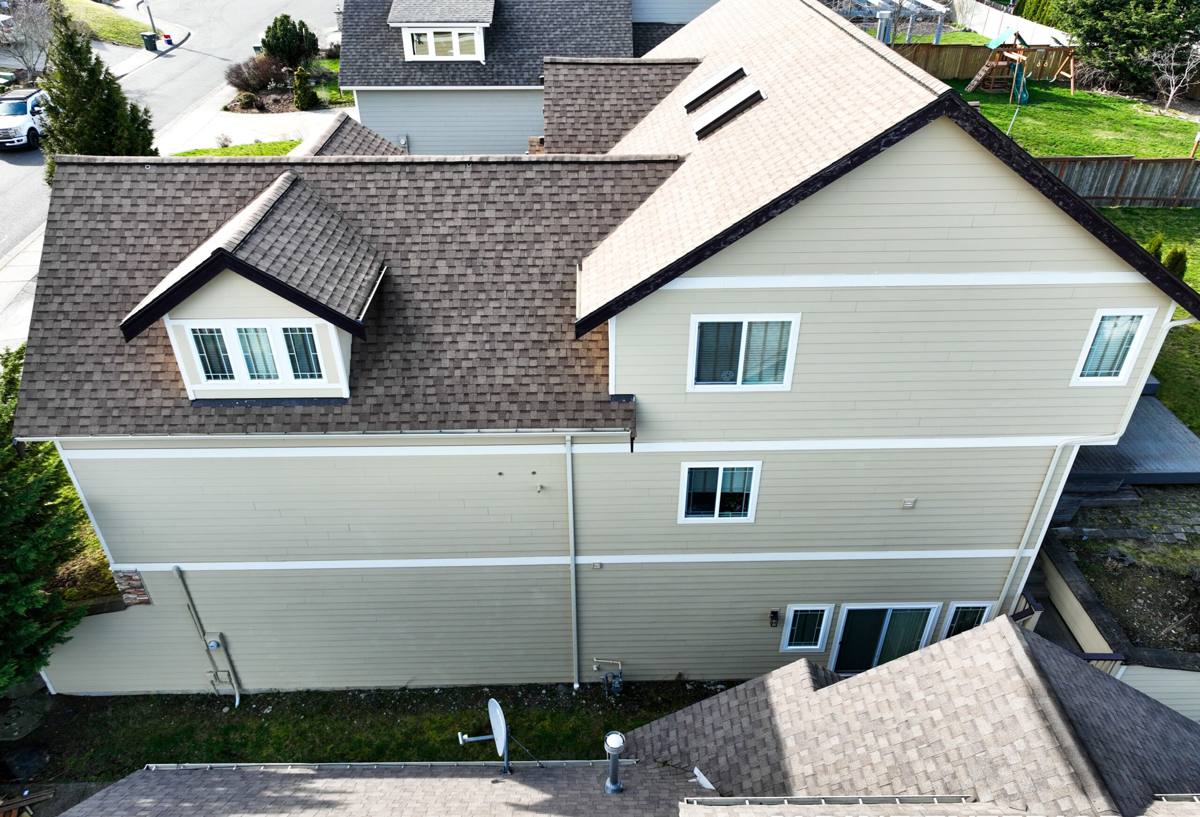
What a Correctly Installed Shingle Roof Includes in This Climate
"Correct" isn't a marketing word — it's a specific set of details that either get done right or don't. In a high-wind, high-UV, salt-air environment, these details matter more than they would elsewhere.
Deck Inspection and Underlayment
Before a single shingle goes down, the roof deck needs to be checked for soft spots, delamination, and proper fastening — plywood or OSB that's been slowly compromised by old leaks won't hold nails securely no matter how good the shingles are. Over sound decking, a synthetic or self-adhering underlayment provides the real waterproofing layer. In wind-driven rain, water can be pushed sideways and even slightly uphill under shingle tabs, so underlayment coverage and lap direction matter far more here than in calmer climates.
Fastening and Wind Resistance
Nail pattern, nail type, and nail placement are what actually keep a roof on during a windstorm — not the shingle brand. Six-nail patterns instead of four, correct nail penetration into the deck, and avoiding high-nailing (a common shortcut that reduces wind resistance) are all things that separate a roof that survives a storm season from one that doesn't.
Flashing, Valleys, and Penetrations
Most leaks don't start in the open field of shingles — they start at transitions: valleys, walls, chimneys, skylights, and pipe boots. Correctly stepped and counter-flashed details, along with woven or properly lapped valley protection, are what keep wind-driven rain from finding its way in during a sideways summer storm.
Starter Strips, Hip, and Ridge
The edges of a roof take the highest uplift pressure in a windstorm. Proper starter strip adhesive along eaves and rakes, and correctly fastened hip and ridge caps, are a small material cost that has an outsized effect on whether shingles stay put in a gust.
Choosing the Right Shingle for a Coastal Pinellas County Home
Not every asphalt shingle is built the same way, and the differences matter more here than in a mild inland climate. The table below compares the broad categories homeowners in Pinellas Park typically choose between.
| Shingle Type | Wind Performance | Typical Lifespan Here | Best Fit |
|---|---|---|---|
| 3-Tab (economy) | Lower wind rating; tabs more prone to lifting | Shorter end of the range | Budget-driven projects, rentals |
| Architectural / Laminate | Higher wind rating due to multi-layer construction | Mid-to-long range with correct install | Most owner-occupied homes |
| High-Wind / Impact-Rated | Highest available wind and impact ratings | Long end of the range | Exposed lots, insurance premium credits |
Beyond the category, look for shingles carrying recognized wind and impact test ratings (the ASTM and UL classifications manufacturers publish) rather than relying on marketing language alone. Algae-resistant granules are also worth asking about — the humidity here encourages the dark algae streaking that shows up on north-facing slopes within a few years on shingles without that protection.
Attic Ventilation: The Part Homeowners Never See
A shingle roof isn't just the shingles — it's a system that includes how the attic breathes. In Florida heat, an under-ventilated attic traps moisture and heat against the underside of the roof deck, which shortens shingle life from below at the same time UV is aging it from above. Balanced intake at the soffits and exhaust at the ridge or through properly sized vents keeps attic temperatures and moisture in check, reduces cooling costs, and protects the manufacturer's shingle warranty, which often has ventilation requirements buried in the fine print. This is one of the most common things we find overlooked on older Pinellas Park roofs — vents that were painted over, blocked by insulation, or never balanced correctly in the first place.
Our Process, From Estimate to Cleanup
- On-site inspection: We walk the roof and attic, not just look at it from the driveway, checking deck condition, ventilation, flashing points, and any signs of prior leaks.
- Written scope and estimate: You get a clear breakdown of materials, labor, and any deck repair contingencies before work starts — no vague allowances.
- Permitting: We pull the required permit through the local building department before tear-off begins.
- Tear-off and deck check: Old roofing comes off down to the deck so it can be inspected and repaired where needed, rather than roofing over hidden problems.
- Underlayment and flashing installation: Waterproofing goes down first, followed by new flashing at every valley, wall, and penetration.
- Shingle installation: Starter strips, field shingles, and hip/ridge caps go on following the fastening pattern the shingle's wind rating requires.
- Ventilation check: Intake and exhaust venting is confirmed or corrected as part of the job, not treated as an afterthought.
- Cleanup and magnetic sweep: Job site and yard are cleared of debris and swept for stray nails.
- Final walkthrough and inspection sign-off: We review the finished roof with you and close out the permit inspection.
Maintenance Checklist for Pinellas Park Homeowners
Asphalt shingle roofs are low-maintenance compared to some other materials, but "low-maintenance" doesn't mean "no-maintenance" in this climate. A short annual routine catches small problems before they become deck damage or interior leaks.
- Look at the roofline from the ground after any named storm or major wind event for missing, lifted, or creased shingles.
- Check for granule buildup in gutters and downspouts, which signals accelerated shingle wear.
- Keep gutters and valleys clear of leaves and debris so wind-driven rain has a clear path off the roof.
- Trim overhanging tree limbs that can abrade shingles in wind or drop debris during storms.
- Watch for dark streaking (algae) or dark stains near vents and flashing, which can indicate moisture issues rather than just cosmetics.
- Have the roof professionally inspected after any hail event or every few years even without obvious damage.
- Check attic insulation and vents periodically for signs of moisture, staining, or blocked airflow.
Repair or Replace? Weighing the Signs
Not every issue means a full replacement, but ignoring the wrong signs can turn a repair into a much bigger job. The table below outlines how we typically evaluate this with homeowners.
| What You're Seeing | Usually Means | Typical Path |
|---|---|---|
| A few missing or lifted shingles after a storm | Localized wind damage | Spot repair |
| Granule loss concentrated in one area | Isolated wear or old storm damage | Repair, with monitoring |
| Widespread granule loss, curling, or brittleness | Shingles reaching end of service life | Full replacement |
| Leaks at multiple points, or staining spreading in the attic | Underlayment or flashing failure | Full replacement |
| Roof is approaching or past its expected lifespan for this climate | Diminishing wind and water resistance | Replacement planning |
Permits, Codes, and Insurance Considerations in Pinellas County
A full roof replacement in Pinellas County requires a building permit and inspection — that's not optional, and it's also your protection as a homeowner. Permitted work confirms the roof was installed to current Florida Building Code wind-resistance requirements, which matters both for safety and for insurance. Many Florida insurers now ask for roof age, permit history, and shingle wind rating when underwriting or renewing a policy, and some offer premium credits for higher wind-rated roofing systems. Skipping the permit process to save time can come back to bite you at resale or claim time, so it's worth confirming any contractor you hire is pulling permits properly rather than treating it as paperwork to skip.
Why a Crew That Already Works in Pinellas Park Matters
Roofing knowledge that works in Ohio or Colorado doesn't automatically transfer to St. Petersburg. A crew that regularly works Pinellas Park and the surrounding Pinellas County area already knows the local permitting process, has a feel for how quickly summer storms roll in and how that affects scheduling, and has seen firsthand which installation shortcuts fail first in this climate — usually starting with under-fastened shingles and skipped flashing details, not the shingle brand itself. That local repetition is what lets a crew move efficiently without cutting the corners that matter most here. It also means someone is nearby and familiar with your roof if a warranty question or storm-related concern comes up later, rather than a crew that installed once and moved on.
If you're weighing a repair, a full replacement, or just want an honest read on where your current roof stands, we're happy to take a look. Reach out for a free, no-pressure estimate using the form below.