 St. Petersburg Siding
 Decking on Pinellas Point Has to Answer to the Water
Pinellas Point sits at the southern edge of St. Petersburg, with Tampa Bay on multiple sides of the neighborhood. That waterfront position is exactly why decks here age differently than decks ten miles inland. Salt-laden air moves off the bay year-round, UV exposure is intense for most of the year, and wind-driven rain during storm season finds every gap in a poorly built structure. A deck that would hold up fine in a drier, shadier part of Pinellas County can fail early here — not because the homeowner did anything wrong, but because it wasn't built or fastened with this exposure in mind.
Composite decking exists in large part to deal with this kind of environment. It doesn't rot, it doesn't need annual staining, and the better products resist fading and moisture absorption far longer than wood. But "composite" covers a wide range of quality, and the decking board is only one part of a deck that has to survive salt air, sun, and hurricane-season wind for decades. This page covers what actually matters when you're building or replacing a composite deck in Pinellas Point.
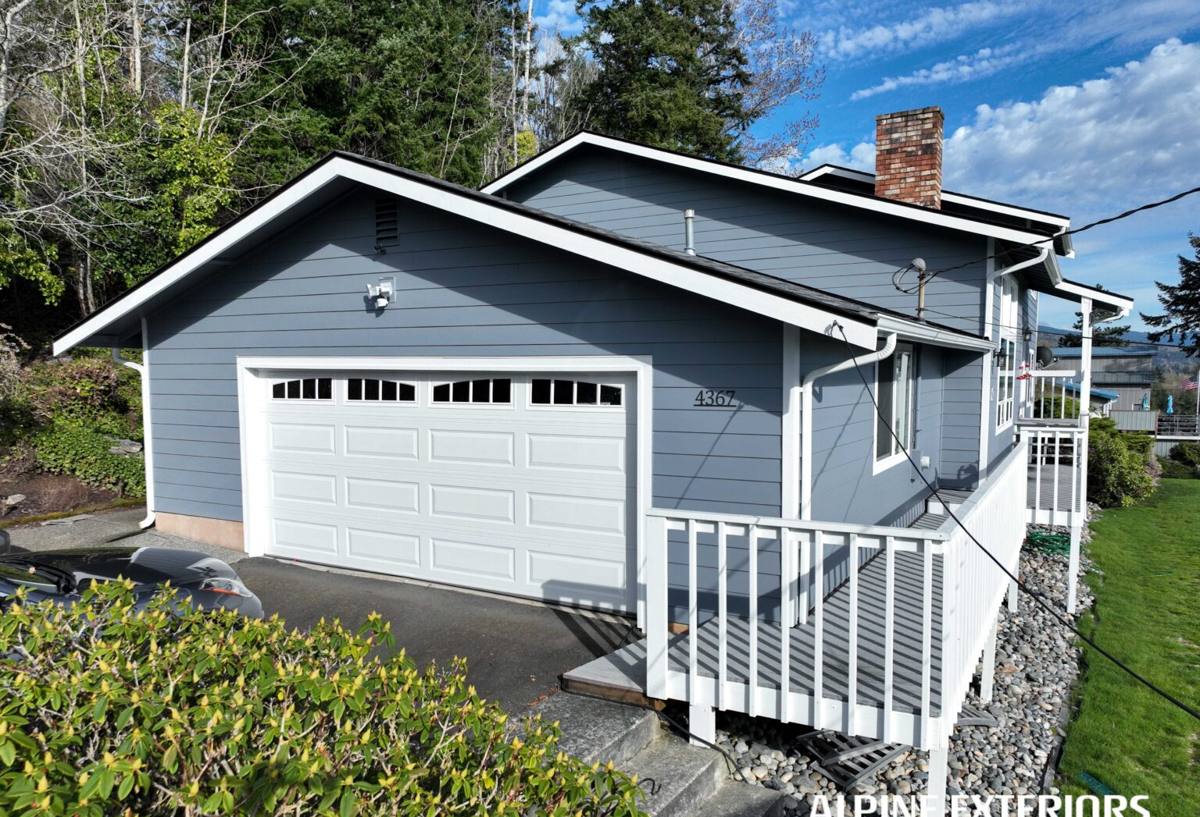
What "Composite Decking" Actually Means
Composite decking is a broad category, and the differences between products matter more here than in a mild climate. Most boards fall into one of two groups:
Capped Composite
A wood-fiber and plastic core surrounded by a plastic "cap" on all sides. The cap is what actually resists moisture, staining, and UV fading — the core underneath still contains organic wood fiber, but it's sealed off from the elements as long as the cap isn't cut, gouged, or left exposed at a fastener hole. This is what we recommend for almost every project in this area.
Uncapped Composite
Older-generation composite with no protective outer layer. The wood fiber in the core is exposed directly to moisture and sun, which means it can absorb water, swell, and fade faster — a real liability in a climate with this much rain and UV. We don't install uncapped composite on waterfront or near-waterfront properties; the moisture exposure here works against it from day one.
PVC (Cellular PVC) Decking
Not technically a "composite" since it has no wood content, but it's often shopped alongside composite because it solves the same problem: rot-proof, moisture-proof decking. PVC is fully synthetic, doesn't absorb water at all, and holds up well in coastal air. It typically costs more than capped composite and can run hotter underfoot in direct sun, which is a real consideration on a south-facing Pinellas Point deck.
| Material | Moisture Behavior | UV/Fade Resistance | Maintenance | Typical Fit |
|---|---|---|---|---|
| Capped Composite | Sealed core resists absorption | Good to very good | Occasional wash | Best all-around choice for this area |
| Uncapped Composite | Core can absorb moisture over time | Fades faster | More frequent cleaning | We avoid this near the water |
| PVC | No absorption, fully synthetic | Excellent | Very low | Premium option, runs warmer underfoot |
| Pressure-Treated Wood | Absorbs and releases moisture constantly | Fades and grays, needs staining | Annual sealing/staining | Lowest upfront cost, highest upkeep |
What a Correct Build Requires in This Climate
The decking boards get the attention, but most deck failures we're called out to fix in coastal St. Petersburg neighborhoods start below the surface — in the framing, fasteners, and connections that never see daylight.
Substructure and Fasteners
Salt air accelerates corrosion on standard fasteners and hardware far faster than it does inland. On Pinellas Point projects we use stainless steel or heavy-duty coated fasteners and structural hardware rated for coastal or ACQ-treated lumber contact, not the cheapest galvanized option available. A joist hanger that rusts through in eight years instead of twenty-five is a hidden problem until the deck starts to move underfoot.
Ledger Attachment and Flashing
Where the deck attaches to the house is the single most common failure point on any deck, anywhere — and wind-driven rain off the bay makes it worse here. Proper flashing behind and over the ledger board, with correct fastener spacing and a real gap or waterproof membrane at the house connection, keeps water from tracking behind your siding and into the wall framing. This is not an area to shortcut.
Drainage and Airflow Underneath
Boards need consistent gapping for water to drain through rather than pool on the surface, and the space underneath the deck needs enough airflow to dry out after our afternoon storms. Decks built low to the ground or against solid skirting with no ventilation stay damp longer, which invites mold and accelerates hardware corrosion even when the boards themselves are rot-proof.
Railings and Fascia
Railing posts are structural, not decorative — they need to be through-bolted to framing rated for the loads, not just screwed to a rim joist. Composite or aluminum railing systems hold up better than wood in this climate for the same reasons the decking does: no rot, no repainting, better UV resistance.
Common Mistakes We See on Local Rebuilds
When we're called out to look at a failing deck in this part of St. Petersburg, it's rarely the composite boards themselves that caused the problem. It's usually one of these:
- Standard (non-coated) fasteners used near saltwater exposure, corroding years ahead of schedule
- No flashing, or inadequate flashing, at the ledger board connection to the house
- Boards installed tight with no expansion gap, causing buckling as the material moves with heat
- Uncapped composite installed on a low, poorly ventilated deck that stays damp after storms
- Railing posts attached with screws only, with no structural blocking behind them
- Composite boards installed directly over undersized or improperly spaced joists
Our Process for Pinellas Point Projects
We treat every deck here as a coastal-exposure build, whether the home backs directly onto the bay or sits a few blocks inland — salt air doesn't stop at a fixed distance from the water.
- On-site assessment. We look at sun exposure, prevailing wind and rain direction, existing structure (if this is a replacement), and how the deck ties into the house.
- Structural plan. Framing layout, footing depth, hardware and fastener specification, and ledger flashing detail — sized to Florida Building Code wind and load requirements for this area.
- Permitting. Deck construction in St. Petersburg and Pinellas County requires a permit and inspection; we handle that process rather than leaving it on the homeowner.
- Build. Framing and structural inspection first, then decking, fascia, and railing installed to manufacturer spec so warranty coverage stays intact.
- Final walkthrough. We go over drainage, gapping, and basic care with you before we consider the job finished.
Living With a Composite Deck Near the Bay
Composite decking is marketed as low-maintenance, and relative to wood it is — but "low-maintenance" isn't "no-maintenance," especially this close to saltwater.
- Rinse the deck periodically to clear salt residue, pollen, and airborne debris before it builds up
- Clean up leaf litter and organic debris promptly so it doesn't trap moisture against the boards
- Check railing hardware and fastener heads once or twice a year for early corrosion, especially after hurricane season
- Keep gutters and downspouts near the deck clear so runoff isn't concentrated onto one section
- Confirm your specific product's cleaning guidance — some capped composites are sensitive to certain solvents and pressure-washer settings
What It Costs and What Drives the Price
Composite decking costs more upfront than pressure-treated wood and less than most PVC systems, but the real cost swing on any given project comes from the structure underneath, not just the board choice.
| Cost Factor | Why It Matters Here |
|---|---|
| Deck size and shape | Square footage, plus corners, stairs, and multi-level layouts add labor |
| Substructure condition | Replacing rotted or corroded framing on an older deck adds cost before boards go on |
| Fastener and hardware grade | Coastal-rated stainless hardware costs more than standard galvanized but avoids early corrosion |
| Decking tier | Entry-level capped composite vs. premium composite or PVC changes material cost significantly |
| Railing system | Composite, aluminum, or cable railing all price differently and hold up differently in salt air |
| Permitting and inspection | Required for new decks and most rebuilds in St. Petersburg; factored into project timeline and cost |
We give a firm number after seeing the site and the current structure — not a phone estimate, since the substructure condition is often the biggest variable on a replacement.
Why Local Experience in Pinellas Point Matters
A crew that mostly builds decks inland, away from the bay, doesn't necessarily think in terms of coastal fastener grades, ledger flashing detail, or ventilation underneath the deck — because they haven't had to. Working regularly in this part of Pinellas County means we've already seen how standard-spec decks perform against this exposure, and we build to that reality from the start rather than learning it from a callback five years in. We also know the local permitting process, which keeps the inspection stage from becoming a delay.
If you're planning a new composite deck or replacing one that's showing its age, we're happy to take a look and give you a straightforward, no-pressure estimate — just fill out the form below and we'll set up a time to come out.