 St. Petersburg Siding
 Why Childs Park Homes Need Storm-Ready Roof Repair
Childs Park sits well inland from the Gulf, but "inland" doesn't mean sheltered. In Pinellas County, every roof takes a beating from the same combination of forces: tropical系统 winds that arrive several times a season, intense subtropical sun that never really lets up, humid air that carries salt further than most homeowners realize, and downpours that don't fall straight down so much as get driven sideways into every seam and lap joint on the roof. A roof in this neighborhood works harder over a normal year than a roof almost anywhere outside the Gulf Coast.
That means storm damage here isn't always a dramatic missing-shingle event. Just as often it's a slow accumulation — lifted tabs, a cracked pipe boot, nails backing out of decking that's been through one too many wind events — that turns into an interior leak weeks or months after the storm that actually caused it. Repairing storm damage correctly in this climate means treating the roof as a system that has to survive the next storm, not just patching what's visibly broken from the last one.
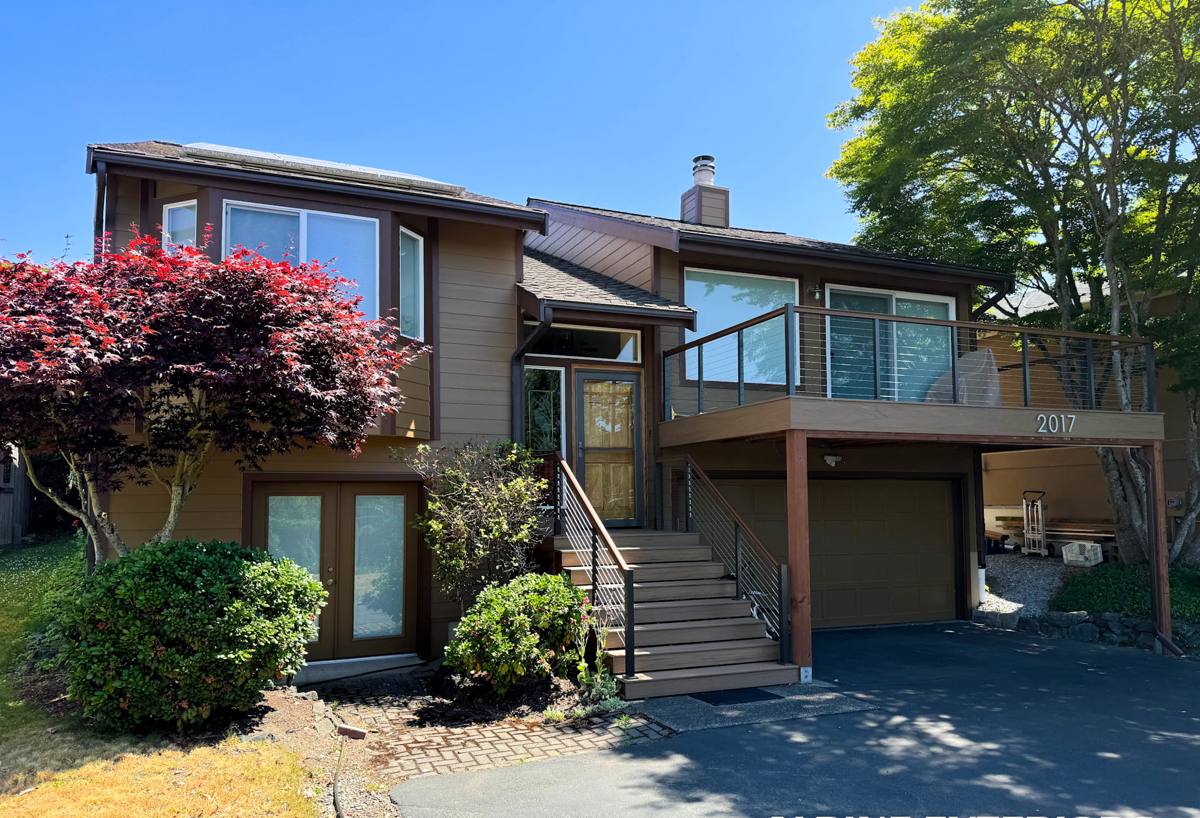
How Pinellas County Storms Damage a Roof
Wind
Straight-line gusts and hurricane-force wind don't just rip shingles off in one clean event. More often they work an edge loose, lift a tab a fraction of an inch, and break the seal underneath — damage that's easy to miss from the ground but leaves that shingle free to flap, crack, and eventually let water underneath on the next rain. Roof edges, ridge lines, and any spot near a chimney or vent are where wind finds a weak point first.
Wind-Driven Rain
Florida rain rarely falls straight down during a storm. When it's coming in at an angle, water gets pushed uphill under shingle laps, around flashing, and into any gap that a calm-weather rain would never reach. This is why a roof can look intact after a storm and still develop a leak — the damage is at the underlayment and flashing level, not on the visible surface.
UV and Heat
Year-round sun bakes the oils out of asphalt shingles and dries out sealants faster than in most of the country. A roof that's already a few years into its UV exposure has less flexibility left in it, so it takes less wind or hail to crack or lift shingles that would have held up fine when they were new.
Salt Air
Even away from the immediate coastline, salt-laden air moving across the county accelerates corrosion on exposed metal — flashing, fasteners, vent stacks, and drip edge. Corroded fasteners lose their grip strength, which means they hold shingles down less securely exactly when wind loads are highest.
Signs Your Childs Park Roof Has Storm Damage
Some storm damage is obvious. A lot of it isn't. After any significant wind or rain event, it's worth checking for the following before assuming the roof came through fine:
- Shingles that look curled, cracked, or slightly lifted at the edges, even if none are missing
- Granules collecting in gutters or at the base of downspouts
- Soft spots or discoloration on ceilings, especially near exterior walls or chimneys
- Visible gaps or bent flashing around vents, skylights, or chimneys
- Sagging sections of roofline or fascia pulling away from the structure
- Debris or granule staining on the driveway or in valleys after a storm
- A musty smell in the attic, which often shows up before any visible ceiling stain
None of these guarantee a major problem, but any one of them is a reason to have the roof looked at before the next rain finds the weak spot.
What a Proper Storm Damage Repair Actually Involves
Inspection Before Assumptions
A repair that starts with "let's just replace the missing shingles" often misses the damage that isn't visible from the ground. A proper job starts with getting on the roof, checking the decking for soft spots, checking fastener condition, and tracing any interior leak back to its actual entry point — which is sometimes several feet from where the water shows up inside.
Decking and Structure
If wind or prolonged water intrusion has softened the decking underneath, patching over it just hides the problem. Damaged decking gets cut out and replaced before anything new goes down on top of it — skipping this step is the single most common shortcut that leads to a repair failing again in the next storm.
Underlayment and Flashing
Underlayment is the roof's actual water barrier; the shingles are the wear layer on top of it. Any repair that disturbs shingles in an area should include a look at the underlayment underneath, and flashing around penetrations should be resealed or replaced rather than just caulked over.
Matching the Existing Roof
For a repair (as opposed to a full replacement), matching the existing shingle profile, color, and where possible age/wear is part of doing the job right — mismatched patches are a cosmetic problem now and a resale problem later.
Our Storm Damage Repair Process
Storm repair calls get handled differently than a routine roof job because timing matters — every day a compromised roof sits exposed is another chance for a small leak to become a bigger one.
- Inspection and documentation — a full roof and attic check, with photos of the damage for your own records and for any insurance claim
- Temporary protection — if there's an active leak or exposed decking, we get it covered to stop water intrusion before anything else happens
- Scope and estimate — a clear written explanation of what's actually damaged, what needs replacing versus what can be repaired, and why
- Repair work — decking, underlayment, flashing, and shingle work done in that order, not shortcuts stacked on top of each other
- Final walkthrough — checking the repair from the ground and from inside the attic before we consider the job finished
Repair or Replace? What Determines the Right Call
Not every storm-damaged roof needs a full replacement, and not every roof can be safely patched. The honest answer depends on a few concrete factors:
| Factor | Favors Repair | Favors Replacement |
|---|---|---|
| Roof age | Under 10–12 years | Near or past expected shingle lifespan |
| Extent of damage | Isolated to one slope or section | Spread across multiple slopes |
| Decking condition | Solid, no soft spots found | Widespread rot or soft decking |
| Shingle availability | Matching shingle still available | Discontinued profile or color |
| Storm history | First significant damage event | Repeated damage over recent seasons |
We'll tell you honestly which side of that table your roof falls on rather than defaulting to the more expensive option.
Why Local Experience in Childs Park Matters
A crew that already works this part of St. Petersburg knows the practical details that make a repair actually hold: which permitting steps Pinellas County requires for roof work, what wind-uplift standards apply to repairs versus full replacements, and how the older housing stock common in this neighborhood tends to be built underneath the shingles. That last point matters more than it sounds — decking thickness, rafter spacing, and ventilation setups vary by the era a house was built, and a repair plan that doesn't account for that can look fine on the surface and still fail early.
There's also a plain logistical advantage: a crew already working in the area can usually respond faster after a storm than one dispatching from across the county, which matters when the difference is measured in how much additional rain gets into your attic before the leak is stopped.
Material Considerations for Florida Storm Repairs
We don't push a single brand for every repair — the right material choice depends on what's already on the roof and what the homeowner's priorities are. A few honest trade-offs worth knowing:
- Standard asphalt shingles are the most common match for existing Childs Park roofs and the most budget-friendly to repair in sections
- Higher wind-rated shingle lines cost more but make sense on roofs that have taken repeated storm damage
- Metal flashing versus lower-grade alternatives — we favor properly formed and sealed metal flashing at penetrations because it holds up better to the area's salt air over time; anything that requires frequent recaulking is a maintenance burden we'd rather not hand a homeowner
- Fastener quality matters more here than in drier, calmer climates — corrosion-resistant fasteners are worth the small added cost given how much salt-laden air moves through this region
Working With Insurance After a Storm
Most storm-related roof damage gets filed as an insurance claim rather than paid out of pocket, and how the repair is documented affects how smoothly that process goes. We photograph and describe the damage in a way that's useful to an adjuster, and we'll walk you through what's typically covered as storm damage versus what falls under normal wear and maintenance — those are two different categories to an insurance company, and being upfront about which one applies avoids surprises later in the claim.
If a recent storm has you wondering whether your roof came through it in one piece, we're glad to take a look. Fill out the form below for a free, no-pressure estimate — we'll tell you plainly what we find, what it needs, and what it doesn't.