 St. Petersburg Siding
 Why Decks in Roser Park Take More Abuse Than the Brochure Suggests
A deck in Roser Park doesn't live an easy life. This is one of St. Petersburg's older, established neighborhoods, with a lot of homes built decades before anyone was thinking about modern wind codes, and mature tree canopy that keeps yards shaded, damp, and slower to dry out after a storm. Add in the realities of living this close to the Gulf — hurricane-force wind gusts, sun that beats down nearly year-round, wind-driven rain that gets pushed sideways into every joint and seam, and salt-laden air that works on metal fasteners whether they're near the water or not — and you've got a structure that has to earn its keep every single day, not just look good on the day it's finished.
A deck built the way it might be built inland, or built to a minimum-code spec with whatever lumber and hardware happened to be on the truck, tends to show its age fast here. Boards cup and split, railings loosen, and rust streaks start bleeding out of screw heads within a year or two. None of that is inevitable. It's mostly a function of whether the framing, fasteners, and decking material were actually chosen for Pinellas County conditions instead of a generic spec sheet.
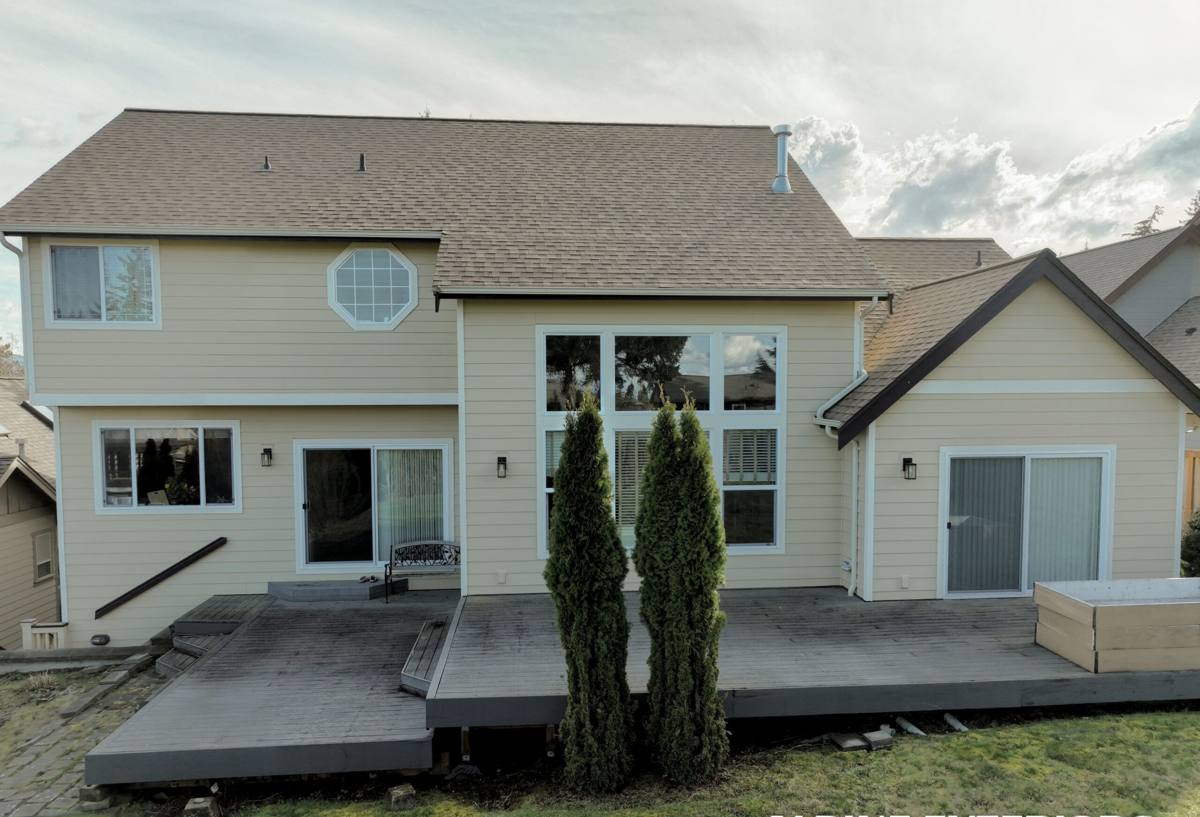
Framing First: Getting the Structure Right for Florida Weight and Wind
The decking boards are what everyone notices, but the framing underneath is what determines whether the deck is still solid in ten years. This is also where most corner-cutting happens, because it's the part that gets covered up.
Footings and Posts
Post footings need to be sized and set to actual soil conditions and local frost-free depth requirements, not guessed at. Pinellas County soil varies block to block, and a footing that's too shallow or undersized is the single most common reason a deck starts to rack or lean within a few years. On sloped or uneven lots — and Roser Park has more elevation change than most of flat Pinellas County — post heights and bracing also need to account for the extra leverage that comes with taller, less-supported posts.
Ledger Attachment and Flashing
Because we're a siding contractor first, we pay close attention to the one connection point most deck crews treat as an afterthought: where the deck's ledger board bolts into the house. That attachment has to be flashed correctly so wind-driven rain doesn't track behind it and into the wall assembly. A poorly flashed ledger is one of the most common causes of hidden rot — not in the deck, but in the siding and framing of the house itself, discovered years later when the damage is already extensive. Get this detail right the first time and it's a non-issue for the life of the deck.
Joists, Hardware, and Hurricane Connections
Joist hangers, post bases, and hold-down hardware all need to be rated for exterior, coastal use, and sized to actual wind load requirements for this area — not just whatever the lumber yard had in stock. Pressure-treated lumber today is manufactured with chemicals that are corrosive to plain or standard galvanized fasteners, which is part of why so many older decks show rust bleed and loosening hardware well before the wood itself fails. Matching hardware to the treated lumber it's fastened to isn't optional here.
Choosing a Decking Material for Roser Park's Sun and Salt Air
There's no single "best" decking material — there's a best material for a given budget, maintenance appetite, and how much direct sun and rain the deck will actually see. Here's how the common options really compare under our conditions:
| Material | Upfront Cost | Maintenance | Sun & Moisture Behavior | Realistic Lifespan |
|---|---|---|---|---|
| Pressure-treated pine | Lowest | Sealing/staining every 1-2 years | Prone to cupping, splintering, and graying without upkeep | 10-15 years |
| Tropical hardwood | High | Regular oiling to maintain color and prevent checking | Naturally dense and rot-resistant; can still gray without oil | 20-25+ years |
| Composite decking | Mid-to-high | Occasional washing, no sealing/staining | Stable in heat and humidity; quality varies by product line | 25-30 years |
| PVC/capped polymer | Highest | Lowest — soap and water | Fully sealed surface resists moisture and UV fade best | 30+ years |
Wood is still a fair choice for homeowners who like the look and don't mind the upkeep, but it needs to be maintained on schedule in this climate or it degrades fast. Composite products from established manufacturers such as Trex or TimberTech have gotten a lot better at resisting heat and moisture, though quality and warranty terms still vary between product lines, so it's worth comparing specs rather than assuming all composite decking performs the same. PVC costs more up front but shrugs off sun and humidity better than anything else on this list, which matters when the deck sits under direct Florida sun most of the day.
Railings and Fasteners: The Small Parts That Fail First
Railings and hardware usually fail before the structural framing does, because they're smaller, more exposed, and easier to under-spec. Stainless steel or heavy hot-dip galvanized fasteners are worth the extra cost near the coast — standard zinc-coated screws and bolts can start showing rust streaks in a season or two once salt air gets into the mix. Railing height and baluster spacing also need to meet current code, which matters both for safety and for passing inspection, especially on any raised deck where a fall would be more than a step down.
Cable and glass railing systems look great but demand more precise, consistent hardware than traditional wood balusters — any weak link in a cable run affects the whole system, so these are worth installing correctly the first time rather than as a budget add-on.
Permits and Inspections in the City of St. Petersburg
Most new decks and significant deck rebuilds in St. Petersburg require a permit, along with inspections at the framing stage and again at final completion. This isn't paperwork for its own sake — it's the mechanism that catches undersized footings, missing hardware, or improper ledger attachment before they're buried under decking boards. Because Roser Park is one of the city's older, established neighborhoods, some exterior projects can also involve additional review depending on the specific property and its history, so it's worth confirming what applies to your address before work starts rather than after. A contractor who pulls the permit, schedules the inspections, and handles the back-and-forth with the inspector is doing you a real service — it's one less thing you have to manage, and it protects you if the work is ever questioned at resale.
What a Correct Deck Build Actually Includes
It's easy to compare two deck quotes on price alone and miss that they're not describing the same job. A correct build should include:
- Footings sized to actual soil conditions and local code, not a standard guess
- Properly flashed ledger board connection to prevent water intrusion into the house
- Coastal-rated, corrosion-resistant hardware matched to the lumber being used
- Framing and connectors sized for regional wind requirements, not minimum code only
- Decking material chosen with your sun exposure, budget, and maintenance tolerance in mind
- Code-compliant railing height and baluster spacing
- A pulled permit and scheduled inspections, not an assumption that it's "not needed"
- A clear walkthrough of what maintenance (if any) the finished deck will need
Our Process, Start to Finish
- On-site assessment — we look at your yard's grade, sun exposure, how the deck will tie into the house, and what condition the existing structure (if any) is in.
- Design and material conversation — we walk through decking and railing options honestly, including trade-offs on cost and maintenance, so you're choosing with full information.
- Permitting — we handle the permit application and coordinate required inspections with the city.
- Demolition and framing — old structure removed if applicable, footings set, framing built with corrosion-resistant hardware, and the ledger connection properly flashed.
- Decking and railings installed — to the manufacturer's fastening specifications, not shortcuts that void warranties.
- Final inspection and walkthrough — we confirm it passes, then go over care and maintenance with you before we call it done.
Keeping a New Deck Looking Right in a Roser Park Backyard
Even a well-built deck needs a little seasonal attention in this climate. A few habits go a long way:
- Sweep off leaves and debris regularly — shaded, tree-covered yards hold moisture longer, which encourages mildew and wood rot
- Rinse salt residue off railings and hardware periodically if you're closer to open water
- Check fastener heads once or twice a year for early rust staining and address it before it spreads
- Reseal or oil wood decking on schedule — don't wait until it's already grayed and dried out
- Keep gutters and downspouts near the deck clear so runoff isn't pooling against posts or footings
Why Hire a Crew That Already Works This Neighborhood
A contractor who's worked on homes in Roser Park has already seen how the older housing stock, mature landscaping, and lot grading here interact with a deck project — where drainage tends to sit, how existing siding and framing typically respond to a new ledger attachment, and what the city looks for at inspection on a property like yours. That's not something you get from a generic quote pulled off a national franchise price list. It shows up in fewer surprises mid-project, fewer change orders, and a deck that's actually built for how this specific block of St. Petersburg behaves through a Florida summer and hurricane season, not just how a deck behaves in general.
If you're weighing a new deck, a rebuild, or just want a straight answer on whether your current one is worth repairing, we're happy to take a look. Fill out the form below for a free, no-pressure estimate — we'll tell you honestly what your project needs.