 St. Petersburg Siding
 James Hardie Siding for Pinellas Park Homes
Pinellas Park sits inland from the open Gulf but is still very much a coastal Florida community — humid year-round, exposed to salt-laden air moving in off Tampa Bay and the Gulf of Mexico, and squarely in the path of the wind-driven rain and tropical systems that define hurricane season here. Siding on a Pinellas Park home isn't just a cosmetic layer. It's the building's primary defense against moisture intrusion, UV breakdown, and wind pressure, all of which are more aggressive here than in most of the country. We install James Hardie fiber cement siding exclusively, and this page covers what that means specifically for homes in and around Pinellas Park.
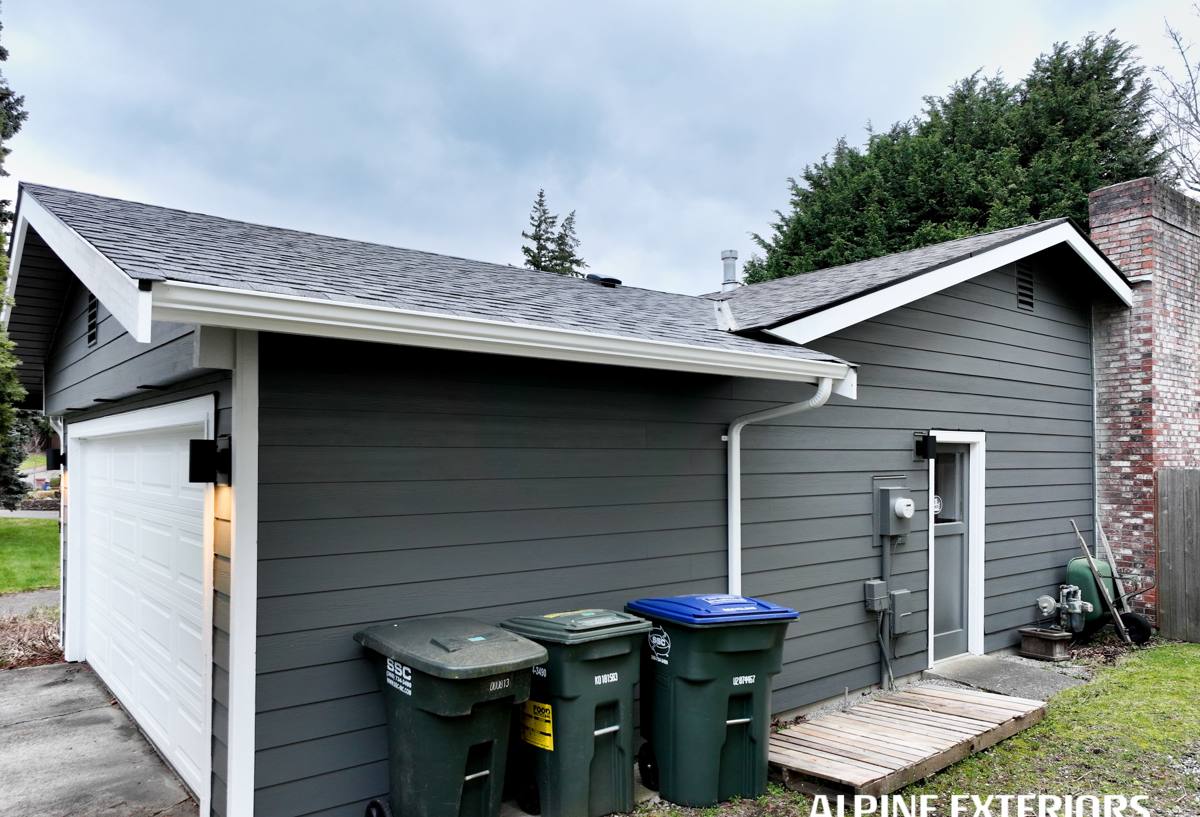
What This Climate Actually Does to Siding
Before talking about the product, it's worth being clear about what siding in this part of Pinellas County is up against, because it explains every decision that follows.
Heat and UV Load
Central Florida gets intense, near-daily UV exposure for most of the year. Painted and pigmented building materials fade and chalk under that kind of sustained sun, and materials with lower dimensional stability can warp or bow as they heat and cool through daily cycles.
Wind-Driven Rain
It isn't just rainfall totals that matter — it's the fact that Gulf Coast storms push rain sideways into wall assemblies under pressure. Siding systems that rely on tight seams and surface-level water resistance get tested hard during these events, and a house doesn't need a direct hurricane hit to see this kind of weather multiple times a year.
Salt Air
Even set back from the water, Pinellas Park homes sit within the reach of salt aerosol carried on Gulf breezes. Salt accelerates corrosion of fasteners and trim, and it's harder on organic or moisture-sensitive materials than inland climates ever see.
Storm Wind Pressure
Florida's building code exists because wind uplift and lateral pressure on exterior walls are real engineering loads, not abstractions. Siding attachment method and fastening schedule matter as much as the material itself when hurricane-force gusts are a realistic annual possibility.
Why We Install James Hardie and Nothing Else
We made a deliberate decision to standardize on James Hardie fiber cement siding rather than carry vinyl, LP SmartSide, or other wood-composite products. It comes down to how each material behaves under the specific stresses above:
- Non-combustible core: Fiber cement doesn't feed a fire the way wood-based products can, which matters for insurance underwriting as much as safety.
- Engineered for humidity: James Hardie's HZ5 product line is formulated specifically for high-humidity, high-moisture climates like ours — it's not a generic product adapted after the fact.
- Dimensional stability: Fiber cement doesn't expand, contract, or warp with heat and humidity swings the way vinyl and some wood composites can, which keeps seams and reveals tight over years of Florida sun.
- Factory-applied ColorPlus finish: A baked-on finish resists the fading and chalking that field-painted or thin-coated products show first in intense UV.
- Long track record in coastal markets: James Hardie has been engineered and marketed specifically toward Gulf and Atlantic coastal conditions for decades, which is a different design goal than a general-purpose siding product.
We're not going to tell you vinyl or LP SmartSide are bad products in every application — they have real installed bases and legitimate uses. But for the specific combination of heat, humidity, salt, and wind this area sees, we decided fiber cement done right was the standard worth building the business around, and we'd rather turn away work than install something on a Pinellas Park home that we don't believe holds up to spec here.
What a Correct James Hardie Installation Involves
The material is only half the equation. James Hardie's own warranty terms are tied to installation following their published specifications, and in a climate like ours, skipped steps show up as problems within a few years rather than decades.
Substrate and Moisture Barrier
Before a single board goes up, the wall sheathing needs to be sound and dry, and a code-compliant weather-resistive barrier (house wrap or building paper) needs to be installed correctly — lapped properly, sealed at penetrations, and integrated with window and door flashing so water has a planned path out rather than a way in.
Fastening Schedule
James Hardie specifies fastener type, spacing, and embedment depth, and those specs get more conservative in high-wind zones. Florida's wind-borne debris regions carry stricter requirements than much of the rest of the country, and Pinellas County falls within that scope. Under-fastening is one of the most common corner-cutting shortcuts in this trade, and it's invisible until a storm finds it.
Clearances and Flashing
Hardie board needs proper clearance from grade, roof lines, decks, and other horizontal surfaces to avoid wicking moisture. Butt joints, corners, and penetrations (vents, hose bibs, light fixtures) all need to be flashed or caulked with compatible sealants — not just caulked over and hoped for.
Fastener and Trim Material
Given the salt air discussed above, corrosion-resistant fasteners and trim hardware aren't optional upgrades here — they're the baseline. Using standard-grade fasteners in a coastal-adjacent climate is a common way installations fail early.
Our Process for Pinellas Park Projects
| Stage | What Happens |
|---|---|
| Assessment | On-site inspection of existing siding, sheathing condition, and any moisture or rot found during tear-off planning. |
| Product Selection | Choosing the right James Hardie plank profile, exposure, and ColorPlus finish for the home's style and HOA or neighborhood expectations, where applicable. |
| Tear-Off and Substrate Repair | Removing old siding, repairing or replacing any compromised sheathing before anything new goes up. |
| Weather Barrier Installation | Installing and properly lapping/sealing the moisture barrier per code and manufacturer spec. |
| Hardie Installation | Installing panels or planks to James Hardie's fastening schedule, with correct clearances and joint treatment. |
| Flashing and Trim | Sealing penetrations, installing corrosion-resistant trim, and finishing transitions at windows, doors, and rooflines. |
| Final Walkthrough | Reviewing the completed work with the homeowner and confirming everything meets both code and warranty requirements. |
Why a Crew That Already Works This Area Matters
Local experience isn't a marketing line — it changes real decisions on the job. A crew that regularly works Pinellas Park and the surrounding St. Petersburg area already understands Pinellas County's permitting process and wind-load requirements, knows what older housing stock in this part of the county tends to have behind the walls (older sheathing types, prior repair patchwork, aging flashing), and isn't learning Florida's building code for the first time on your house. That translates into fewer surprises mid-project, more accurate estimates up front, and installation decisions — fastener spacing, flashing details, clearance heights — that are already dialed in for this specific climate rather than generic best practices from a cooler, drier region.
Signs Your Current Siding May Be Failing
Homeowners often wait too long to address siding issues because early warning signs look cosmetic rather than structural. Watch for:
- Soft or spongy spots when pressing on siding near the bottom courses or around windows
- Visible warping, bowing, or buckling panels, especially on south- and west-facing walls
- Paint that's peeling, bubbling, or chalking heavily compared to a few years ago
- Staining or streaking that suggests water is tracking behind the siding rather than off it
- Gaps opening up at seams, corners, or trim that weren't there when the siding was newer
- A musty smell or visible mold on interior walls that back up to exterior siding
Any of these can indicate the weather barrier or substrate underneath has already been compromised, which is worth catching before it turns into a larger repair.
Cost Factors Specific to a Pinellas Park Project
We won't quote a number without seeing the house, but the main variables that move a James Hardie project's cost in this area are worth knowing up front:
| Factor | Why It Matters Here |
|---|---|
| Home size and wall complexity | More corners, gables, and dormers mean more cutting, trim, and flashing detail. |
| Existing substrate condition | Older homes in the area sometimes have hidden sheathing damage that needs repair before new siding goes on. |
| Product profile and finish | Lap siding, panel systems, and shake profiles carry different material and labor costs; ColorPlus finish avoids future field-painting costs. |
| Tear-off scope | Full removal of old siding versus installing over existing conditions (only appropriate in limited cases) changes labor significantly. |
| Trim and accessory work | Corrosion-resistant fasteners, trim boards, and soffit/fascia work tied into the siding project add to scope. |
Maintenance Once It's Installed
One of the practical advantages of James Hardie in this climate is how little ongoing maintenance it asks for compared to wood-based alternatives. A periodic rinse to remove salt residue and airborne grime, an annual walk-around to check caulking at joints and penetrations, and prompt attention to any impact damage (lawn equipment, storm debris) is realistically the extent of it. There's no repainting cycle to plan around the way there is with field-finished materials, since the ColorPlus finish is baked on at the factory and backed by its own warranty coverage.
If you're planning a siding project in Pinellas Park or anywhere else in the St. Petersburg area, we're happy to walk the property, look at what's there now, and give you a straightforward, no-pressure estimate for a correctly installed James Hardie system. There's a form below — reach out and we'll get a time on the calendar.