 St. Petersburg Siding
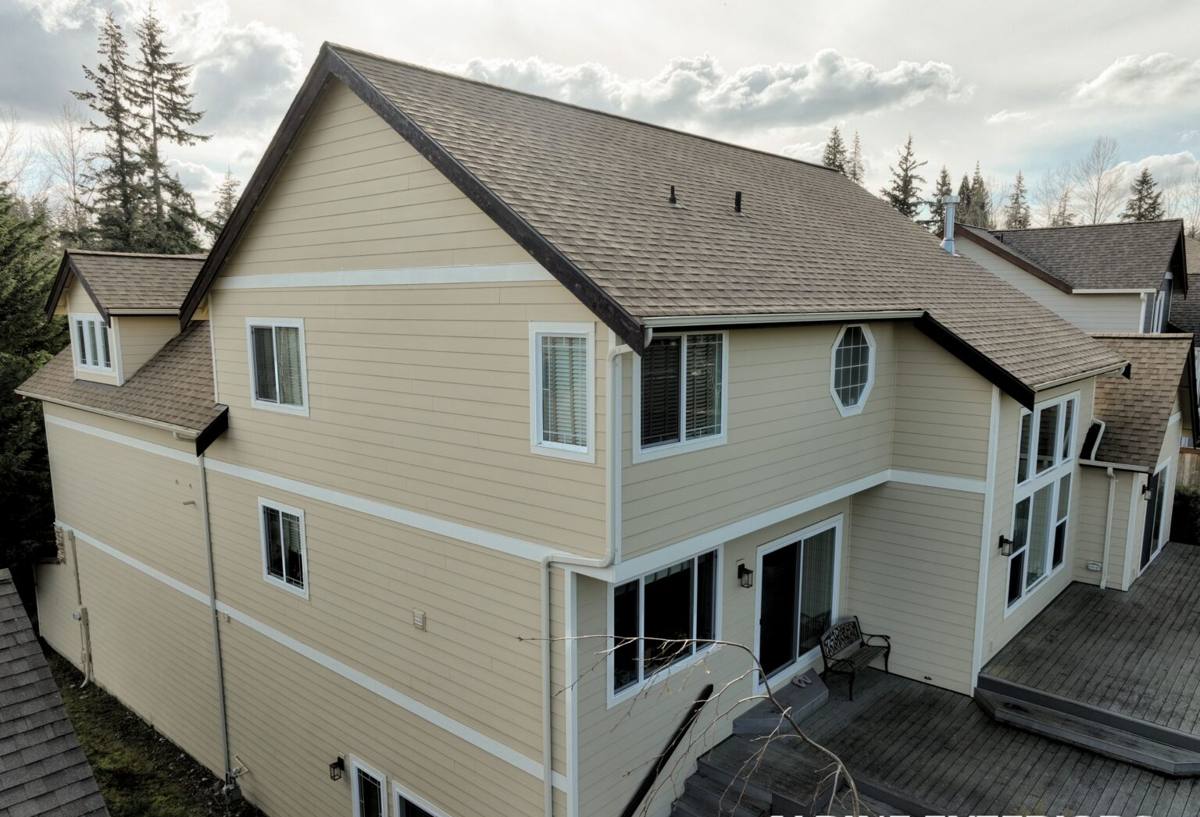
 Building Decks for Kenneth City Homes
Kenneth City sits in the middle of Pinellas County, tucked between St. Petersburg and the rest of the peninsula, which means every deck built here deals with the same conditions the whole county deals with: long, humid summers, intense sun almost year-round, sudden downpours, and the outside chance of a serious storm blowing through. It's a compact, established community of mostly single-family homes on modest lots, and a lot of the backyards we see are shaded by mature trees, bordered by fences, or sized in a way that calls for a deck design that makes smart use of the space rather than a generic rectangle bolted onto the back of the house.
We build decks for homeowners across St. Petersburg and the surrounding Pinellas County communities, and Kenneth City is regularly on our schedule. That matters more than it sounds like it should — a crew that already knows the permitting office, the soil, and the way afternoon storms roll in off the Gulf builds a different deck than a crew passing through once.
What Florida Climate Does to a Deck
A deck in Kenneth City isn't dealing with snow load or freeze-thaw cycles like a deck up north. It's dealing with something harder on materials in a different way: constant heat, constant UV, high humidity, and — because we're close enough to the Gulf and Tampa Bay — salt-laden air that accelerates corrosion on anything metal.
- UV exposure: Florida sun breaks down wood fibers and fades or chalks composite decking faster than in milder climates. Materials rated for northern states often underperform here.
- Humidity and rain: Wood that can't dry out between rain events is where rot, mold, and fastener corrosion start. Ventilation and drainage under the deck matter as much as what's on top.
- Wind: Pinellas County sees tropical storm and hurricane-force wind events. A deck attached to the house, or a freestanding structure with railings and stairs, needs framing and fastening that accounts for uplift and lateral load, not just static weight.
- Salt air: Even a few miles inland from the bay, airborne salt corrodes standard steel fasteners and hardware over a few seasons. It's a slow, quiet failure mode homeowners often don't notice until a railing post or ledger connection has weakened.
None of this means a deck can't last in Kenneth City — decks here last for decades when they're built with the right materials and details. It means "the right materials and details" is a shorter list than it is in most of the country, and skipping steps shows up faster here than it would somewhere drier and cooler.
What a Correctly Built Deck Involves
Foundation and Framing
Everything starts below the decking boards. Footings need to be sized and set to local frost-free depth requirements (not much of an issue here, but drainage and soil bearing still matter), and posts need to sit on a footing that won't shift in Florida's sandy or fill soils. Framing lumber should be pressure-treated for ground contact where it's near or in contact with soil, and joist spacing should account for the decking material going on top — composite and PVC boards generally want tighter joist spacing than wood.
Ledger Attachment
If the deck attaches to the house, the ledger board connection is the single most safety-critical detail on the whole project. It has to be properly flashed to keep water out of the house's structure, and lag-bolted or through-bolted per code — not just nailed. A poorly flashed ledger is one of the most common sources of hidden rot damage to a home's rim joist, and it's not something you can inspect casually once the deck is finished.
Fasteners and Hardware
Given the salt air across this part of Pinellas County, we use hot-dip galvanized or stainless connectors and coated deck screws rated for coastal exposure, not the standard-grade hardware that's fine in drier inland climates. This is one of the cheapest details to get right and one of the most expensive to fix later, since replacing corroded hardware usually means partially disassembling the deck.
Decking Material
Board choice comes down to a few honest trade-offs, which we'll walk through below rather than push one product as universally "best."
Decking Material Options for This Climate
| Material | How it handles our climate | Maintenance | Typical lifespan here |
|---|---|---|---|
| Pressure-treated wood | Affordable, but UV and humidity mean it needs consistent upkeep to avoid graying, splitting, and rot | Annual cleaning and re-sealing recommended | 10–15 years with upkeep |
| Composite decking | Resists rot and insects well; quality varies — cheaper composites can fade or absorb heat more in direct FL sun | Occasional washing, no sealing | 20–25+ years, manufacturer-dependent |
| PVC/capped polymer decking | Fully synthetic, handles moisture and UV very well, doesn't support rot | Low — washing only | 25+ years |
| Tropical hardwoods (e.g., ipe) | Naturally dense and rot-resistant, but requires correct fastening and periodic oiling to hold color | Periodic oiling to prevent graying | 25+ years with upkeep |
We don't push composite or PVC as automatically superior to wood, or vice versa — it's a real trade-off between upfront cost, maintenance tolerance, and how the deck will be used. A shaded, low-traffic deck can do fine in treated wood with routine care. A pool deck or a full-sun deck that gets heavy family use is usually a better fit for composite or PVC precisely because Florida sun and humidity punish wood fastest in those conditions.
Railings, Stairs, and Attachment Points
Railings and stairs are where a lot of deck failures actually originate, not the decking boards themselves. Post attachment to the framing has to be solid enough to resist lateral force — code minimums exist for a reason, and we don't treat them as a ceiling to build down to. In a wind event, a loose railing post is often the first thing to fail, and it's also one of the easiest things to get wrong if a crew is rushing.
For stairs, we pay attention to stringer spacing and support, especially on decks with any real elevation change, which is common on Kenneth City lots with a step down from a raised interior floor level.
Our Process for a Kenneth City Deck Project
- On-site visit: We look at the actual lot — grade, drainage, existing structures, sun exposure, and how the space is used before drawing anything.
- Design and material selection: We walk through material trade-offs honestly based on your budget, maintenance appetite, and how the deck will be used.
- Permitting: Deck construction in Pinellas County typically requires a permit, and we handle that process rather than leaving it to the homeowner.
- Framing and structural work: Footings, posts, ledger (if attached), and joist framing — the part that determines how the deck performs in wind and over time.
- Decking, railing, and stairs installed: Finish materials go on last, with fastening details matched to the coastal environment.
- Final walkthrough: We go over the finished deck with you, including any maintenance the material choice calls for.
Why Local Experience Matters for This Job
A deck built by a crew that doesn't regularly work Pinellas County can still look fine on day one. The difference shows up over the first few Florida summers and the first tropical storm season, in the hardware that starts rusting, the ledger flashing that wasn't detailed for this level of rain, or the railing post that wasn't fastened for the wind loads this area actually sees. We're a St. Petersburg-based crew that works Kenneth City and the surrounding Pinellas County neighborhoods regularly, so the material choices and structural details on your deck aren't a generic national spec — they're what we've found actually holds up here.
Signs an Existing Deck Needs Attention
- Soft or spongy spots in decking boards, especially near the house or at ground contact points
- Rust staining around fasteners or connectors
- Railing posts that flex or wobble under light pressure
- Gaps or separation where the deck meets the house (ledger area)
- Persistent mold or algae growth that doesn't clean off, suggesting trapped moisture underneath
If any of these sound familiar, it's worth having someone look at the structure before deciding between a repair and a full rebuild — sometimes it's a straightforward hardware fix, and sometimes the framing itself has been compromised.
Getting Started
Every backyard in Kenneth City is a little different — lot size, tree cover, how the house sits on the grade, how you actually want to use the space. We'd rather look at it in person than guess from a phone call. If you're thinking about a new deck or need an honest opinion on an existing one, we offer free, no-pressure estimates — just fill out the form below and we'll set up a time to come take a look.