 St. Petersburg Siding
 Building Decks That Actually Hold Up in Seminole
Seminole sits close enough to the Gulf and the Intracoastal that salt air is a daily fact of life, not an occasional nuisance. Add in the summer sun beating down for months at a time, sudden wind-driven downpours, and the real chance of a hurricane-force wind event most years, and you've got one of the more demanding climates in the country for an outdoor structure. A deck that would hold up fine in a drier, cooler part of the country can start showing problems here within a couple of seasons — loose fasteners, cupped boards, corroded hardware, a railing that's gone soft.
Custom decks for Seminole homes need to be built around that reality from the start, not patched up after the fact. That means the right decking material for constant UV and moisture exposure, hardware rated for coastal corrosion, framing tied down to resist uplift, and drainage details that keep water from sitting where it shouldn't. This page walks through what actually goes into a deck built to last in this part of Pinellas County, and what to expect if you're planning one.
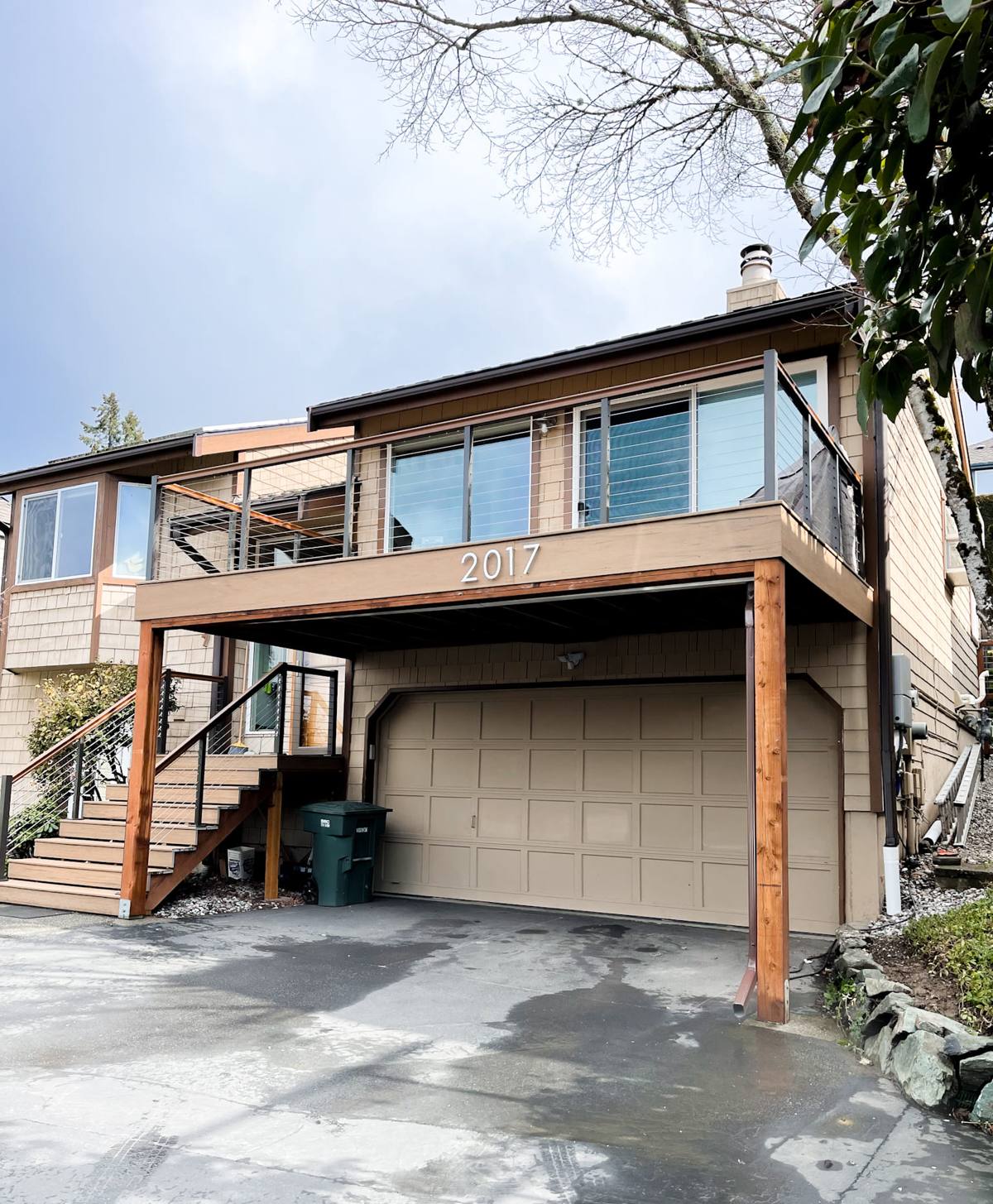
What "Custom" Should Mean for Your Deck
A custom deck isn't just picking a board color. It's designing the structure around your yard, your house, and how you actually plan to use the space — grilling, entertaining, a quiet spot off the master bedroom, or a transition zone between the house and a pool. In Seminole, that design work also has to account for a few things that are specific to the area:
- Lot drainage — many yards here sit low and flat, so deck footings and grading need to move water away from the house, not toward it
- Proximity to a pool, spa, or dock, which changes the fastener and railing requirements
- Prevailing wind exposure — an open, unshaded deck takes more direct sun and wind than one tucked under mature tree cover
- How the deck ties into existing siding, doors, or a lanai, so flashing and transitions don't create a future leak point
A good design also plans for the deck's second season, not just the day it's finished — board spacing that allows for expansion and contraction, fastener patterns that won't work loose under thermal cycling, and a layout that doesn't trap standing water after a summer storm.
Sizing and Layout
Most custom decks we design in this area fall somewhere between a modest 200-square-foot extension off a back door and a full multi-level outdoor living space with a separate grilling area and seating zone. Layout should follow how the sun hits the yard through the day and where you actually want shade — in Pinellas County's climate, an unshaded deck facing west can be nearly unusable by mid-afternoon for half the year without some kind of cover or pergola built into the plan.
Choosing a Decking Material That Fits This Climate
Every decking material sold today will look good on day one. The differences show up after two or three Florida summers. Here's an honest breakdown of the main options we work with:
| Material | How it handles UV & heat | How it handles salt air & moisture | Maintenance |
|---|---|---|---|
| Pressure-treated pine | Fades and can check/crack under sustained sun without regular sealing | Needs sealing to resist moisture cycling; hardware can corrode faster if not coastal-rated | Annual cleaning and re-sealing recommended |
| Composite decking | Holds color well; premium capped lines resist fading better than budget lines | Doesn't rot or absorb salt moisture; good long-term fit for this area | Periodic washing; no sealing or staining needed |
| PVC decking | Very stable in heat; some lighter colors can run hot underfoot | Fully moisture- and rot-proof; a strong choice near pools and the water | Low — occasional cleaning |
| Tropical hardwoods (e.g., ipe) | Naturally UV- and heat-resistant but will gray without oiling | Naturally rot- and insect-resistant | Requires periodic oiling to maintain color; higher upfront cost |
We don't push one material on every job. Composite and PVC decking have become the more common choice for Seminole homeowners specifically because they take the moisture and UV exposure out of the maintenance equation — but a well-sealed and properly maintained wood deck is still a legitimate option if you like the look and are willing to keep up with it. What matters more than the brand name is whether the product is installed to its manufacturer's spec, because hidden gapping, fastening, and ventilation details are what determine whether a composite deck stays flat and tight or starts to warp at the board ends.
What's Underneath Matters More Than the Boards
The decking surface gets all the attention, but the framing, fasteners, and ledger connection are what actually keep a deck standing through a bad storm season. This is where we see the most corner-cutting on decks built by crews that don't regularly work in coastal Florida.
What a Correct Frame Includes
- Hot-dip galvanized or stainless structural hardware — standard electroplated hardware corrodes faster in salt air and is a common source of premature failure
- Proper ledger board flashing where the deck attaches to the house, so water can't work its way behind the siding
- Joist hangers and structural connectors rated for the load and fastened per manufacturer spec, not just toe-nailed
- Post-to-footing connections designed to resist uplift, since wind loading — not just weight — is what a deck frame has to withstand here
- Footings sized and set to local frost-free, soil-bearing requirements, which in this area is more about soil type and drainage than frost depth
None of this is visible once the deck is finished, which is exactly why it's worth asking a contractor to walk you through their framing and fastener choices before work starts, not after.
Permits and Wind Requirements in Pinellas County
Most new decks and deck replacements in Seminole require a building permit, and the structure has to meet Florida Building Code wind load requirements for this region. That covers things like railing height and baluster spacing, footing depth and spacing, and how the deck attaches to the house. It's not a formality — it's the difference between a deck that's engineered to stay put in a wind event and one that's just nailed together.
We handle the permitting and inspection process as part of the job. If a contractor offers to skip the permit "to save time," that's a red flag, not a favor — it usually means the work isn't built to code, and it can create real problems if you ever sell the house or file an insurance claim.
How the Process Works
- On-site consultation — we look at your yard, discuss how you'll use the space, and talk through material options honestly, including trade-offs on cost and maintenance
- Design and estimate — you get a clear layout and a written estimate before anything is signed
- Permitting — we pull the required permits and handle inspections through Pinellas County
- Build — framing first, with all structural connections and flashing completed and typically inspected before decking goes down
- Decking, railing, and finish work — boards, railings, and any stairs or lighting are installed
- Final walkthrough — we go over the finished deck with you and cover basic care before we consider the job done
Living with a Deck in Salt Air and Florida Sun
Even a low-maintenance material benefits from a little routine care in this climate. A short seasonal checklist goes a long way toward getting the full lifespan out of the structure:
- Rinse off salt residue and pollen buildup every few weeks, more often if you're close to the water
- Check railings and stair connections for looseness after any major storm
- Keep gutters and downspouts near the deck clear so runoff isn't dumping directly onto footings
- For wood decks, plan on resealing on the schedule the sealant manufacturer recommends — UV exposure here breaks it down faster than in milder climates
- Trim back nearby vegetation so boards get airflow and dry out after rain instead of staying damp
Why It Matters That We Already Work in Seminole
A deck built by a crew that hasn't worked much in coastal Pinellas County will often use the same materials and details they'd use anywhere else in the country. That's how you end up with standard hardware corroding in two years, or a wood deck that wasn't sealed with this much UV exposure in mind. Working in and around Seminole regularly means we've seen how different materials and fastener grades actually perform here over time — not just what a spec sheet claims — and we build accordingly.
If you're planning a custom deck for your Seminole home, we're happy to walk the space with you and put together a straightforward, no-pressure estimate. There's no obligation — just an honest look at what your yard and budget can support. Use the form below to get started.