 St. Petersburg Siding
 Crescent Lake Decks Face a Different Kind of Wear
Crescent Lake is one of St. Petersburg's older, established neighborhoods, built up around Crescent Lake Park with a mature tree canopy that shades much of the housing stock. That canopy is part of what makes the area pleasant to live in, and it's also part of what makes deck repair here different from a repair job in a wide-open, full-sun yard. Decks under heavy oak cover deal with more shade, more leaf and pollen debris, and slower drying times after rain. Decks in the sunnier pockets of the neighborhood deal with the opposite problem: aggressive UV exposure that dries out and checks wood fibers faster than most homeowners expect.
Layer in the rest of what a Pinellas County exterior has to survive — hurricane-force wind gusts during storm season, wind-driven rain that gets pushed sideways into framing joints, and the salt-laden air that drifts inland off Tampa Bay and the Gulf — and a wood or composite deck is under constant, low-grade attack even when nothing looks obviously wrong. Deck repair in this neighborhood isn't just about swapping a rotten board. It's about understanding which of these forces did the damage, so the fix actually holds.
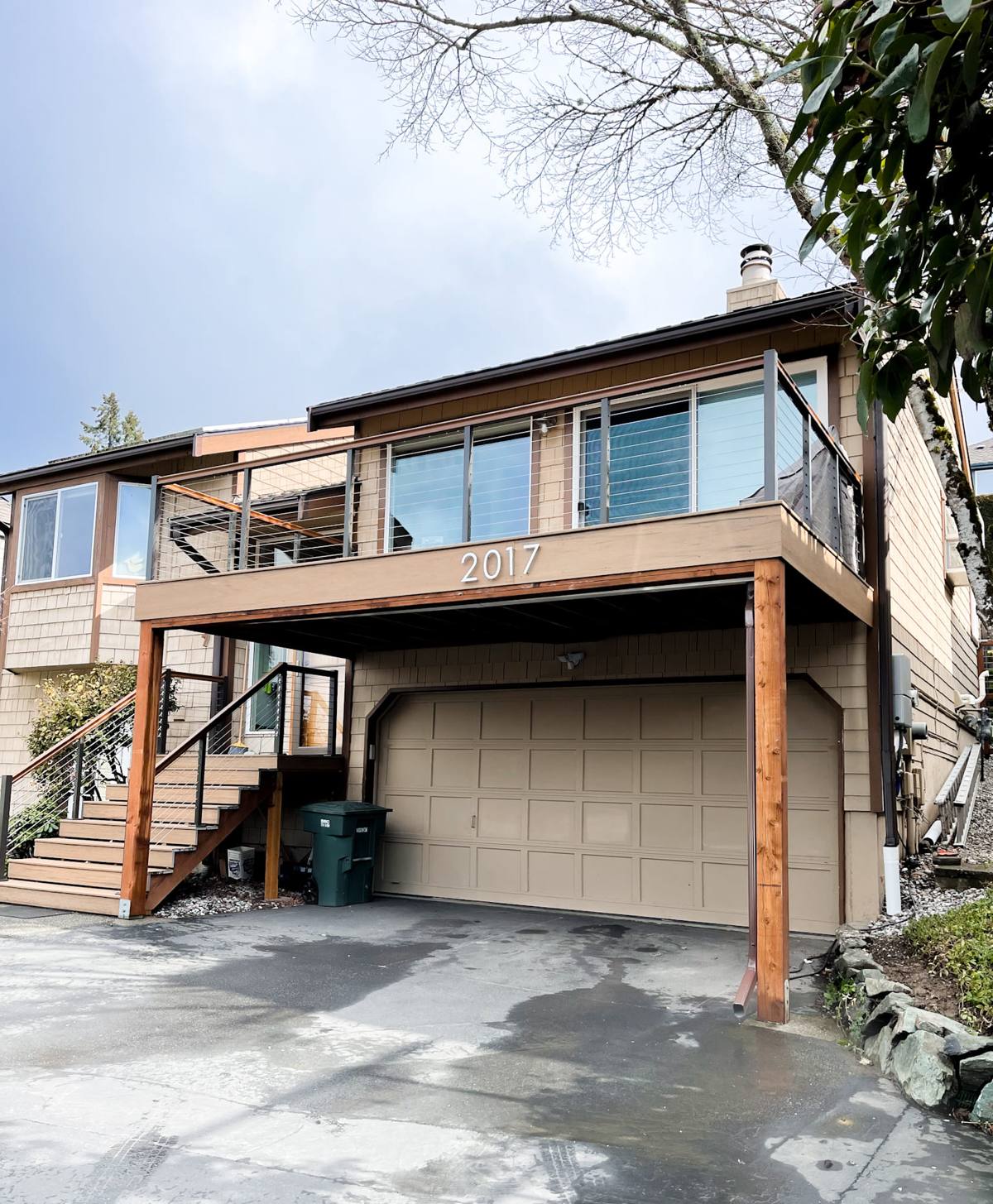
Signs a Deck Needs Repair, Not Just a Cosmetic Fix
Most deck failures don't happen overnight. They start small and get ignored because the deck still looks fine from a few feet away. Here's what actually signals a problem underneath the surface:
- Boards that feel soft, spongy, or slightly springy when you walk across them
- Gaps between boards that have widened noticeably since the deck was built
- Nail or screw heads popping up above the board surface
- Railings or posts that wiggle when pushed, even slightly
- Stairs with more give or bounce than they used to have
- Dark staining or streaking where the deck attaches to the house (the ledger board)
- Mildew or black film that comes back within a few weeks of cleaning it off
- Visible rot, splitting, or insect damage at the base of support posts
- A noticeable dip or sag anywhere in the deck surface
Any one of these on its own might be a minor fix. Two or three together, especially near posts or the ledger board, usually means the structure underneath needs a real look before more boards get replaced on top of it.
What a Correct Deck Repair Actually Involves
The structure underneath
The part of a deck that fails first is rarely the part you can see. The ledger board — the piece bolted to the house that the whole deck hangs from — takes on moisture from wind-driven rain and from water that runs down the house siding. If it's rotted or the flashing behind it has failed, no amount of surface repair fixes the real problem. Joist hangers, support posts, and footings need the same scrutiny: corroded hardware and softened wood at ground contact points are common in Florida's humidity, and they're structural issues, not cosmetic ones.
The decking surface
Whether it's wood or composite, board spacing matters more here than in drier climates. Boards need enough gap to drain and to move slightly with humidity swings without buckling or cupping. Fasteners need to be corrosion-resistant — coated deck screws or stainless steel, not standard hardware that will rust and stain the boards within a couple of seasons of salt air exposure.
Railings and stairs
Railings get treated as an afterthought, but they're a code and safety item, not just a design choice. Post spacing, railing height, and baluster gaps all need to meet current code, and a repair is a natural point to correct anything that was built to older standards or has loosened over time.
Wood vs. Composite: What Makes Sense for a Repair
When a section of decking is bad enough to replace rather than patch, homeowners often ask whether to stay with wood or switch that section to composite. Both have a place, and the honest answer depends on the rest of the deck and what you're trying to solve.
| Factor | Pressure-Treated Wood | Composite Decking |
|---|---|---|
| Upfront cost | Lower | Higher |
| Typical lifespan with upkeep | 10–15 years before major repair | 20–25+ years |
| Maintenance | Needs sealing/staining every 1–2 years in this climate | Occasional washing, no sealing |
| UV and heat behavior | Grays and checks without regular sealing | Fade-resistant, but can hold surface heat |
| Moisture behavior | Absorbs water; rot risk if not sealed and ventilated | Doesn't rot, but core can trap moisture if the product isn't installed with proper drainage gaps |
| Matching an existing deck | Easier to blend with existing wood framing and boards | Best used for full sections or full replacement to keep a consistent look |
Our general approach: if the underlying structure is sound and only a few boards are bad, matching with pressure-treated wood keeps cost down and keeps the deck consistent. If we're already replacing a large section, composite is worth the conversation because it takes the yearly sealing chore off your plate for good.
Common Deck Problems We See and What They Usually Mean
| What You Notice | Likely Cause | Typical Fix |
|---|---|---|
| Dark stain along the house wall | Ledger board or flashing letting water behind the deck | Pull boards near the ledger, replace flashing, repair or replace the ledger |
| Soft spots in the middle of the deck | Joist rot from trapped moisture and poor airflow underneath | Replace affected joists, improve under-deck ventilation |
| Rust streaks around fasteners | Standard (non-coated) hardware corroding in humid, salt-influenced air | Remove and replace with corrosion-resistant fasteners |
| Loose or wobbly railing posts | Fasteners pulled loose or post base wood softened | Re-anchor with proper structural hardware, replace damaged post material |
| Persistent mildew film | Heavy shade and slow drying under tree canopy | Deep clean, improve airflow/pruning, reseal wood surfaces |
How We Handle a Deck Repair, Start to Finish
Inspection
We get underneath the deck, not just look at the top of it. That means checking the ledger connection, probing posts and joists for soft wood, and looking for corrosion on hardware. On shaded lots we pay extra attention to moisture pooling and airflow; on sunnier lots we check for UV-driven checking and fastener backing-out.
Scoping the repair honestly
We tell you what actually needs to be fixed versus what's still sound. If the frame is solid and it's a handful of boards, that's what we quote. If the ledger or major structural members are compromised, we explain why a bigger repair is the safer route, and what happens if it's deferred through another storm season.
Doing the work
We use corrosion-resistant fasteners and hardware rated for exterior/coastal-influenced conditions, match board spacing to allow proper drainage, and take care around existing landscaping and root systems common in a tree-covered lot. Debris and old material are cleared as we go.
Final check
Before we call it done, we walk the deck with you — check for level, check railings for solid attachment, and go over what maintenance will keep the repair lasting.
Why Hiring a Crew That Already Works Crescent Lake Matters
A deck repair crew that only occasionally works in this part of St. Petersburg can still do competent work, but they're often learning the neighborhood's quirks on your project. Crews who regularly work in and around Crescent Lake already know that heavy tree cover changes the maintenance math, that older homes in the area may have framing or ledger attachments built to older standards, and that permitting and inspection expectations from the City of St. Petersburg and Pinellas County apply the same way here as anywhere else in the city — repairs that go beyond simple like-for-like board replacement often need a permit, and it's worth confirming that before work starts rather than after.
Familiarity also means faster, more accurate diagnosis. When you've seen the same ledger-flashing failure or the same joist-rot pattern on several decks nearby, you're not guessing at what's driving the damage — you're confirming it.
Keeping a Repaired Deck in Good Shape
- Reseal or restain wood decking on a schedule — Florida humidity and UV break down finishes faster than in drier climates
- Sweep leaf litter and pollen off the boards regularly if you're under tree canopy; trapped organic matter holds moisture
- Check railings and stair connections for looseness twice a year, not just when something feels off
- Rinse salt residue off deck surfaces and hardware periodically, especially after windy weather off the bay
- Walk the deck after any major storm and look underneath if you can access it, before small issues become structural ones
- Keep nearby irrigation heads from spraying directly onto deck boards or posts
A repair done right, followed by basic upkeep, should hold up well against everything a St. Petersburg summer and storm season can throw at it.
If you're seeing any of the warning signs above, or just want an honest opinion on whether your deck needs a few boards replaced or a closer structural look, we're happy to come take a look. Fill out the form below for a free, no-pressure estimate.